Grief and the First Days · 8 min read · October 25, 2026
By the StayWith team
Do Dogs Grieve When Another Dog Dies? Signs and How to Help
Yes, dogs grieve. They may not understand death the way we do, but they notice the absence, they change their behaviour, and they need help to adjust. The signs are usually clear once you know what to look for, and most dogs recover with time, routine, and a little extra patience.
What are the signs a dog is grieving?
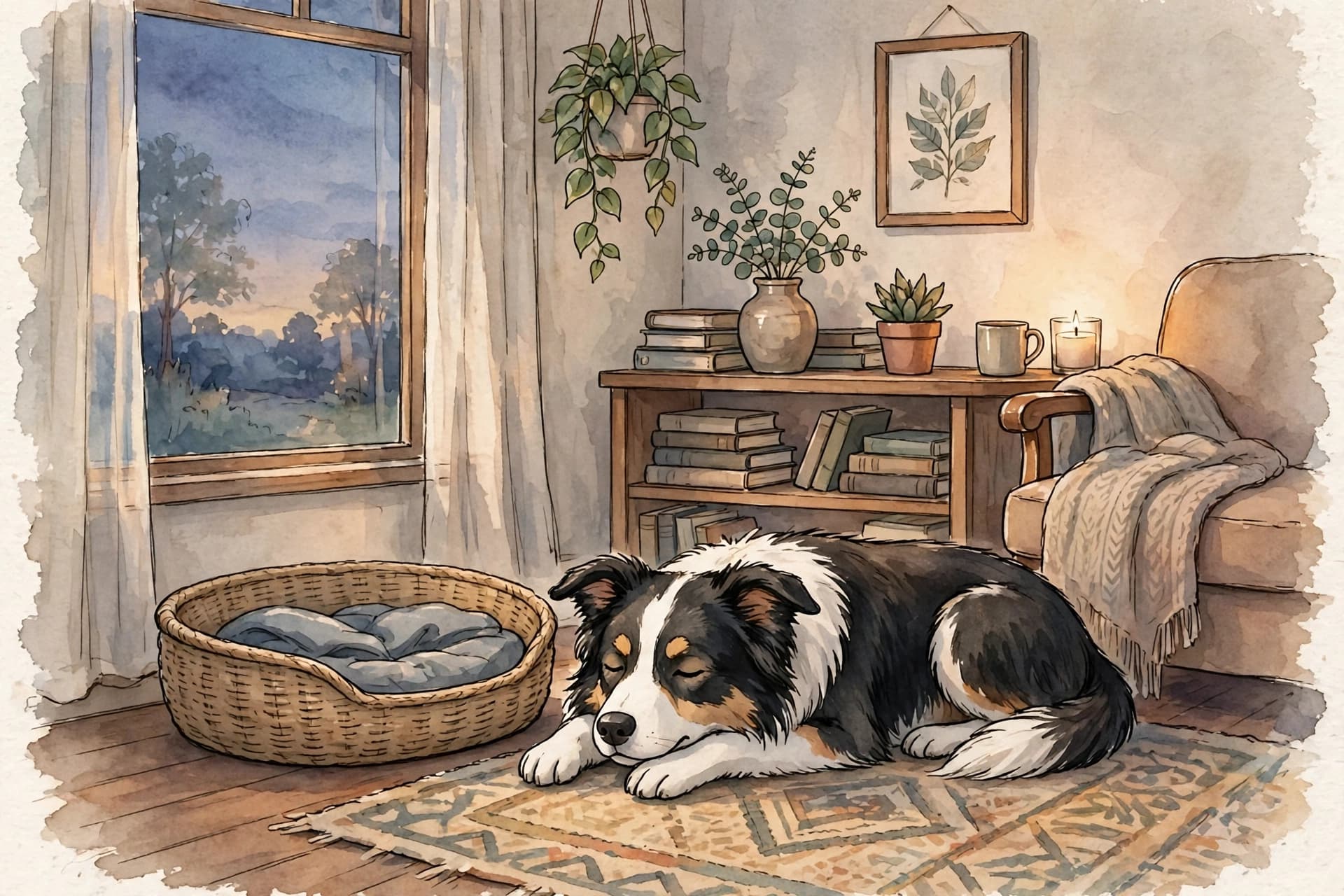
Yes, dogs grieve when another dog dies. They may not understand death the way we do, but they notice the absence. The companion who shared their walks, meals, sleeping spot, and play is gone, and the house feels wrong to them in the same way it feels wrong to you. In a 2016 survey in the journal Animals, 74 percent of dogs changed how they sought affection after losing a companion. According to VCA Animal Hospitals, an ASPCA study found that over 60 percent of pets showed four or more behavioural changes after losing a companion.
Not every dog shows the same signs. The most common changes are:
A few dogs become withdrawn instead of clingy, and that is normal too. The key is the change from their usual self. The signs also depend on the dog. A senior dog who was already slowing down may simply sleep more, which is easy to miss. A young, high energy dog may become restless and destructive instead of quiet. And the bond matters: a dog who loses a littermate she has lived with since birth will usually change more than a dog who loses a housemate she merely tolerated. Watch your own dog against her normal self, not against a list, and trust what you see.
- Eating less, or more slowly, and sometimes refusing favourite foods. A New Zealand study found about 30 percent of grieving pets had a decreased appetite.
- Searching the house, checking the other dog's bed, and waiting by the door at the usual walk time.
- Sleeping more than usual, or sleeping in the other dog's spot.
- Losing interest in play, toys, and walks.
- Clinginess, following you from room to room and struggling when you leave. The New Zealand study found about 60 percent of dogs and cats clung more to their people.
- Whining, sighing, or barking more than usual, especially at times the other dog was active.
- Restlessness, pacing, or the opposite: lying flat and listless.
Do dogs understand that the other dog is dead?
Probably not in the way we mean it. Dogs live in the present and read the world through routine and scent. What they understand is that the companion is not here, the routine is broken, and the house smells different. Some dogs seem to wait, as if the other dog will come back. That is how a creature that lives by habit experiences a sudden absence.
Letting your surviving dog see and sniff the body, where that is possible and not distressing for you, can help. Dogs process a lot through scent, and a chance to investigate seems to settle the searching sooner than a sudden disappearance does. If the other dog died away from home, bring home a blanket that carries their scent.
A practical seven step plan to help your grieving dog
- Keep the routine steady. Same feeding times, same walk times, same bedtime. Routine is a dog's clock, and a familiar schedule is the most reassuring thing you can offer. VCA Animal Hospitals makes the same point: predictable mealtimes, exercise, and bedtimes help a grieving pet feel secure.
- Keep them moving, gently. Do not force long walks if your dog has no energy, but still go out. Short walks, a little play, and time outside help more than staying in. If the usual route is heavy with memories, try a new one for a while.
- Tempt the appetite, do not fight over it. Offer food at the usual times and take it away after twenty minutes if untouched. Warming the food slightly, adding wet food, or hand feeding a few bites can restart eating. If your dog eats almost nothing for more than two days, call your vet.
- Let them sniff and search. Do not wash the other dog's bed or hide their things on day one. Let your dog visit the empty bed, sniff it, and lie in it. Blocking off the places they are looking for does not spare them confusion.
- Offer gentle company, not constant fuss. Be present, sit nearby, and let your dog come to you. Extra cuddles are fine. But avoid rewarding every whine with treats or fuss, because that can teach your dog that whining is the way to get attention, and the habit can outlast the grief.
- Add small enrichment. A new toy, a puzzle feeder, a different route, or a short training game gives your dog something else to think about. Keep it light. The goal is a little spark of interest, not a full day of activity.
- Watch your own mood. Dogs read your body language closely, and if you are crying on the floor, your dog will worry. That does not mean hiding your grief. It means calm company at least some of the day: a steady voice, a normal walk, a hand on their back. You are grieving too. The guidance in how to cope with losing a dog applies to you just as much as this plan applies to them.
How long does dog grief last?
There is no fixed timeline. Feeding and territorial changes tend to settle within about two months, according to the 2016 Animals survey. Changes in affection seeking and sleep can run two to six months. Some dogs are different for a week, others are still checking the door in month four. As long as the trend is slowly toward normal, your dog is on track.
The shape of recovery is rarely a straight line. The first two weeks are usually the hardest, then there is a slow climb with good days and bad days mixed together. A bad day after a good week is normal, and it does not mean your dog is getting worse. What matters is the direction over a month: eating a little more, walking a little further, greeting you at the door again. If the trend is flat, or sliding backwards after a month, that is the moment to call your vet, not the moment to wait longer.
What should the first week look like?
Keep the first week as boring as possible. Same food, same bowl, same walk times, same bedtime. Do not wash the other dog's bed or blanket yet, and do not move the furniture. Your dog is navigating by smell and habit, and every familiar thing is a landmark.
Feed at the usual times, even if she only picks at it. Go out for the usual walk, even if it is shorter than usual, and let her sniff as long as she likes. Play for a few minutes if she asks, and stop when she loses interest. Sit with her in the evening, the way you always did, and let her choose whether to lean against you or lie alone.
Change one thing at a time, and only when you must. If the usual walk route is too painful for you, try a new one, but keep the time the same. If you need to wash the bedding, wash one item and leave the rest. Small, steady days are what carry a grieving dog through the first week.
When should you call the vet?
Call your vet if your dog stops eating almost entirely for more than two days, loses weight quickly, becomes very lethargic, vomits or has diarrhoea, or shows signs of pain. Grief and illness look alike, and a truly ill dog needs treatment, not just patience. Also call if behaviour gets worse after a month instead of better, or if your dog becomes destructive or dangerously anxious.
Should you get another dog to help?
Not right away. A new dog does not replace the one who died, and your surviving dog needs time to adjust before meeting a stranger. Most vets suggest waiting a few months, until appetite, sleep, and play are back to normal. When you are ready, when to get another dog covers timing and choosing the right companion.
What mistakes do owners make with a grieving dog?
The most common mistake is feeding the sadness. Extra treats, table scraps, and food at every whine feel kind in the moment, but they teach your dog that whining brings food, and they can upset a stomach that is already unsettled. Comfort with company and routine, not with food.
The second is removing every trace of the other dog on day one. Washing all the bedding, throwing away the toys, and moving the bowls feels like cleaning up, but it takes away the scent landmarks your dog uses to understand what happened. Wait a week or two, then change things gradually.
The third is skipping the vet. Grief and illness look alike, and a dog who stops eating, drinks far more than usual, or becomes very lethargic needs a check, not just patience. A quick visit rules out the medical causes and gives you a clear plan.
The fourth is expecting your dog to grieve the way you do. Dogs do not need to talk about it, and they do not need a ceremony. They need their routine, their walk, and you, sitting nearby, being steady.
Frequently asked questions
Do dogs really miss other dogs?
Yes. Dogs form strong bonds with the animals they live with. In the 2016 Animals survey, three quarters of dogs changed how they sought affection after a loss.
How long will my dog grieve for the other dog?
It varies. Appetite and territorial changes usually settle within about two months, while affection and sleep changes can take two to six months. A few dogs take longer if the bond was close.
Should I let my dog see the body of the dog who died?
If it is possible, it can help. Dogs process a lot through scent, and a chance to sniff and investigate seems to reduce the searching. If the death happened away from home, a blanket carrying the other dog's scent can help.
Will my dog be sad forever?
Most dogs adjust over weeks to months with a steady routine and gentle company. If the sadness deepens after a month, or your dog stops eating or becomes very withdrawn, talk to your vet.
Is it okay to comfort my dog a lot after the other dog dies?
Yes, comfort is good, and your dog needs your company more than usual right now. Just avoid rewarding every whine with food or fuss.