Memorial and Continuing Bonds · 8 min read · October 25, 2026
By the StayWith team
The First Anniversary of Your Dog's Death: Why It Hurts and How to Get Through It
The first anniversary of your dog's death often hurts more than people expect, because grief comes in waves and a date on the calendar can pull one in without warning. Many owners say the second year feels different from the first, often quieter, but the anniversary itself can still knock you flat. Here is why the date hits hard, and a few rituals that help.
Why does the first anniversary hurt so much?
Dates anchor memory. Your body remembers the day even when your mind is busy with other things. In the weeks before the anniversary, you may feel low or restless without knowing why, and then the date arrives and the feeling finally has a name. That slow build up is often worse than the day itself, because it is vague and you cannot plan for it.
There is also a second loss inside the anniversary. The first year after a death is a year of firsts: the first birthday without them, the first holiday, the first summer. The anniversary marks the end of that year, which means you have now lived a whole year without your dog. A full year of absence is a heavy thing to count. Friends may have moved on, and nobody else may remember the date, which can make the day feel lonely in a way the funeral did not.
What are grief waves?
Grief waves are the most useful picture of how grief behaves over time. In the first weeks, the waves come constantly, one after another, and there is barely time to breathe between them. Over months, they get further apart. You have good days, then a wave arrives out of nowhere, a smell, a song, a dog that looks like yours on the street, and for an hour you are right back in it.
Anniversaries are predictable waves. You can see them coming on the calendar, and knowing that helps, because you can plan for them instead of being caught by them. The waves do not stop after the first year, but they get further apart, and usually smaller. That is normal, and it does not mean you are going backwards. Our guide on how long grief lasts after losing a dog explains the shape of that first year in more detail.
What can I do on the day itself?
Do one thing, not ten. A day packed with rituals can feel like a performance, and you will end it exhausted. Pick one thing that feels like your dog, and do it slowly.
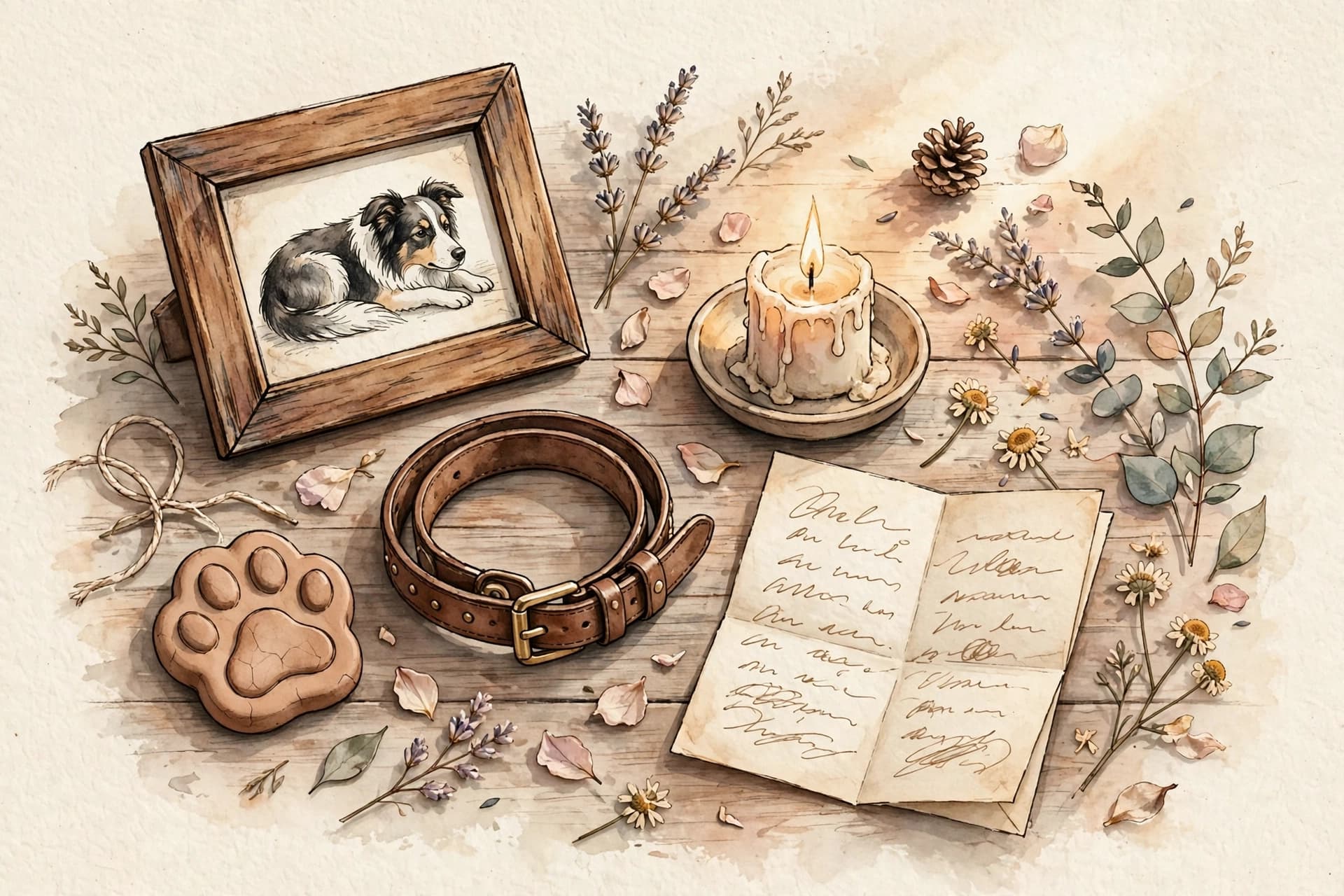
Some owners take the old walk, the same route at the same hour, and talk to the dog as they go. Some cook the dog's birthday meal, eggs the way they liked them, a little bacon on top, and eat it themselves. Some write a letter, telling the dog what has happened since they died. Some look at photos on purpose, rather than avoiding them, and let themselves cry. Some visit the spot where the ashes were scattered, or plant something, or light a candle at the time of day the dog died.
Tell one person in advance what the day is. A friend who knows can check in, or simply know why you are quiet. One person who remembers is often enough. And if the day turns out to be easier than you feared, that is fine too.
If you wake up and feel nothing, that is normal too. Numbness is a common response to a date you have been dreading, and it does not mean you have forgotten the dog or that the grief is gone. It means your mind is protecting you for a few hours, and the feeling may arrive later in the day, or the next day. Do not chase it. Other rituals that help: plant a tree or a shrub in the garden, with the dog's name on a small stone beside it. Make a photo book, one photo per month of the dog's life, and look through it once with a cup of tea. Cook the dog's birthday meal and share it with someone who knew them. If the dog loved car rides, take a short drive to their favorite place and sit there for a while. The ritual does not need to be grand. It needs to be yours, and it needs to end, so the day can end too.
How do I get through the week before the anniversary?
The week before is often worse than the day itself, because the feeling has no name yet. You may feel low, restless, or irritable without knowing why, then realize what date is coming and feel almost relieved that there is a reason. Plan the week the way you would plan the day. Keep it light if you can: no big decisions, no difficult conversations you can postpone. Tell one person the date is coming, so someone knows why you are quiet. Decide the day's ritual in advance, so you are not choosing under pressure on the morning itself. Put the photo out, or the candle, or the letter, the night before, so the day starts with something ready rather than something to organize. And if the dread is heavy, say so out loud to a friend, or write it down. Naming it takes some of its weight away, and the day itself is often gentler than the week that led to it.
What about their birthday and the holidays?
For some owners, the birthday is harder than the death anniversary, because the birthday is a date of life and the gap between the celebration and the absence can feel strange and sharp. If your dog's birthday is coming up, plan for it the same way. Mark it in whatever way feels right, or let it pass quietly. Both are valid.
Holidays carry the absence too, in a different way. The dog was there for every Thanksgiving, every Christmas morning, every summer barbecue. The first holiday without them can feel like a seat is empty at the table. Some owners set a small place for the dog's photo, or take a walk before the guests arrive. A small ritual, done early in the day, often carries the grief so the rest of the day can be lighter.
What if the anniversary falls on a holiday or a birthday?
Sometimes the date collides with another one: Christmas, a family birthday, a wedding anniversary. Then you have two feelings in one day, and neither gets the space it wants. The answer is to separate them in time, even by a few hours. Mark the dog's day early, before the celebration starts. Take the walk in the morning, light the candle, write the letter, and then put it away and join the day. Or mark it the day before, quietly, and let the holiday be the holiday. Tell one family member what you are doing, so nobody mistakes a quiet morning for a bad mood. Children complicate this in a good way: a child who wants to remember the dog too can draw a picture or pick a flower, and that small act can carry the grief for the whole family. You do not have to choose between remembering the dog and enjoying the day. You can do both, one after the other.
What does the second year usually look like?
Often lighter, not gone. Many owners say the sharp pain of the first year softens in the second into a steadier ache. You still miss the dog, but the missing stops interrupting every day. You can talk about them without crying, most of the time. You can see a dog that looks like yours without having to sit down.
Some people feel guilty when it gets easier, as if feeling better is a betrayal. It is not. Grief can still return in the second year, with a new pet, a move, or another loss. That is not a relapse. It is how grief works, in waves, getting further apart.
There is another picture that helps some owners: grief does not shrink, you grow around it. In the first year, the grief fills the whole of your life. In the second year, your life gets bigger around it, new routines, new walks, new people, and the grief stays the same size but takes up less of the whole. You may find yourself laughing at a memory that would have made you cry a year ago. You may think about a new dog, and feel both ready and guilty at once. That is normal, and our guide on when to get another dog talks through how to tell readiness from loneliness. A new pet in year two is not a betrayal of the old one. It is a sign that your life has grown large enough to hold another dog alongside the memory of the first.
What if the anniversary feels worse than the day they died?
This is common, and it surprises people. On the day your dog died, you had adrenaline, and people around you, and a hundred practical things to do. A year later, it is just you and the date, and the quiet makes the feeling bigger. You also know now what a year without them actually feels like, which you did not know then.
Feeling worse on the anniversary does not mean you have failed at grieving. It means the date is doing its job, which is to make you feel the loss again, properly, for one day. Let it do that, then let the day end. If you want more ideas for marking the day, our list of pet memorial ideas has twenty, from the simple to the lasting.
Frequently asked questions
Should I take the day off work?
If you can, yes, or at least keep the day light. Anniversaries are tiring even when they go well. If you cannot take the day off, plan one small ritual for the morning or the evening.
Is it weird to mark the anniversary?
No. People mark the anniversaries of people they have lost, and a dog who shared your home for years deserves the same. Most owners who mark the day say it helps.
What if I forgot the exact date?
It happens, especially when the death was sudden or chaotic. Choose a day that feels right, the birthday, the adoption day, or the day you brought the ashes home. The date is a tool for remembering, not a test.
Will it get easier every year?
Usually, but not in a straight line. Most owners find each anniversary a little gentler than the last, though a wave can still be tall after years of small ones.
Can I celebrate their life on the anniversary?
Yes, and many people do. Cook their favorite meal, take the old walk, tell a funny story about them to someone who never met them. Grief and celebration can share a day.