Grief and the First Days · 8 min read · October 25, 2026
By the StayWith team
My Childhood Dog Died: Grieving the Dog Who Raised You
Losing a childhood dog as an adult hurts in a particular way, because that dog was there for every version of you, from a kid coming home from school to the adult you are now. When they die, you are not only losing a dog. You are losing the one witness to your whole childhood.
Why does losing a childhood dog hurt so much as an adult?
Because the dog was a constant across every stage of your life. Jobs changed, friends changed, you changed, and the dog was there through all of it. They hold memories you cannot get back anywhere else, the afternoons after school, the summers in the yard, the nights you could not sleep.
There is also a second loss inside this one. A childhood dog is tied to a time when home was a fixed place and the world was smaller. Losing the dog can feel like losing that version of home too. You are grieving a dog, and a childhood that is now fully over. Our guide on why losing a dog hurts so much explains the shape of this grief in more detail.
Why does the house sound wrong now?
Because a house with a dog has a soundtrack, and you grew up inside it. The bell on the collar, the nails on the kitchen floor, the sigh when they settle, the snoring from the rug, the bark at the mailman. You may not have noticed these sounds for years, because they were the background of your life. Now they are gone, and the quiet is loud.
When you go home for a visit, the house feels different in a way that is hard to describe. The spot by the door is empty. Nobody meets you when you come in. The floor is clean in a way it never was. Some people find the first visit home is the hardest part, harder than the phone call that told them the dog had died. That is normal.
What do I do with their things?
There is no deadline, and nobody gets to set one for you. The collar, the leash, the bed, the bowl, the half chewed toy under the couch, all of these can stay where they are for as long as you need. Some people keep the collar, because it is small and it held the bell you grew up listening to. Some ask their parents to send the collar and a photo to their own apartment.
If your parents want to clear things away and you do not, say so. Ask them to keep the collar and one photo, and to let you decide about the rest when you are home next. A single object, chosen on purpose, is often enough.
How do I grieve from far away?
Many adults lose their childhood dog from a distance. You live in another city, or another country, and the dog lived with your parents. You may not have been there at the end, and that guilt can sit on top of the grief. You may feel you do not have the right to grieve as hard as your parents, because they were the ones feeding the dog every day. You do have the right. The dog was yours too, in the way that matters.
Call your parents and talk about the dog, not just about how they are doing. Ask for old photos, the dog as a puppy, the dog with you as a kid. If you can, go home, even for a weekend, and take the old walk. If you cannot, make a small ritual where you are: light a candle, write the dog a letter, look at photos on purpose for an hour.
Ask your parents for the things that matter, and ask plainly. Ask them to send the collar and a few photos in the post, or to keep the collar safe until your next visit. Ask them to tell you the story of the last days, if you want to hear it, or to tell you the funny stories instead, if that is what you need. If there was a small family goodbye, a burial, or a scattering of ashes, ask if you can join the next part of it by video call, even a short one. It will not be the same as being there, but it is better than hearing about it afterward. If you cannot afford to travel home, say so, without shame. Your parents will understand, and the dog knew you loved them long before the last week. Guilt about distance is one of the most common parts of this grief, and it is almost always misplaced.
What if my parents are grieving differently from me?
Families rarely grieve in step. Your parents may want a new dog within weeks, because the empty house is unbearable to them, while you need months before you can even think about it. Or the reverse: you are ready to talk about the dog, and your mother cannot hear the name without crying, so the house goes silent about it. Both are normal, and neither is wrong. The friction usually comes from silence, not from difference. Say what you need, plainly. I need to talk about him. I need you to wait before getting another dog. I need the collar kept safe. Your parents may not know what you need until you say it, because they are grieving too, and grief makes people guess badly. Siblings help here: a brother or sister who grew up with the same dog is the one person who understands exactly what you lost. Call them, even if you have not spoken in weeks. Tell the stories together. That shared remembering is often the thing that holds a family together after a childhood dog dies.
Is it silly to cry this hard over a dog from years ago?
No, and the people who would call it silly have usually never lost one. This kind of grief is often what psychologists call disenfranchised, which means the world around you does not treat it as a real loss. Friends may say "it was just a dog" or "you hadn't lived with them for years," and those words can make you feel foolish for crying. You are not foolish. The bond was real, and time since you lived together does not shrink it. A dog who raised you does not stop being yours because you moved out.
If someone says something dismissive, you do not have to argue. You can simply say the dog was family, and leave it there. The people who understand will understand.
How do I keep their memory alive as an adult?
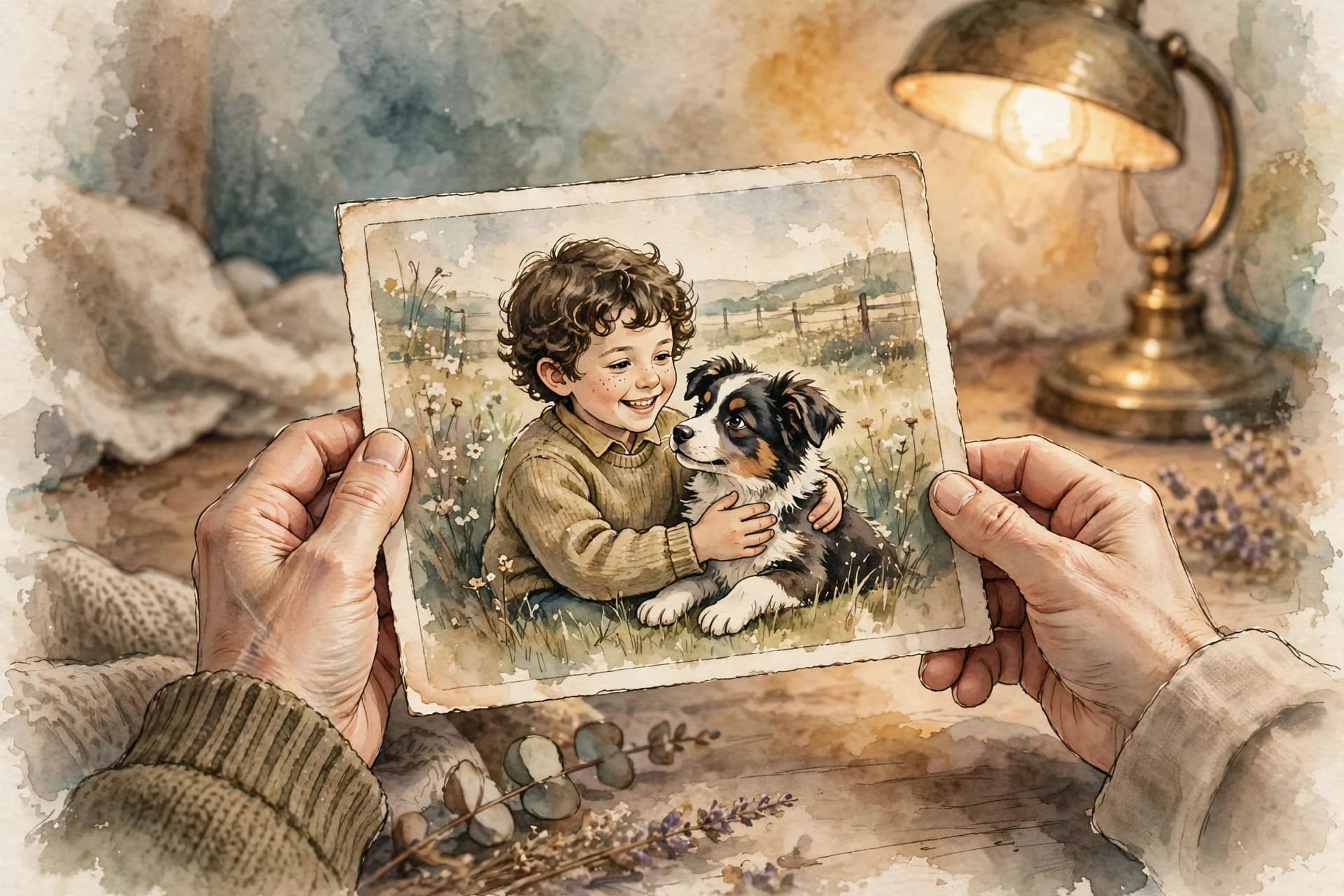
Memory needs a little work, or it fades into a warm blur. Start with the photos. Ask your parents to dig out the old albums, or the box of prints in the cupboard, and take photos of the photos with your phone. Make a small album of your own, ten or twelve pictures, from puppy to grey muzzle. Then ask for the stories. Call your parents and ask them to tell you one story each about the dog, and write them down. The time the dog stole the roast. The time they waited at the gate for the school bus. The time they slept on your bed through a thunderstorm. Stories are what keep a dog alive after the photos have faded. Keep one object in your own home, the collar, or a photo in a frame, where you will see it every day. And if you have children one day, tell them about the dog. A childhood dog who is talked about becomes part of the family story, and that is a kind of living on.
What can help?
Tell one person the whole story, from the beginning. Not the short version, the whole one: how the dog arrived, the trouble they caused, the nights they slept on your bed, the way they waited at the door. Telling the story out loud is one of the oldest ways humans grieve, and it works for a childhood dog better than almost anything else.
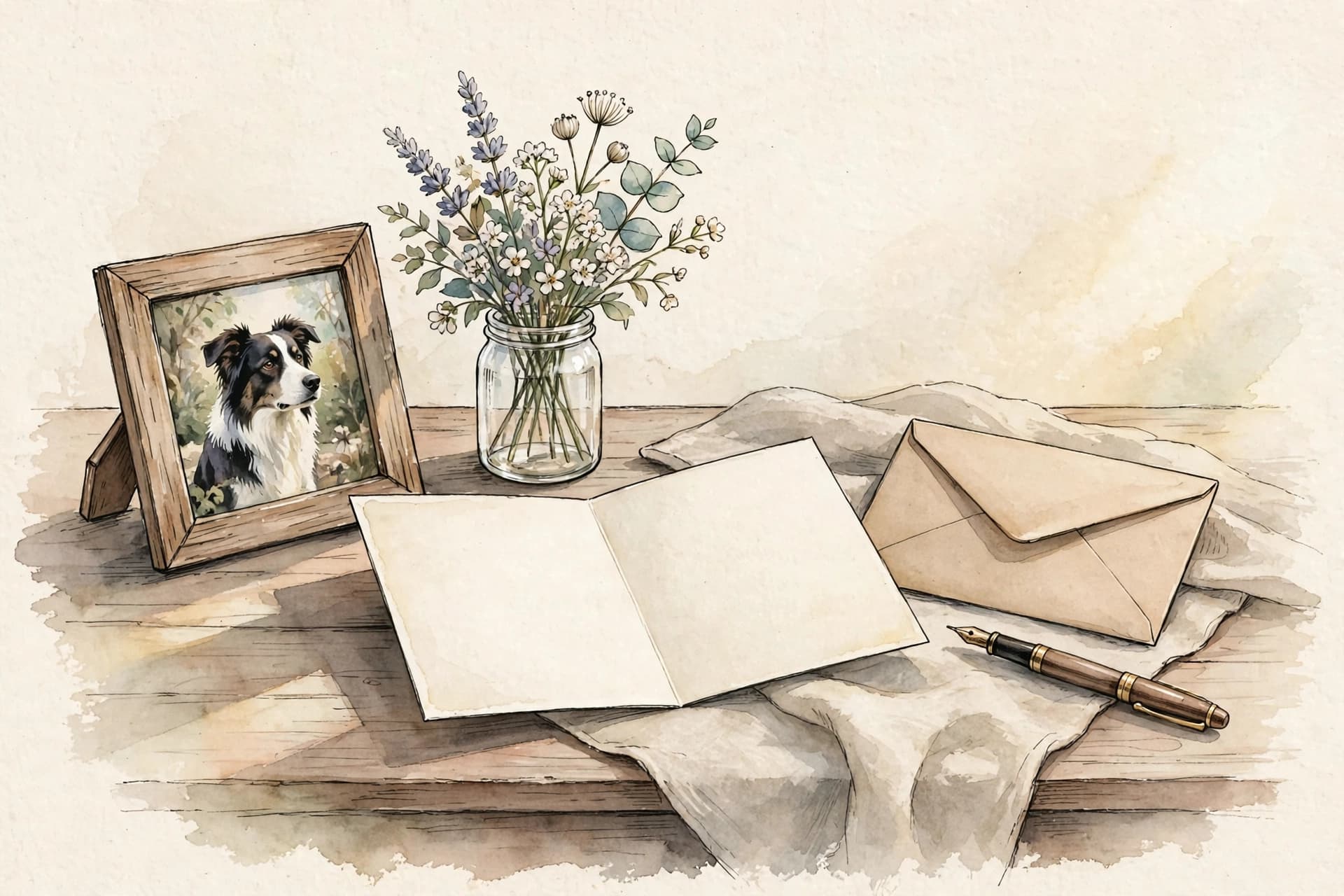
Write it down, if telling it feels too hard. A page or two, in your own words, about the dog and what they meant. Look at old photos on purpose, and let yourself cry. Keep one object, the collar or a photo, where you can see it. If you want words for a card, our collection of quotes for a dog who has died may help.
If writing feels hard, start with three prompts and answer each in a few lines. What was the first thing I remember about the dog? What was the funniest thing they ever did? What would I tell them now if I could? A page or two is enough. You are not writing a book. You are giving the grief somewhere to go. Another thing that helps is a project with an end: a photo album finished in one evening, a playlist of songs from the years the dog was alive, a short video of old clips set to a song they would have liked. A project gives your hands something to do while your heart catches up, and when it is finished, you have something to keep. If the grief still feels too big after a few months, and it is stopping you from sleeping or working, talk to someone. A grief counselor who takes pet loss seriously can help, and asking is not an overreaction.
Frequently asked questions
I did not get to say goodbye. Is that normal?
Yes, very common for adults who live elsewhere. Many childhood dogs die while their person is away at college or in another city. The guilt is real, and it is also misplaced. A lifetime of love is not cancelled by one absence.
My parents want another dog already. How should I feel about that?
However you feel. Their grief is theirs, and a new dog is not a replacement for the old one. Many families get another dog quickly because the empty house is unbearable. You are allowed to need more time, and they are allowed to need less.
Should I get a dog of my own now?
Not to replace the one you lost. A new dog deserves to be wanted for itself. When you are ready, you will know, because the thought of a new dog will feel like a beginning rather than a repair.
Why am I crying more now than when it happened?
Delayed grief is common, especially when the news arrives by phone and you are far away. The feeling often lands properly on the first visit home, or months later on a random Tuesday. It is not late. It is on its own schedule.
Will the house ever feel normal again?
It becomes a new normal. The house will not sound like it used to, but in time it will sound like a house again, and you will be able to visit it and remember the dog without the quiet knocking you flat.