Grief and the First Days · 8 min read · October 23, 2026
By the StayWith team
Why Does Losing a Dog Hurt So Much?
Losing a dog hurts so much because the loss is never only one loss. Psychologist Julie Axelrod explains that when a dog dies, an owner loses a source of unconditional love, a primary companion who structures daily life, and a protege: a being they raised, protected, and cared for much like a child. Add to that the routines woven into every day and the fact that society often refuses to recognise the grief, and the depth of the pain stops being a mystery. It matches the size of what was actually lost.
What did psychologist Julie Axelrod say about why dog loss hurts?
Julie Axelrod, a psychologist who writes about pet bereavement, names three losses inside the one event. First, unconditional love: your dog loved you without evaluation, on your worst days as fully as on your best, and few human relationships offer that. Second, a primary companion: for many people the dog is the being they spend the most hours with, talk to most, and organise life around. Third, a protege: you fed, trained, protected, and made decisions for this animal from youth to old age, so the bond carries the weight of parenthood as well as friendship.
When all three end on the same day, the grief is not excessive. It is arithmetic.
Why do daily routines make the loss feel so big?
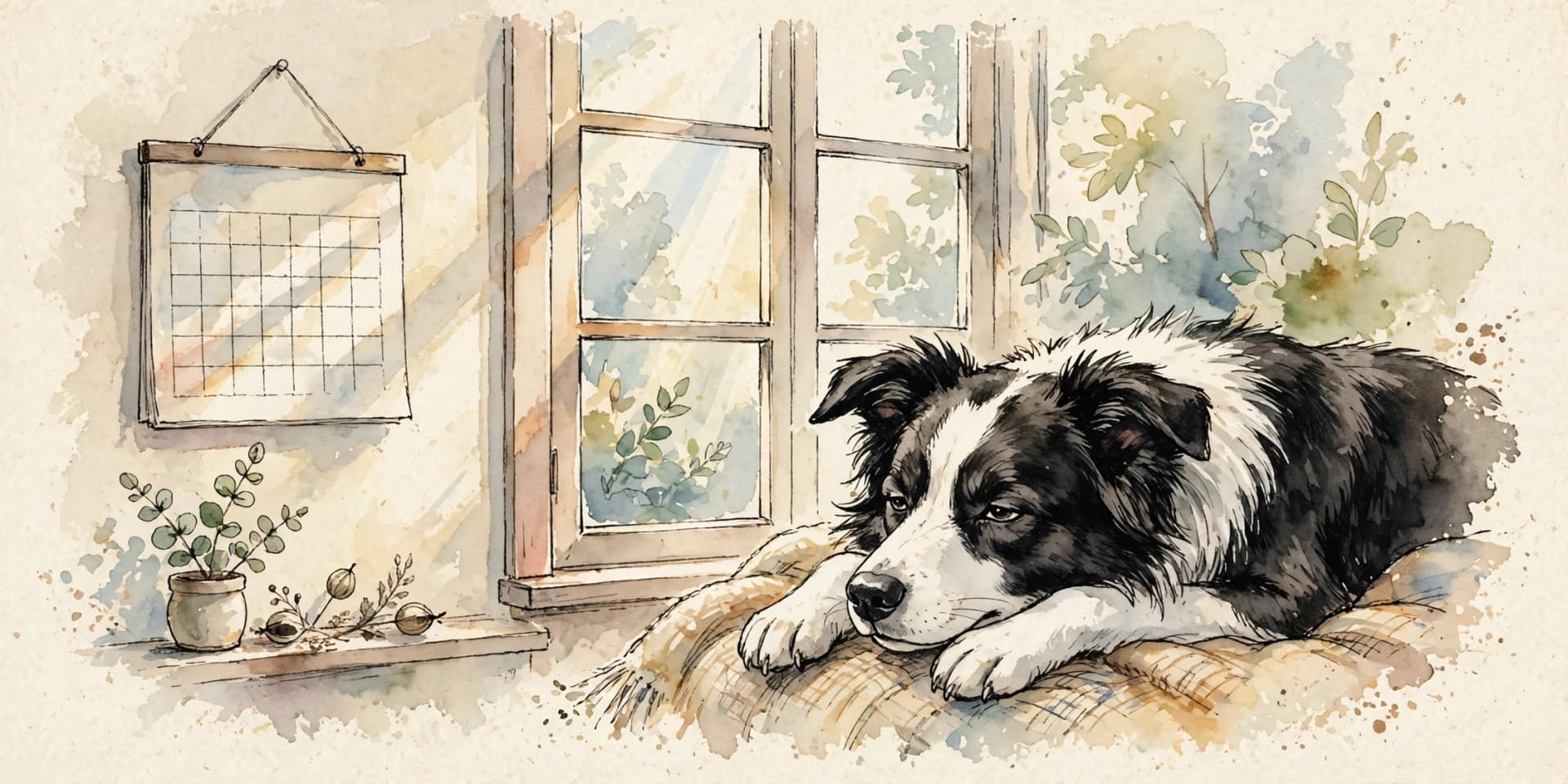
A dog is not an occasional presence. A dog is the alarm clock, the walk at dawn, the face at the window, the reason the evening has a shape. Owners commonly touch, feed, speak to, and think about their dog dozens of times a day, every day, for a decade or more.
So the loss repeats. It is there at the hour of the walk, at the sound the key makes in the door, in the passenger seat, in the corner where the bed was. Psychologists note that this is one reason dog grief can feel more relentless than other griefs: your environment announces the absence constantly. Understanding that pattern can steady you, and how long does grief last shows how long these waves usually take to space out.
There is also chemistry underneath the routines. A 2015 study in the journal Science found that when dogs and their owners gaze at each other, both release oxytocin, the hormone linked to bonding and trust. It is the same hormone involved in the bond between a parent and a child. Your dog was not just a habit. Your body was bonded to them in a measurable way, many times a day, for years. When that bond ends, the loss is physical as well as emotional, which is why grief can feel like withdrawal. Your body is missing something it was given every day.
Why does it hurt more when other people do not understand?
There is a name for this: disenfranchised grief. It is grief that society does not recognise or grant rights to. There is no bereavement leave for a dog. There is often no funeral, no cards, and sometimes there are jokes. Colleagues may expect you back at full speed in a day, and even kind people say things like you can always get another one.
That dismissal adds a second wound on top of the first. You are grieving, and you are also having to defend the grief. Many owners say the loneliest part is not the empty house but the sense that the size of their loss is invisible to everyone around them. It is not invisible. It is shared by nearly every dog owner who has stood where you are standing.
What did the 2026 PLOS One study find about pet loss?
A 2026 study published in PLOS One found that 21 percent of owners rated the death of their pet as the most distressing loss of their lives, ahead of other bereavements they had lived through. Read that again if you have been calling yourself dramatic. One in five owners, in a formal study, placed this loss first.
The same research tradition explains why. The bond with a dog often involves more daily caregiving and more constant companionship than many human bonds, and it ends without the rituals and recognition that carry people through human bereavement. Depth of grief follows depth of attachment, not species.
The study also answers the question owners ask themselves in the middle of the night: am I overreacting? The answer from the research is no. Grief follows attachment, and attachment is built from time, care, and daily presence. A dog you lived with for ten years holds more of your daily life than many people you know. The species of the one you lost matters far less than the size of the place they held. Knowing this does not remove the pain, but it removes the second pain, the shame about the first pain. That shame is what makes many owners grieve alone, and grieving alone is what makes grief last longer.
Does grieving this deeply mean something is wrong with you?
No. It means the attachment was real. People grieve in proportion to what a relationship held: the love, the time, the care, the identity. For many owners the dog was present for a whole chapter of life: childhood homes, first flats, marriages, children, illnesses, recoveries. Losing the dog can feel like losing the witness to all of it, which is why the stages described in the stages of grief can arrive with such force.
If the grief stays at full intensity for many months and blocks your daily life, that is a reason to seek support, not a verdict on your character. About 7.5 percent of bereaved owners may develop prolonged grief, and help exists for it.
What helps when the pain feels out of proportion?
First, retire the word proportion. Then do the practical things that carry weight: talk with people who use your dog's name, keep one small ritual, and let your body grieve with sleep, food, and daylight where you can. The ideas owners report as genuinely useful are collected in coping with losing a dog.
Most of all, stop measuring your grief against the opinions of people who have never loved a dog this way. The research is on your side. So is every owner who has ever cried in a parked car outside the vet and then driven home to a quiet house.
Why does losing a dog change how your home feels?
Because your home was a sensory map of your dog, and the map has gone blank. The sounds are gone first: nails on the floor, the sigh before sleep, the collar at the door, the drinking from the bowl in the next room. Then the smells fade: the warm dog smell on the sofa, the biscuit tin, the shampoo from bath day. Then the warm spot on the sofa goes cold, and the house, which used to hum quietly, falls silent. Silence after years of small sounds can feel louder than noise.
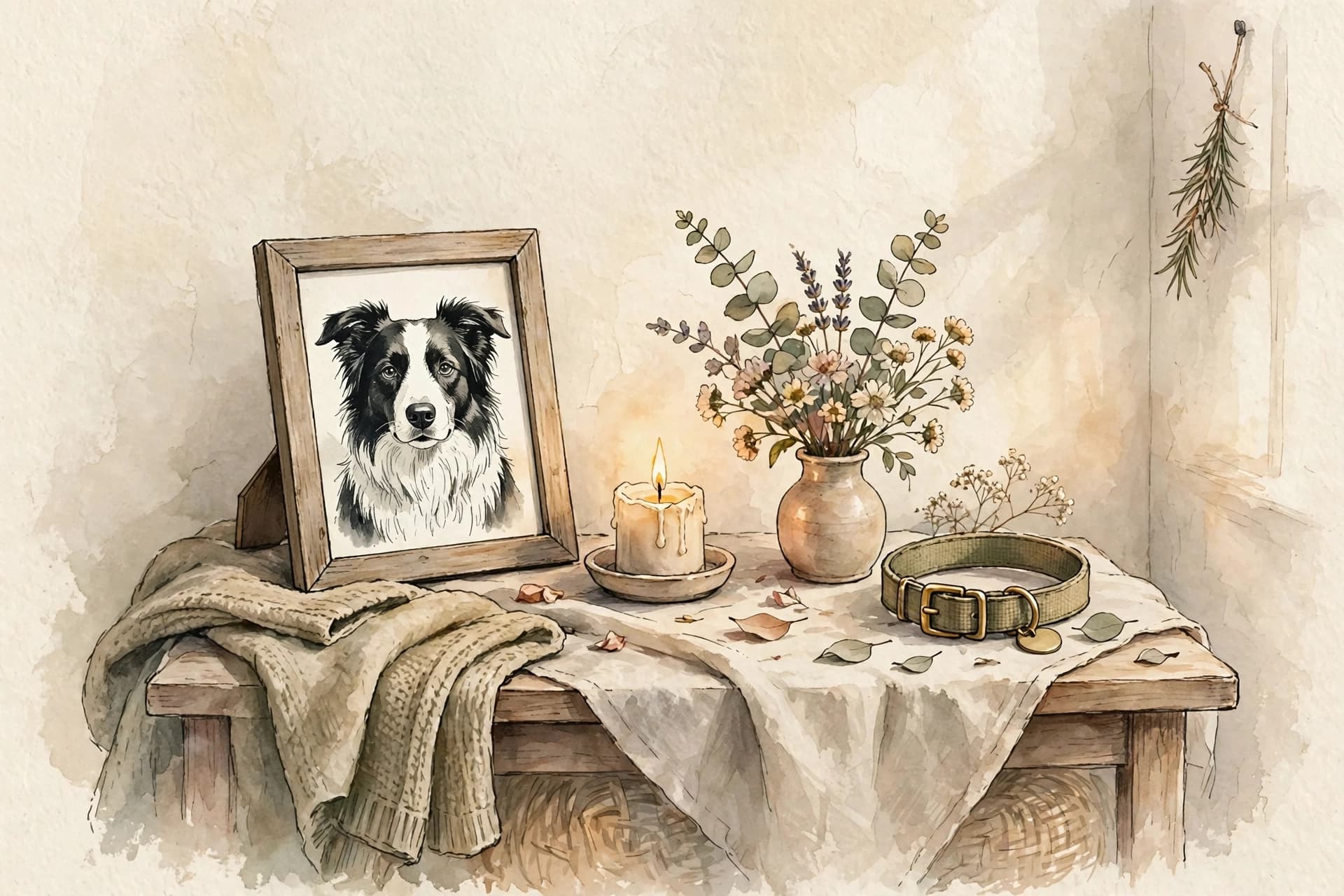
This is why the empty house hurts more than the empty calendar. You do not only miss your dog. You miss the version of your home that contained them. A few small changes can help the house become yours again. Rearrange one corner, so one room stops looking exactly like the room they died in. Move the bed, or fold the blanket and put it in a memory box. Play music in the evenings, so the quiet has something in it. Keep one ritual in the room, such as the evening tea in the chair where they used to sleep beside you, so the room holds a new habit alongside the old memory. The home slowly stops being a museum and starts being a home again.
Why can losing a dog hurt more than losing a person you barely knew?
Because grief follows attachment, not labels. The dog was there every single day, morning and night, for years. They saw you at your worst and asked for nothing. They were present for the ordinary hours that make up a life: the breakfasts, the bad days at work, the illnesses, the quiet evenings. A person you barely knew, however much you respected them, held almost none of your daily life.
Human relationships also carry complication: old arguments, unfinished business, distance. The bond with a dog is simple and complete, which is why its loss can feel so clean and so total. This is not a ranking of love, and it says nothing about how much you loved the person. It is a fact about daily contact. The one who shared your days is the one whose absence you feel in every hour of them, which is why the stages described in the stages of grief can arrive with such force after a dog dies.
Frequently asked questions
Is it normal for losing a dog to hurt as much as losing a person?
Yes, and research supports it. A 2026 study in PLOS One found 21 percent of owners rated their pet's death the most distressing loss of their lives. Grief follows the depth of the bond and the dailiness of the presence, and a dog scores high on both.
Why does losing a dog hurt more than I expected?
Because the loss is layered. Psychologist Julie Axelrod points to three losses at once: unconditional love, a primary companion, and a protege you raised and protected. On top of that, your home and routines repeat the absence all day long.
What is disenfranchised grief?
Disenfranchised grief is grief that society does not recognise or make room for. Pet loss is a classic example: no leave, few rituals, and comments that minimise it. The dismissal itself adds pain, which is why finding people who understand matters so much.
Why do I feel guilty for grieving a dog so much?
Because the culture quietly ranks grief, and dogs are placed low by people who have not lived the bond. The guilt usually fades when you meet other owners, read the research, or join a pet loss support group and hear your own story in other voices.
How long will this level of pain last?
According to PetMD, the acute phase of grief typically lasts 1 to 2 months, then softens into waves. In a 2019 study of 82 owners, most grieved for about a year or longer. If the intensity never softens across many months, support can make a real difference.