Grief and the First Days · 8 min read · October 23, 2026
By the StayWith team
The 7 Stages of Grief After Losing a Pet
The 7 stages of grief after losing a pet are shock, denial, bargaining, guilt, anger, depression, and acceptance. They are a map, not a timetable. Most people do not move through them in a neat order: stages overlap, repeat, and return on hard days. You might feel acceptance on Tuesday and anger again on Friday, and that is normal. Knowing the names of the stages helps mainly because it tells you that what you are feeling has been felt by millions of pet owners before you, and that each stage does pass.
What does shock feel like after losing a pet?
Shock is the numb first stage. You may feel strangely calm, or as if you are watching your life from outside it. Many owners keep doing small automatic things: putting water in the bowl, reaching for the lead, listening for the dog at the door, then remembering.
What helps: let the numbness be there. It is your mind dosing the pain. Eat something small, drink water, and let other people handle decisions where they can. The practical steps for the first day are listed in the first 24 hours, so you do not have to hold them all in your head.
What does denial feel like after losing a pet?
Denial sounds like this: it cannot be real, not yet, not my dog. You may expect the greeting at the door for weeks. Some owners avoid the room where it happened, or keep the bed and bowl exactly where they were, because moving them would make it final.
What helps: say the truth in plain words, to yourself or to one trusted person: my dog died, and I miss them. You do not have to say it often. Small doses of reality, repeated gently, are how denial loosens.
What does bargaining feel like after losing a pet?
Bargaining is the land of if only. If only we had caught it earlier. If only I had chosen the other treatment. If only I had insisted on one more test. Owners replay the last weeks like a film, searching for the moment where it could have gone differently.
What helps: write the if only thoughts down, then answer them with what you actually knew at the time. You made decisions with love and partial information, which is all any owner ever has. If bargaining centres on the timing of a final decision, euthanasia guilt works through that specific pain in depth.
What does guilt feel like after losing a pet?
Guilt is the stage pet owners feel most sharply. It attaches to everything: the day you were impatient, the walk you skipped, the signs you missed, the relief you may have felt when the suffering ended. Guilt often peaks at night, when the house is quiet.
What helps: name one concrete memory of your care for every guilty thought. The meals, the vet visits at midnight, the hand you held them with at the end. Guilt is usually love with nowhere to go, and it softens when it is spoken aloud to someone who understands.
What does anger feel like after losing a pet?
Anger can aim anywhere: at the illness, at the vet, at yourself, at friends who said it was just a dog, at other people walking their healthy dogs. Many owners feel ashamed of this stage, especially anger at people who meant well.
What helps: movement. Walk the old route, work in the garden, clean the garage. Anger is energy, and it settles faster when the body moves. It also helps to prepare one calm sentence for dismissive comments, such as: he was family to me, so this is a real loss. You do not owe anyone a longer defence.
What does depression feel like after losing a pet?
Depression in grief feels like heaviness and flatness. The routines that structured your day are gone, so time itself feels empty. Food tastes of little. Invitations feel impossible. Many owners say the evenings are worst, when the walk would have happened and the house settles into quiet.
What helps: shrink the day. One shower, one meal, one short walk outside. Keep a light on in the room where your dog used to sleep if the darkness bothers you. If the heaviness never lifts for many weeks, or deepens, please consider professional help. Grief and depression can overlap, and both deserve care.
Grief and clinical depression can look alike, and they can overlap. A useful difference counsellors point to is movement. Grief moves, even slowly: a bad morning and a slightly easier evening, a terrible Tuesday and a manageable Wednesday. Clinical depression tends to stay flat and unmoving for weeks, and it often brings a loss of interest in everything, not just in reminders of your dog. If nothing lifts at all for many weeks, or you feel worthless rather than sad, talk to your doctor. Both conditions deserve care, and both respond to it. You do not have to sort out which one it is before you ask for help.
What does acceptance feel like after losing a pet?
Acceptance is not forgetting, and it is not being fine. It is the stage where the fact of the loss stops arguing with you. You can tell a story about your dog and smile inside the sadness. You might move the bowl, or you might keep it forever, and either choice feels like yours rather than like a wound.
What helps: let acceptance arrive without forcing it, and do not feel disloyal when a good day comes. A good day is not the end of love. It is love in a quieter form.
Do the stages of grief happen in order?
No. The stages describe common weather, not a route. Most owners cycle: shock and denial early, guilt and bargaining in loops, anger surfacing at reminders, low periods that lift and return, and acceptance growing slowly underneath it all. A returning stage is not a relapse or a failure. The overall timeline research, covered in how long does grief last, shows grief commonly lasting about a year, sometimes far longer, and stages can appear anywhere along it.
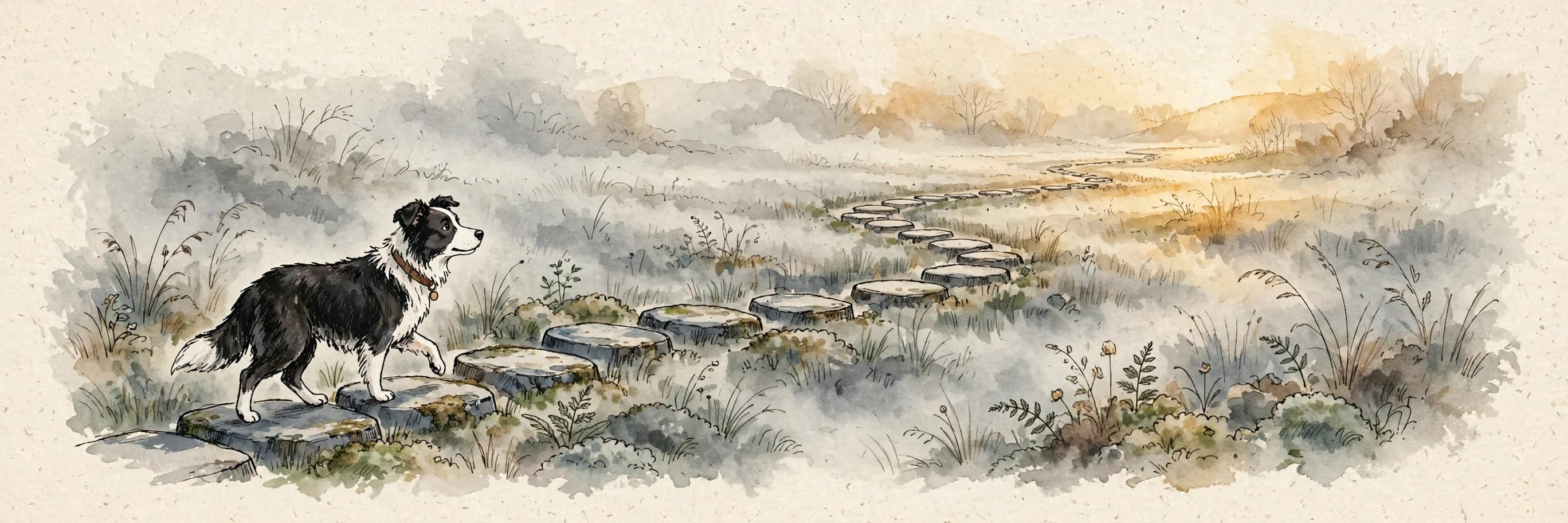
Certain moments pull stages back without warning. The anniversary of the death, the season your dog loved most, a vet visit with a new pet, a dog on the street that looks like yours, a song from the car rides. These are not setbacks. Think of grief as a spiral rather than a staircase: you pass the same places again, but each time from a little higher up, with a little more room around the pain. The second time anger visits, it usually stays for a shorter while than the first.
What if you feel numb for weeks?
Numbness is one of the most common and least talked about parts of grief. It can feel like nothing at all: no tears, no anger, no sadness, just a flat grey quiet. Some owners worry this means they did not love their dog enough. The opposite is usually true. Numbness is your mind dosing the pain, the same way shock does in the first days, only stretched across weeks.
Numbness is different from denial. Denial argues with the fact. Numbness accepts the fact and feels nothing about it yet. The feelings usually arrive later, often in a rush, on an ordinary day when something small breaks the seal. That rush can be frightening, but it is normal, and it passes.
A few grounding steps help while you wait for feeling to return. Cold water on your wrists. A short walk, even ten minutes. One small task finished, such as washing the dishes or paying one bill. Naming five things you can see in the room. These sound trivial, and they are, but they keep you in your body while your mind catches up.
Seek help sooner if numbness lasts for months with no feeling at all, or if you cannot function: you cannot eat, sleep, work, or care for yourself. Long, total numbness can be a sign of stuck grief, and a counsellor can help you thaw it safely.
How can you help a friend move through the stages?
Match your support to the stage they are in. In shock, do practical things: bring food, handle a phone call, sit with them without needing conversation. In guilt and bargaining, listen without arguing the facts. They do not need to hear that they did everything right. They need to hear that the decision was made with love. In anger, do not take it personally, even if it lands on you. In the low, flat stage, show up without trying to fix anything: a walk together, a meal, a text that says I am thinking of you and your dog. In acceptance, keep saying the dog's name. Remembering is the gift that lasts longest.
What not to say matters as much as what to say. Avoid you can always get another one, at least he lived a long life, and you should be over it by now. Each of these rushes the person past a stage they still need. If you want the full set of words that help, and the ones that wound, what to say to someone covers it in detail.
Frequently asked questions
How long does each stage of pet grief last?
There is no set length for any stage. Shock and denial often dominate the first days and weeks, guilt and bargaining can return for months, and acceptance usually grows slowly across the first year. Stages overlap and repeat, so measure progress in months, not days.
Is guilt a normal stage of grief after losing a pet?
Yes, guilt is one of the most common stages for pet owners, because we make real decisions for our animals, including medical ones. It usually softens when you weigh the full record of your care, not only the final days. If guilt about a final decision dominates everything, dedicated help exists for exactly that.
Why do I keep going back to anger after I felt acceptance?
Because the stages are not stairs. A reminder, a place, or a careless comment can bring anger back for an hour or a week, even long after acceptance has begun. Returning stages do not erase the progress you have made.
What if I never felt some of the stages?
That is common and fine. Some people skip anger, others never bargain. The 7 stages are a vocabulary for common experiences, not a checklist you must complete to grieve correctly.
When should grief about a pet lead me to get professional help?
Seek help if low mood, numbness, or longing stays at full strength for many months and blocks work, sleep, or daily care. About 7.5 percent of bereaved owners may develop prolonged grief. Counselling and pet loss support groups both help, and asking early is a strength.