Grief and the First Days · 8 min read · October 23, 2026
By the StayWith team
Euthanasia Guilt: Did I Do It Too Soon, or Too Late?
If you are asking whether you did it too soon or too late, you are feeling the single most common emotion that follows euthanasia: guilt. Vets who do this work every day will tell you there is rarely one single right day. There is a window of days, sometimes weeks, when saying goodbye is a kind and defensible choice. Almost every loving owner picks a day inside that window, and almost every one of them doubts it afterwards. The doubt is not proof that you chose wrong. It is proof of how seriously you took the decision.
Why does guilt hit so hard after euthanasia?
With most deaths, nature makes the timing decision and we simply live with it. Euthanasia hands the decision to you, and that responsibility is exactly what makes it an act of love and exactly what makes it hurt. You were the person your dog trusted most, and you used that trust to end their suffering. Your mind then turns the same facts over and reads them as betrayal. PetMD, in its guidance on coping with euthanasia guilt, describes guilt as the most common emotion owners report afterwards, ahead of almost everything else. You are not unusual for feeling it. You are the norm.
There is another layer to it. Euthanasia is one of the only decisions in a pet's life where love and ending point in the same direction, and the mind struggles to hold both at once. You can know the decision was kind and still feel like you betrayed them, because the feeling comes from the act of choosing, not from the quality of the choice. Owners who waited too long often feel the same guilt in reverse, wishing they had chosen sooner. That is the clearest sign the guilt is not a verdict on your timing. It follows the decision itself, whichever way you made it.
What is the difference between guilt and regret?
Guilt says you did something wrong. Regret says you wish the ending had gone differently. Most owners who say they feel guilty are actually carrying regret, and the difference matters, because regret does not accuse you. You can regret that your dog's last year was hard, regret that you could not give them more time, and still know you chose the kindest option available. A simple test helps: imagine a close friend told you this exact story about their own dog. Would you tell them they did wrong, or would you tell them they did a loving and painful thing? Almost everyone answers the second way for a friend and the first way for themselves. That gap is grief talking, not evidence. When the guilt spikes, name it correctly. Saying "I regret how it ended" is honest. Saying "I did wrong" is usually not, and your own kinder judgment of a friend proves it.
Is there really one right day, or a window of days?
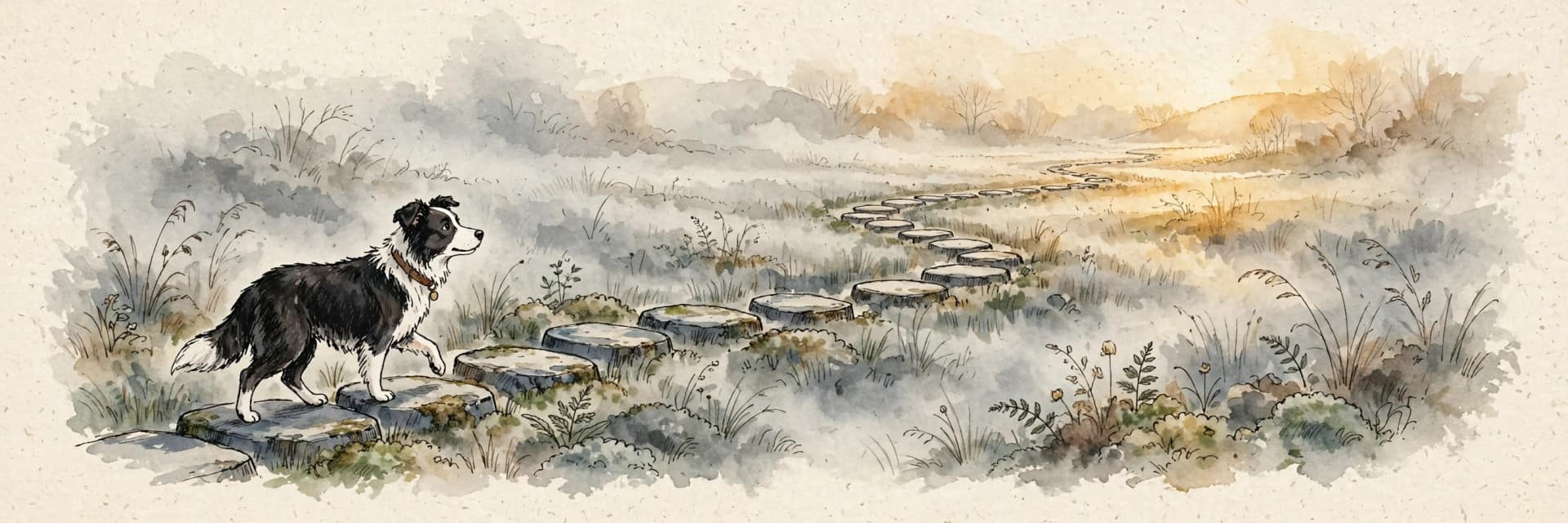
There is a window. Think of your dog's last chapter as a slope, not a cliff edge. At the top of the slope, they still enjoy most of life. At the bottom, they are suffering with no good days left. Somewhere along that slope sits a stretch of days where the kind choice and the bearable choice overlap. A goodbye inside that stretch is not too early and not too late. It is inside the window, and inside the window is the only standard any owner can honestly be held to. If you want to understand how vets judge where a dog sits on that slope, our guide on knowing when it is time walks through the quality of life scale they use.
What actually happens during euthanasia?
Many owners torture themselves with images of their dog being frightened or in pain at the end. The reality, as PetMD explains it, is gentler than the fear. First the vet gives a sedative, and your dog drifts into a deep, relaxed sleep. Then a second injection stops the heart, usually within seconds, while your dog is already fully unconscious. Your dog does not feel pain, does not feel fear, and does not know anything is wrong. The last thing they know is falling asleep near the people they love. If your memory of the room is fuzzy because you were crying, that is normal too. You were there. That is what mattered to them.
Why does my brain keep replaying the last weeks?
The replay is your brain searching for control. It replays the morning they did not eat, the walk they cut short, the vet visit you postponed, hunting for the moment where a different choice would have changed the ending. Each replay feels like new evidence, but it is the same evidence viewed through grief. A small exercise helps some owners. Take a sheet of paper and draw a line down the middle. On the left, write what you knew at the time: the vet's words, the dog's condition that week, the bad days outnumbering the good. On the right, write what you know now, which is mostly that you miss them and that the ending hurt. The left column is the evidence you decided on. The right column is grief, not new evidence. When the replay starts, look at the paper instead of arguing with your memory. The paper does not change its mind.
How do I stop replaying the moment they died?
The last minutes are the ones the brain replays most, because they are the most recent and the most charged. That is normal in the first weeks, and it is not a sign that something went wrong. It is your mind trying to file away a moment it does not yet know how to store. One thing that helps is deliberately giving it another memory to hold beside the last one. Each time the final minutes replay, follow them on purpose with a specific good memory: the morning walk, the greeting at the door, the exact way they slept on your feet. Do it the same way every time, like a short routine, and the good memory starts to share the space. If the images come as sudden, vivid flashes that stop you functioning, or if they are still as strong after two or three months, talk to a counsellor who understands pet bereavement. Intrusive images that will not soften are something a professional can help with, and asking is not weakness. It is the same care you gave your dog, turned toward yourself.
What can I say to myself when the guilt spikes?
Exact words help more than vague comfort. Try these, out loud if you can:
None of these will erase the feeling in one reading. They are rails to hold while it passes, and it does pass in waves rather than all at once, as our piece on the stages of grief describes.
- "I made this decision with the information I had, and I made it out of love."
- "Waiting for total certainty would have meant waiting for more suffering."
- "A peaceful ending a little early is kinder than a painful one a little late."
- "My dog did not keep score. My dog trusted me, and I used that trust gently."
- "Guilt is the price of being the one who loved them enough to decide."
Does writing a letter to my dog actually help?
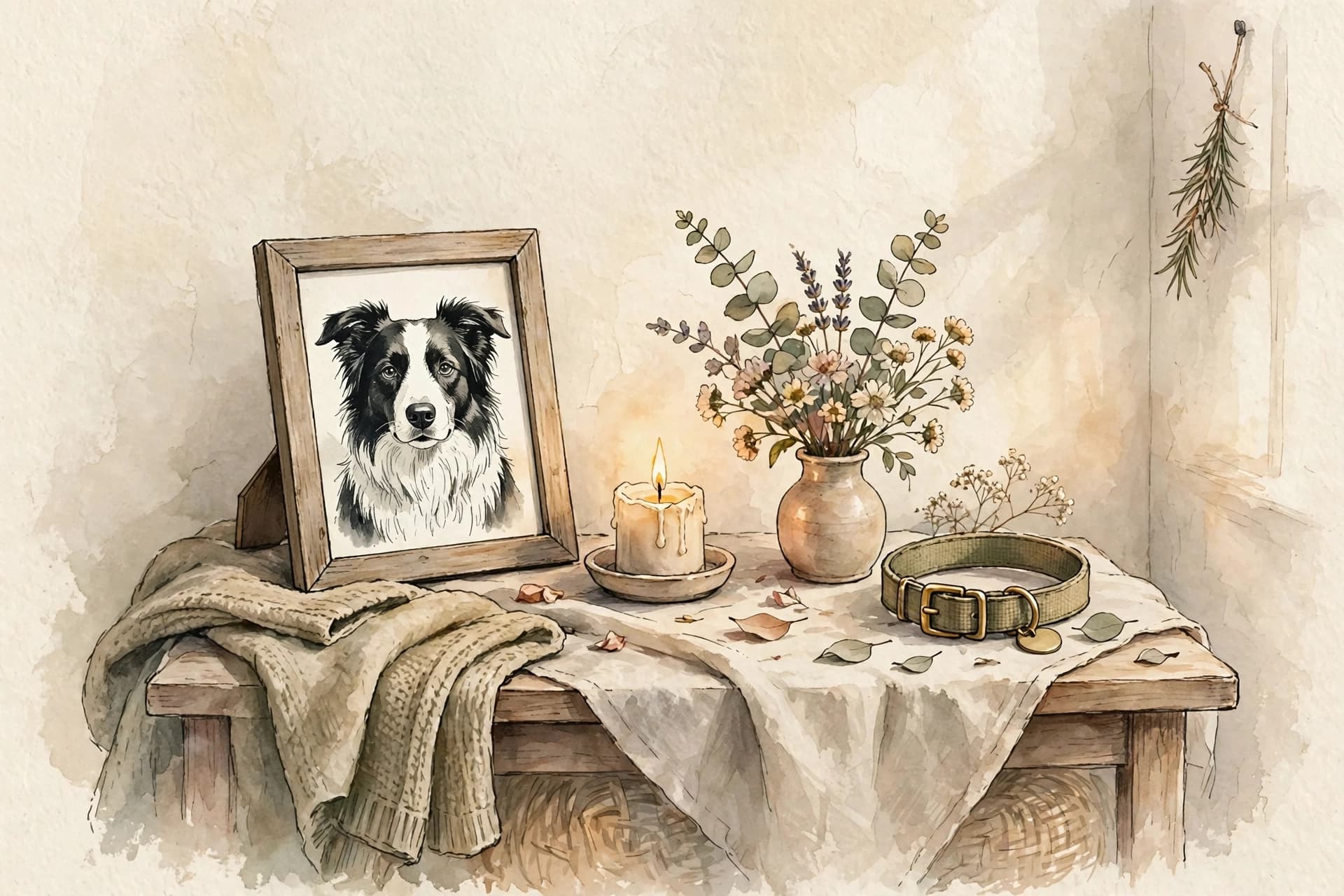
For many people, yes, because guilt shrinks when it is given specific shape instead of a general fog. Write the letter by hand if you can. Thank them for specific things: the mornings, the greeting at the door, the exact spot they chose on the sofa. Say sorry for the specific things you keep replaying, and then answer each one the way you would answer a friend. End with what you would do the same again, because most of the list is that. Keep the letter with their collar or their photo. Some people read it on the anniversary each year, and find it hurts less every time.
Should I talk to my vet afterwards?
Yes, and you will not be the first. Vets expect a follow up call from loving owners, and many welcome it. You can ask what they saw medically that you could not see at home, whether waiting would have changed anything, and what the likely next weeks would have looked like. Hearing "you spared them the worst part" from the person who examined your dog carries a weight that comfort from family cannot. If your practice has a nurse or a bereavement contact, they can also point you to local pet loss support groups.
When does guilt mean I should look for more support?
Guilt that softens over weeks is normal grief. Guilt that still stops you sleeping, eating, or leaving the house after a couple of months deserves company. Pet loss support groups exist in most cities and online, and many are free. A counselor who understands pet bereavement can help too, and there is no threshold of suffering you must reach before you are allowed help. Our guide on coping with losing a dog gathers the things grieving owners say actually helped them.
Frequently asked questions
Is it normal to feel relief as well as guilt?
Yes, completely. Relief that their suffering is over and relief that the waiting is over are human responses, and they sit alongside love rather than replacing it. Feeling relief does not mean you loved them less.
What if I feel I did it too soon because they had a good last day?
A good final day is common and does not rewrite the weeks before it. Many owners deliberately choose a good day so their dog's last memory is a pleasant one, and vets often say that is a gift, not a mistake.
What if I waited too long and I know it?
Then you are a person who found it hard to let go of someone they loved, which is one of the most forgivable things in the world. Your dog knew your love for years, not your timing for one day, and those years are what they carried.
Will the guilt ever fully go away?
For most people it fades from a constant ache into something occasional and much softer, often within the first year. It tends to return briefly on anniversaries and then pass faster each time.
Should I get another dog to help with the guilt?
Only when you want a new dog for their own sake, not as a repair for this grief. A new dog can be a joy later, but guilt is worked through, not adopted away.