Grief and the First Days · 8 min read · October 23, 2026
By the StayWith team
Signs Your Dog Is Dying: What the Last Days Look Like
The last days of a dog's life usually look quieter, not dramatic. Most dogs eat and drink less, sleep far more, move less, and slowly pull inward, spending long stretches resting and fewer moments engaged with the house. Breathing often changes, becoming faster at rest, slower and deeper, or uneven with pauses. Many lose interest in walks, greet you less at the door, and may have accidents indoors for the first time in years. None of this means you have failed them. It is the body winding down, and your job in these days is mostly comfort, calm, and closeness.
Why is my dog eating and drinking less?
Appetite is usually the first thing to go. As the body slows, it needs less fuel, and digestion becomes hard work. PetMD notes that a dying dog may refuse food entirely in the final days, and that this is the body conserving energy rather than a problem you must fix. Offer small amounts of something tempting and easy, warmed slightly so it smells stronger. Keep fresh water within reach of their bed so they never have to travel for it. If they stop drinking altogether, wetting their lips and gums with a damp cloth is a small kindness they can still feel.
Why is my dog withdrawing or hiding?
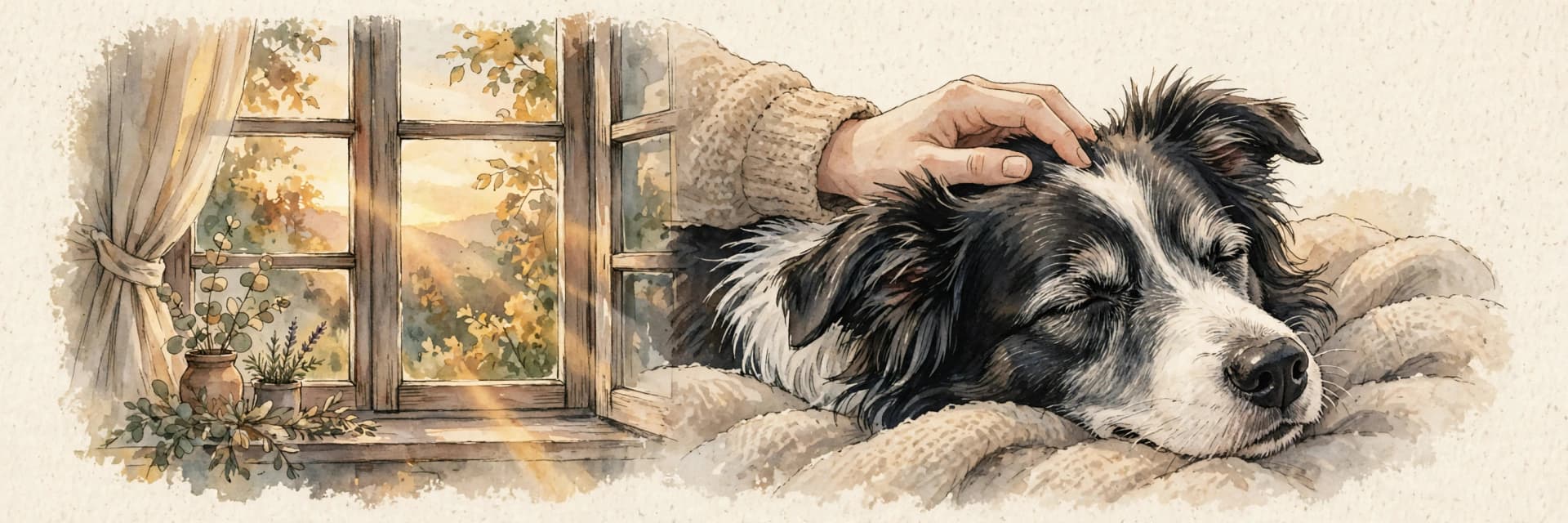
Many dying dogs seek out quiet corners, lie facing a wall, or stop following you from room to room. This withdrawal is instinct, not rejection. A body that feels vulnerable looks for a safe, still place, and a tired brain has less room for company. Respect it without disappearing. Sit near them rather than over them. Read in the same room. Let them choose closeness on the terms they can still manage, and do not be hurt if the dog who shadowed you for a decade now sleeps through your arrival. The love has not changed. The energy has.
What breathing changes are normal, and which are not?
Breathing in the last days often becomes irregular. You may see faster panting at rest, long slow breaths, or pauses between breaths that stretch and make your own heart stop. Some of this is expected as circulation and temperature control weaken. What is not normal, and deserves a call to your vet the same day, is breathing that looks like hard work: ribs heaving, neck stretched out, gums turning pale, grey, or blue, or a dog who cannot settle because every position makes breathing harder. It helps to know the numbers. A resting dog normally breathes about 10 to 30 times a minute. Count the rise and fall of the chest for 15 seconds and multiply by four, when your dog is asleep and not dreaming. A resting rate that stays above 40 breaths a minute, or breathing with the mouth open at rest, deserves a call to your vet the same day, because it can mean pain, fluid, or distress that medication can ease. Write the number down each evening. A rising trend over several days tells your vet more than any single count.
What does the last 24 hours usually look like?
The final day is often the quietest. Most dogs sleep almost the whole time, waking briefly, then sinking back. Breathing slows and may pause for a few seconds between breaths. Their body feels cooler, especially the ears and paws, and they may not respond to their name or to food at all. Some dogs have one last rally, lifting their head, eating a little, even trying to stand, and then settle again. That rally can be a gift of a final good hour, and it does not mean they are recovering. What helps most in these hours is staying close and keeping things calm: your hand where it has always rested, your ordinary voice, the house quiet. If you are unsure whether what you are seeing is peaceful or distressing, call your vet and describe it. They can tell you in a minute, and that minute spares hours of worry.
Why can my dog suddenly not get up, or not settle?
Mobility fades in stages. Stairs go first, then slick floors, then standing itself. You may need to support their back end with a towel used as a sling for trips outside. The opposite sign confuses owners more: restlessness. A dying dog may pace, circle, get up and lie down again and again, or whine in the night. Restlessness often means discomfort, nausea, or confusion, and your vet can adjust pain relief or add a mild sedative. A dog who sleeps most of the day and night is usually more comfortable than a dog who cannot settle at all.
What about accidents, and changes in temperature?
Incontinence is common at the very end, because muscles relax and because getting outside costs more than the dog has. Use washable bedding or pads under them, clean them gently and often, and never scold. Skin stays healthier kept dry. You may also notice their ears and paws feel cool. As circulation slows, the body protects the core and lets the edges cool first. A light blanket over them helps, though many dogs kick blankets off even now, which is fine. Let them choose.
What signs mean I should call the vet now?
Call the same day, or use an emergency line at night, if you see any of these: struggling to breathe or breathing with the mouth open at rest, crying out when touched or moved, a seizure, collapse and inability to rise, repeated vomiting when they cannot keep water down, or a sudden change where they seem distressed rather than tired. These are comfort emergencies. Your vet may adjust medication, see your dog the same day, or talk honestly with you about whether the kindest step is near. If that conversation is coming, our guide on knowing when it is time can help you prepare for it.
How do I prepare my home and my family for the last days?
A little preparation makes the last days calmer for everyone. Move their bed to the room where life happens, on the floor, away from stairs and drafts, with water within reach and washable bedding underneath. Write your vet's number and the after hours emergency number on a card on the fridge, so nobody has to search for it at 2 a.m. If there are children, tell them simply and ahead of time: the dog's body is getting very tired, the dog will die soon, and it is okay to feel sad and to ask questions. Let the other pets be near if they want to be. And decide in advance, as far as you can, who will be there at the end and what you will do in the hours after, so those choices are not made in the middle of grief. Our guide on the first 24 hours covers the practical steps for afterwards.
How can I keep my dog comfortable at home?
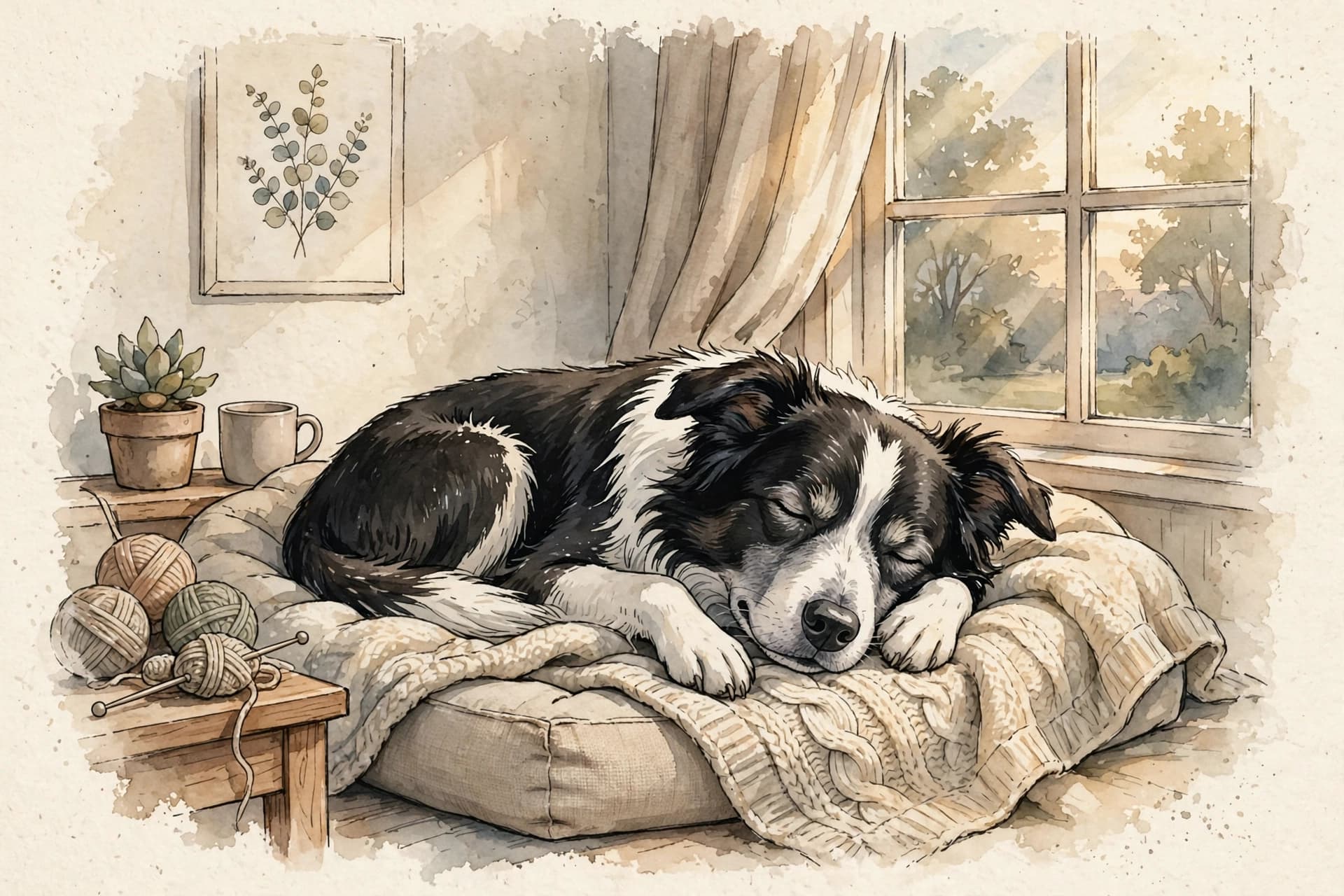
Keep their world small and familiar. A thick, soft bed on the floor in the room where life happens, away from stairs and noise. Water and a small bowl within reach. Help outside little and often rather than in long efforts. Keep their routine as normal as it can be, because predictability is calming. Talk to them in your ordinary voice. Let visitors be few and quiet. And give prescribed pain relief on schedule, not only when they seem sore, because steady medication works far better than chasing pain after it arrives, a point PetMD makes often in its end of life guidance. Grieving while they are still here is its own burden, and our piece on anticipatory grief is written for exactly these days.
Keep a small comfort checklist on the fridge so tired minds do not have to remember. Pain relief given on schedule, not only when they seem sore. Water within reach, refreshed twice a day. Bedding dry and clean. A short trip outside every few hours, with a towel sling if they need help standing. Their favourite blanket, your worn jumper beside them for your smell, and the house kept at a steady, warm temperature. Tick each one off morning and evening. The list looks simple, and that is the point. In the last days, simple done well is the whole of good care.
Is it okay to just sit with them and do nothing?
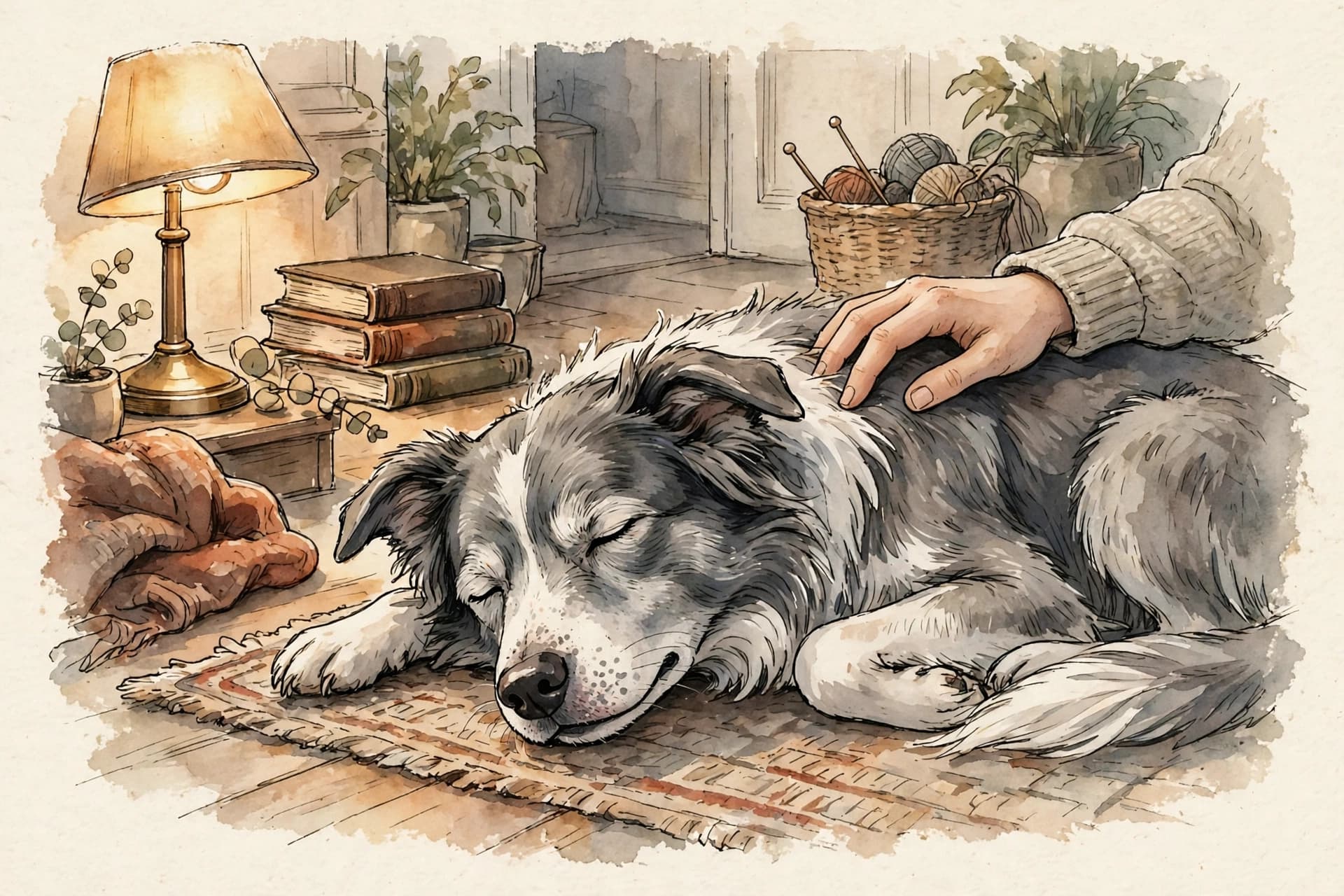
It is not only okay. For most dogs, it is the whole wish list. Your presence, your smell, your hand resting where it has always rested: this is the substance of the life they loved, delivered in its simplest form. You do not need to perform these days correctly. You need to be findable, gentle, and near. When the time comes, you will know you gave them the ending every dog would choose if they could: at home, unhurried, with their person close. And when you need it, our guide on the first 24 hours covers the practical hours that follow.
Frequently asked questions
How long does the dying process take in dogs?
It varies from days to a few weeks once clear signs appear, depending on the illness. A slow fade is most common with age and organ failure, while some conditions move much faster.
Do dogs know they are dying?
Nobody can say for certain, but dogs do seem to sense that their body is failing and that the household feels different. What they clearly respond to is your calm and your presence.
Should I let my other dog see what is happening?
Usually yes. Letting a housemate dog sniff and be near, during and briefly after, helps them understand the absence rather than search for it. Keep it calm and supervised.
Is it wrong to hope it happens in their sleep?
It is one of the most common hopes loving owners have, and there is nothing wrong with it. If nature does not grant it, choosing a peaceful assisted ending is not a failure of that hope.
My dog rallied and ate a full meal. Does that mean they are getting better?
A brief rally near the end is well known and can be a gift of a good day rather than a recovery. Enjoy it with them, and keep judging the overall pattern, not the single day.