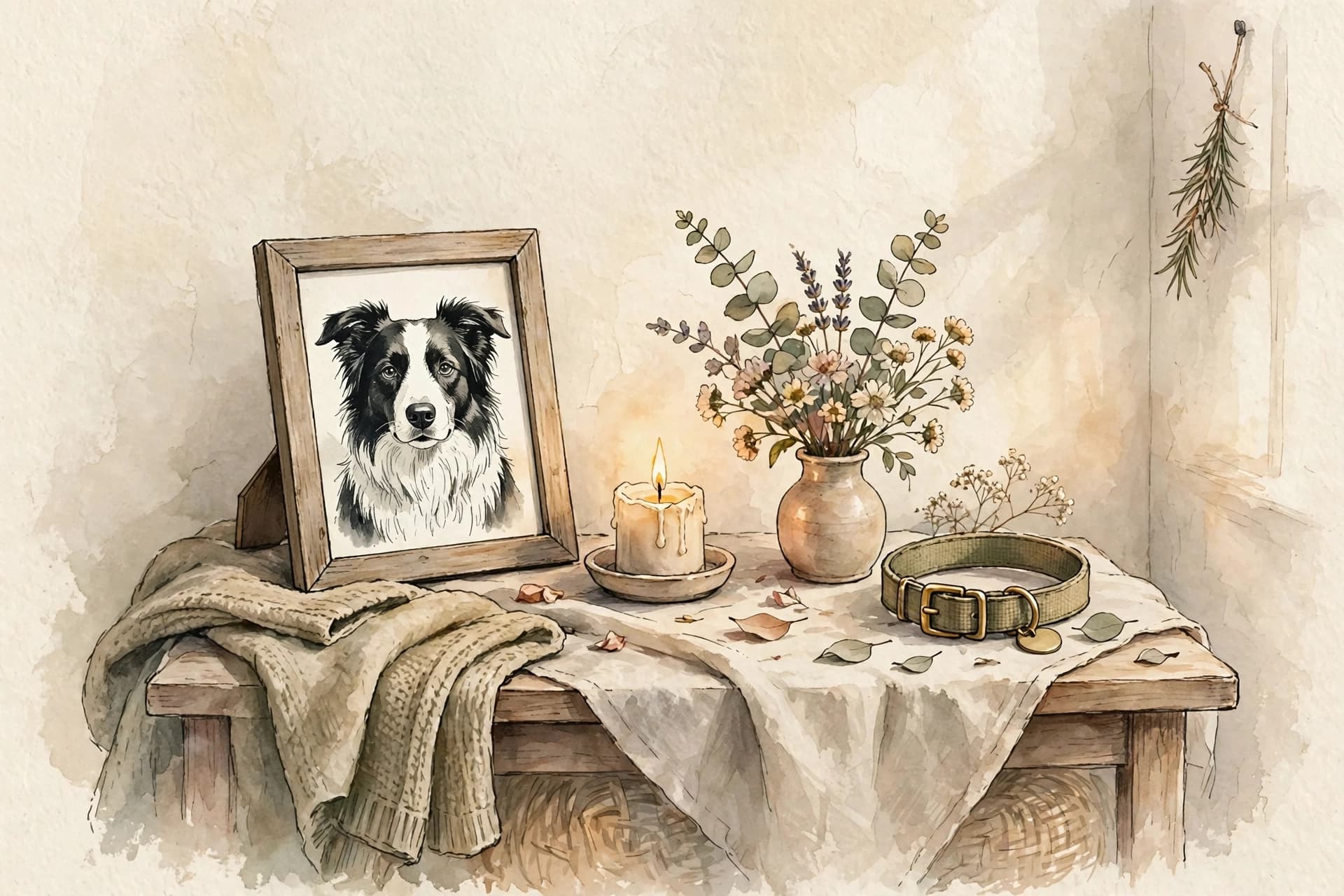
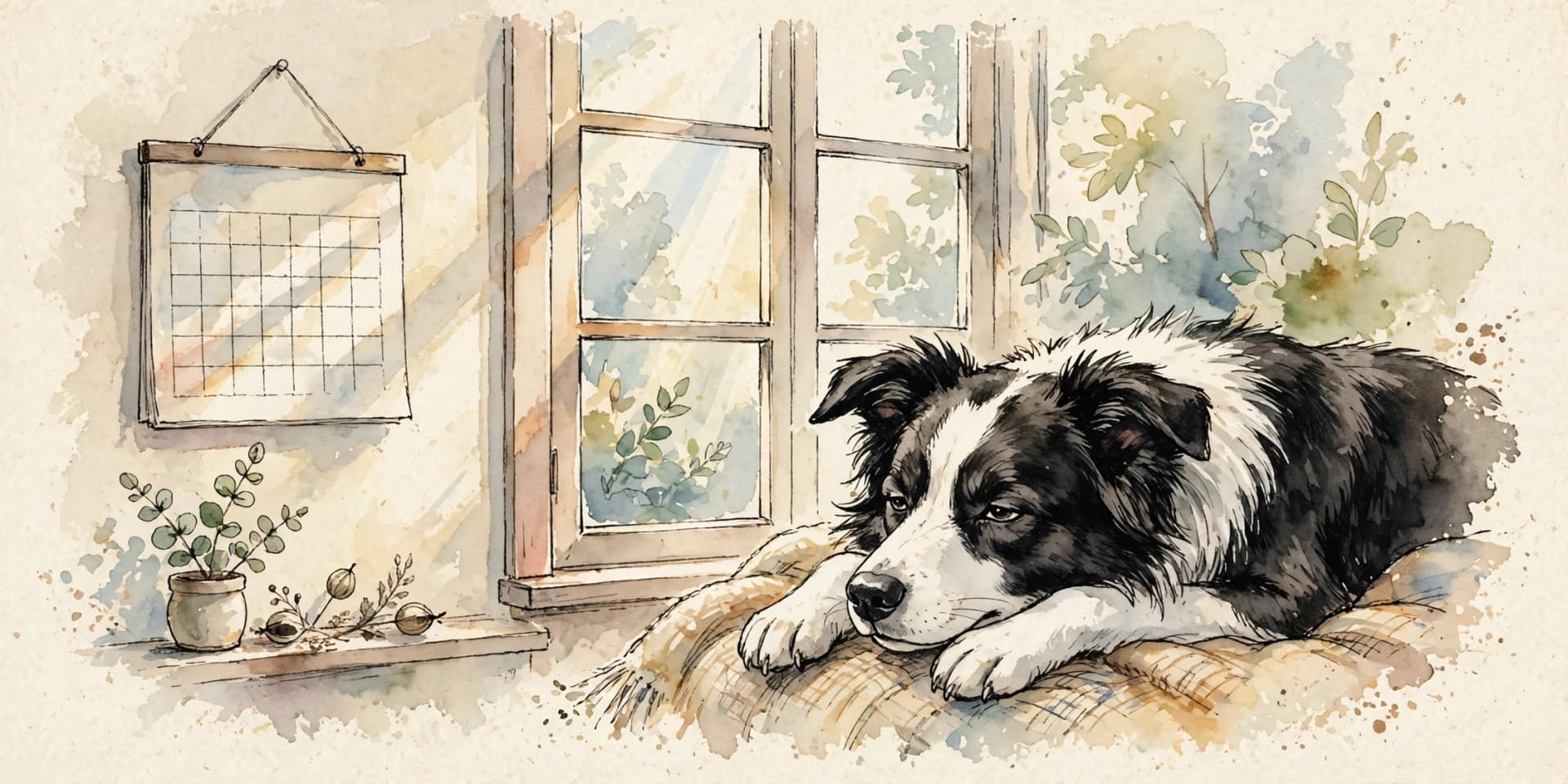
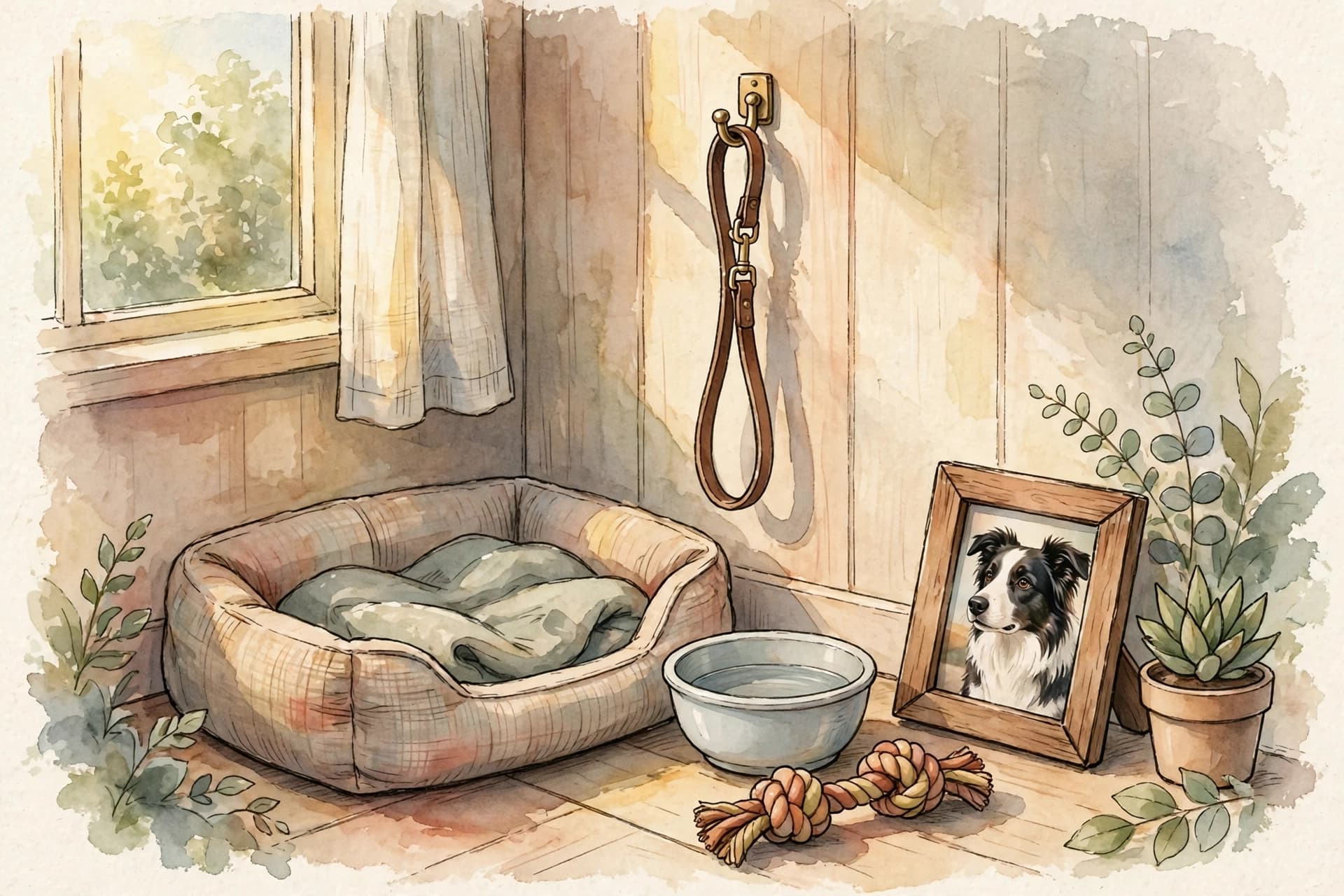
Grief and the First Days · 8 min read · October 25, 2026
By the StayWith team
The First Night Without Your Dog
The first night is usually the hardest night, because the house keeps running the routine your dog used to run: the evening walk, the last trip outside, the settling down by the bed. Nothing in the house has changed, and everything has. Getting through it is mostly about keeping one or two small anchors and letting the rest be hard.
Why is the first night the hardest?
Because the day has distractions and the night does not. During the day there are arrangements to make, people to tell, a vet to call, a grave or a cremation to arrange. The night is when all of that stops and the absence starts talking. The house is quiet in a way it has not been quiet for years, and the quiet has a shape: the shape of a dog who used to fill it.
It is also the first time the routine breaks in full. Dogs are creatures of habit, and so are their owners, and your body has years of muscle memory for the evening. Your hand reaches for the leash. Your feet turn toward the door. Your ears listen for the nails on the floor.
The quiet itself is strange. Houses make small sounds all the time, the heating clicking, the fridge humming, the pipes settling, and for years your dog's breathing and shifting covered most of them. On the first night, you hear the house properly for the first time in years, and it sounds empty, because it is. Some owners leave a radio on low, or a fan running, just to give the rooms a sound that is not silence. It is not a cure, but it takes the edge off the listening.
Should I stay at home or go somewhere else for the first night?
Most owners stay at home, and most owners who stay are glad they did, even though the night is hard. Home is where your bed is, where your things are, and where the routine lives. Going through the first night in your own house means the second night is a little less strange, because you have already survived the worst of it in the place where it happened.
But staying is not right for everyone. If the house feels unbearable, or if you live alone and the silence is the worst part, going to a friend's house or having someone stay with you is a good choice, not a weak one. A friend's kitchen table, a spare bed, a familiar voice in the next room, these are real comforts. What matters is that you are not alone with the quiet if alone is what scares you most. If you do go elsewhere, come home in the morning, not in the middle of the night. The house is easier to face in daylight, with a plan for the day ahead.
What do I do with the evening walk?
Take it anyway, if you can. Many owners say the walk is the worst part of the first night and also the thing that got them through it. The route is the same, the air is the same, and for twenty minutes your body is doing something familiar instead of sitting in a quiet house. You do not need the leash. You do not need a reason.
If you cannot face the walk, do something else with your hands and your feet. Wash the dishes. Fold laundry. Make tea slowly. The point is not the task. The point is motion, because a body in motion cries less than a body sitting still in the room where the bed used to be. Our guide on how to cope with losing a dog gathers more of these small, practical anchors from owners who have been through the first week.
What do I do about the last trip outside?
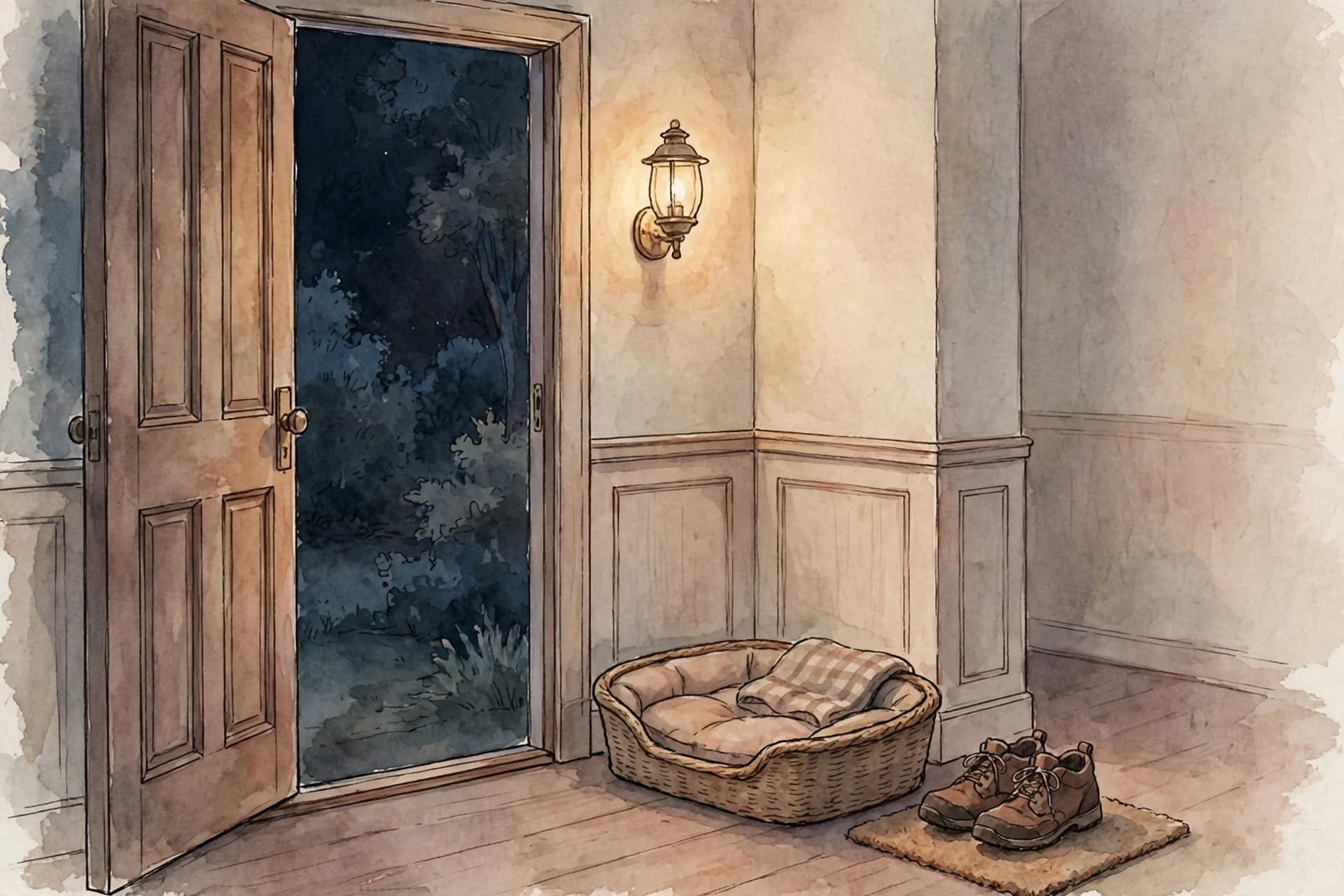
Every dog had a last trip outside, usually in the evening, usually the same small routine: the back door, the garden, the patch of grass, the sniffing, the coming back in. On the first night without them, that door still opens and the garden is still there, and the absence is sharpest in that small, ordinary moment.
Some owners make a small ritual of it. They open the door, step outside, and say goodnight out loud, to the garden and to the dog. It sounds strange, and it helps more than standing in the kitchen and pretending the routine never existed. Others light a candle by the door, or leave the porch light on for a while, the way they used to when the dog was out late. There is no right ritual. The point is to mark the moment instead of walking past it. The last trip outside was part of your day for years, and it deserves a goodbye of its own, even a quiet one.
How do I sleep when the house is quiet?
Sleep is often the hardest part, and it is normal for it to be broken for a while. A few things that help:
The first night is not a test you pass or fail. It is a night you get through, however you get through it.
- Leave a low light on, or a quiet radio, or a podcast you have already heard. Silence is the problem, and a gentle sound fills it without asking anything of you.
- Keep their bed where it is for tonight. You can decide about it tomorrow, or next week. Tonight is not the night for decisions.
- If you usually slept with your dog on or near the bed, put a pillow or a folded blanket where they used to lie. It stops your hand from reaching into empty space in the dark.
- Get up if you cannot sleep. Lying awake and listening to the quiet makes it worse. Make tea, sit in the kitchen, look at one photo, and go back when you feel tired again.
- Do not reach for alcohol or sleeping pills on the first night unless you already use them. They blur the grief instead of resting you, and the morning after is usually worse.
What about the first morning?
The first morning has its own sting. You wake up and for half a second you forget, and then you remember, and the remembering is its own small loss all over again. The feeding routine is the sharpest part: the bowl, the measuring, the waiting by the door while they eat.
Keep one piece of the morning routine and let the rest go. Make your own breakfast properly, even if you do not feel hungry. Open the curtains. Step outside for a minute. If you work from home, consider working from a cafe for the morning, just to be around other living things. If you have to go to work, the first day is the hardest day to go back, and it is okay to ask for a later start. PetMD notes the acute phase of grief typically lasts one to two months, so the first week feeling impossible does not mean the whole year will feel this way.
What helps in the first week?
Small things, done on purpose, one at a time:
One warning worth knowing: the second night is often worse than the first. The first night has shock on its side, and shock carries you. The second night, the shock has worn off and the grief has moved in properly. If the second night feels harder, that does not mean you are going backwards. It means the grief is doing its real work. The third night is usually when the tiredness catches up, and tiredness, for once, is a friend. Let yourself sleep when it comes.
- Keep the routine that is still yours. Your meals, your shower, your walk, even if the walk is shorter and lonelier. Routine is a raft.
- Write them a letter. Not a grand one. Just what happened today, what you miss, what you are grateful for. Owners who do this often say the first week is when it helps most.
- Tell one person the truth about how bad it is. Not "I am fine," but "last night was awful."
- Say their name out loud. At the door, at the bowl, on the walk. Grief researchers who study continuing bonds say that keeping the relationship alive in small, ordinary ways helps more than trying to let go quickly. Saying their name is one of the simplest ways to do that.
- Do not decide anything big this week. Not about the bed, not about the bowl, not about another dog. The guide on what to do with your dog's things can wait until you are ready for it.
Frequently asked questions
Is it normal to hear them, or think I heard them?
Yes, very normal. Many owners hear nails on the floor, or a sigh by the bed, or a jingle from the collar for days or weeks afterwards. Your brain is used to those sounds, and it fills in the gaps. It is not a sign of anything wrong. It is a sign of how well you knew them.
Should I sleep in a different room?
Only if your room feels unbearable. Most owners do better staying where they are, because a new room adds strangeness on top of grief.
What if I have children in the house?
Let them see you sad. Children who see a parent cry and recover learn that grief is survivable. Keep their routine steady, answer their questions simply, and let them sleep with a photo or a toy if it helps.
What if I live alone and the silence is the worst part?
Invite someone over, or go to someone else's house for the evening. If that is not possible, call a friend and leave the phone on speaker while you make dinner.
Does the first night get easier if you have another pet?
Sometimes, and sometimes it is harder, because the other pet is grieving too and the house still feels short by one.