Memorial and Continuing Bonds · 8 min read · October 25, 2026
By the StayWith team
What to Do With Your Dog's Things After They Die
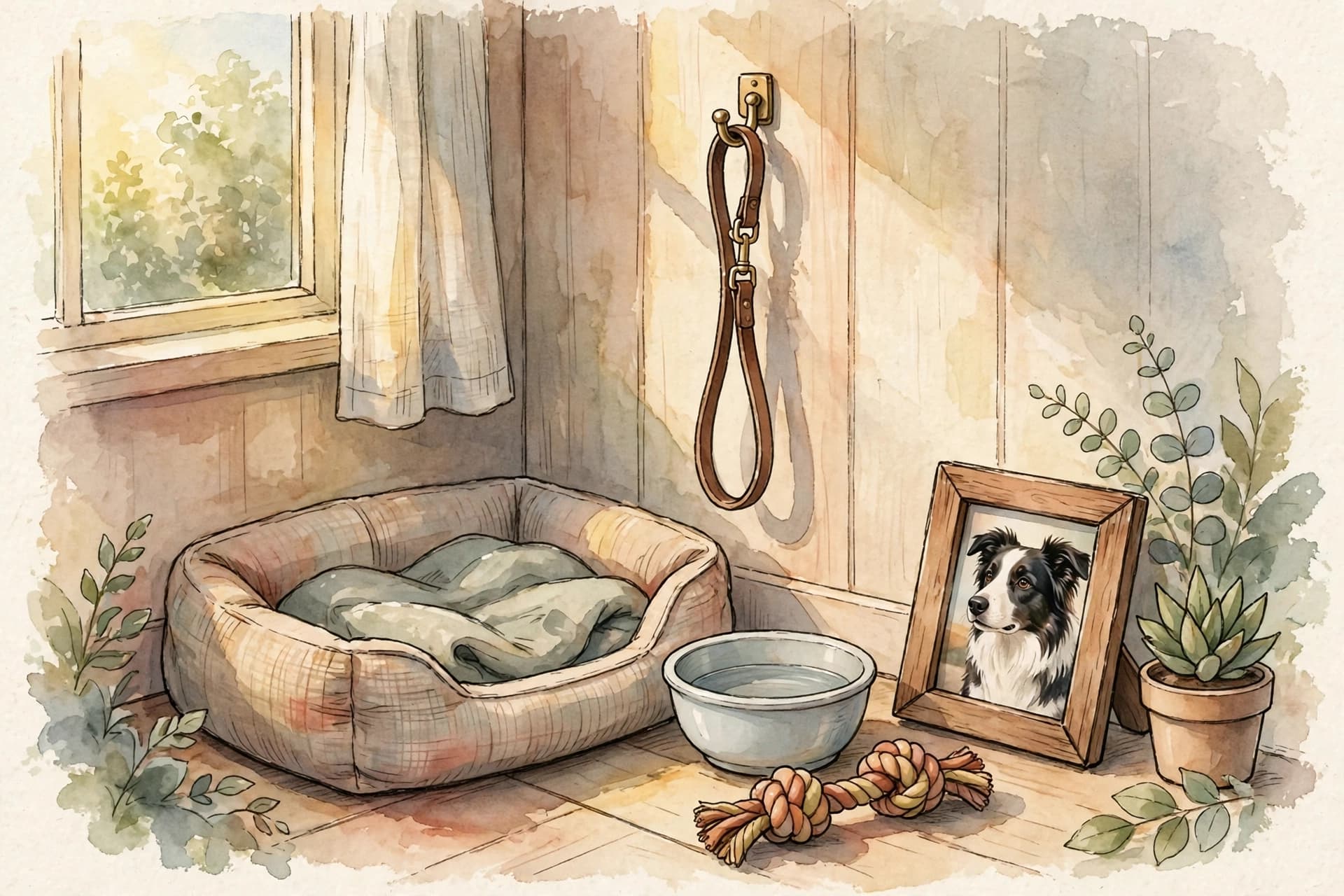
The bed is still in its corner. The bowl is still by the door. The leash is still on its hook. There is no right time to move a dog's things, and no rule that says you must. Most owners end up keeping one or two things close, putting the rest away for later, and letting the decision take as long as it takes.
Is there a right time to move their things?
No, and anyone who gives you a number is guessing. Some people clear the bed and the bowl on the first day because the sight of them is unbearable. Some leave everything exactly where it was for months, because moving it feels like a second goodbye. Both are normal. The only timing that matters is yours.
One thing that does help: make the decision in small pieces rather than one big clearing out. Moving the food bowl today does not mean you have to decide about the bed today. Owners who try to do everything at once often stop halfway through, crying in a pile of dog blankets, and then feel worse for having started. One thing at a time, on days when you feel steady enough, is kinder and it actually gets done.
What should I keep?
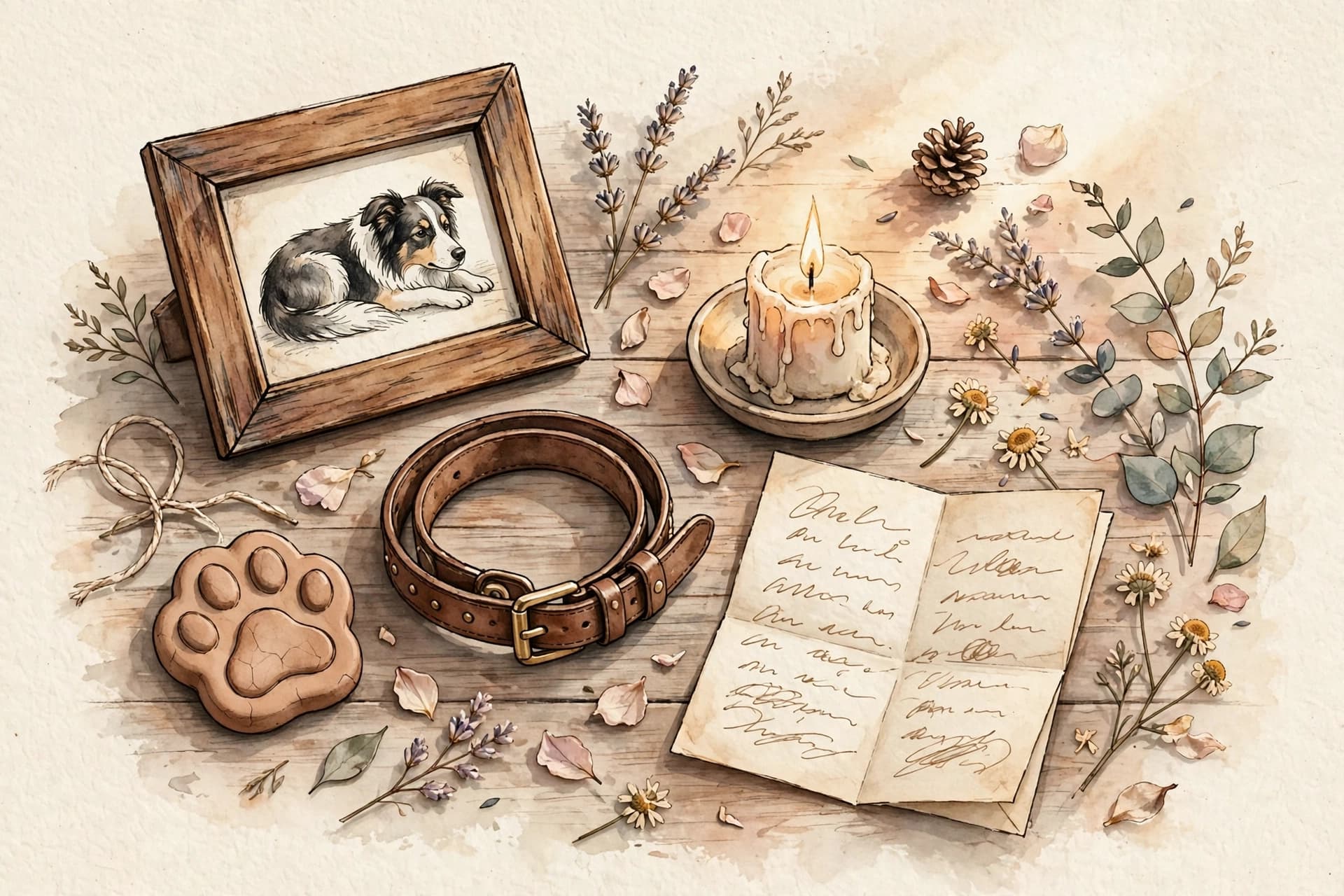
Keep what holds a memory, not what holds a duty. The collar usually tops the list, because it was on their body every day and it still smells faintly of them. The tag, with their name on it, is small enough to keep in a drawer, on a keyring, or on a shelf. A favorite toy, especially one they carried everywhere, is another common keeper. A photo you already love, framed and put where you will see it, is worth more than a box of things you never look at.
If you are not sure about something, put it in a box and write the date on it. If you do not open the box in six months, you have your answer, and you can decide again then. Nothing about this is final. You can always take something back out.
A few keepers owners mention again and again: the first collar, from when they were a puppy, and the last one, from the end. A paw print, taken by the vet or pressed into clay at home. A clipping of fur, kept in an envelope. A single photo printed large, not just on a phone. These are small things, and small is the point. A shelf with three loved objects is a memorial. A room full of everything is a museum, and museums are hard to live in.
How do I decide what to keep when everything feels important?
When everything feels important, the problem is not the things. It is that each one holds a different piece of your dog, and choosing feels like choosing which piece matters most. A simple method helps. Make three piles: keep close, keep stored, and let go. The keep close pile is small, three or four things at most, and it lives where you can see it. The keep stored pile goes in a box with a date on it, and you can revisit it in six months. The let go pile is the things that were useful but not loved: the spare lead, the half empty bag of food, the chewed up toy they never liked.
Another test that helps is the sense test. Keep one thing for each sense: something that smells of them, like an unwashed blanket; something you can see, like a photo; something you can hold, like the collar or the tag. Three things, one for each sense, is often enough to keep the memory close without keeping the whole house as it was. If a thing fails every test and you still cannot let it go, keep it. The tests are tools, not rules, and your grief is allowed to overrule them.
What can I donate, and where?
The things you do not keep can do real good. Shelters and rescues always need clean blankets, towels, unopened food, treats, leashes, collars, and toys. Many will also take a dog bed if it is clean and in good shape. A quick call or message before you go saves a wasted trip, since some shelters have specific rules about what they can accept.
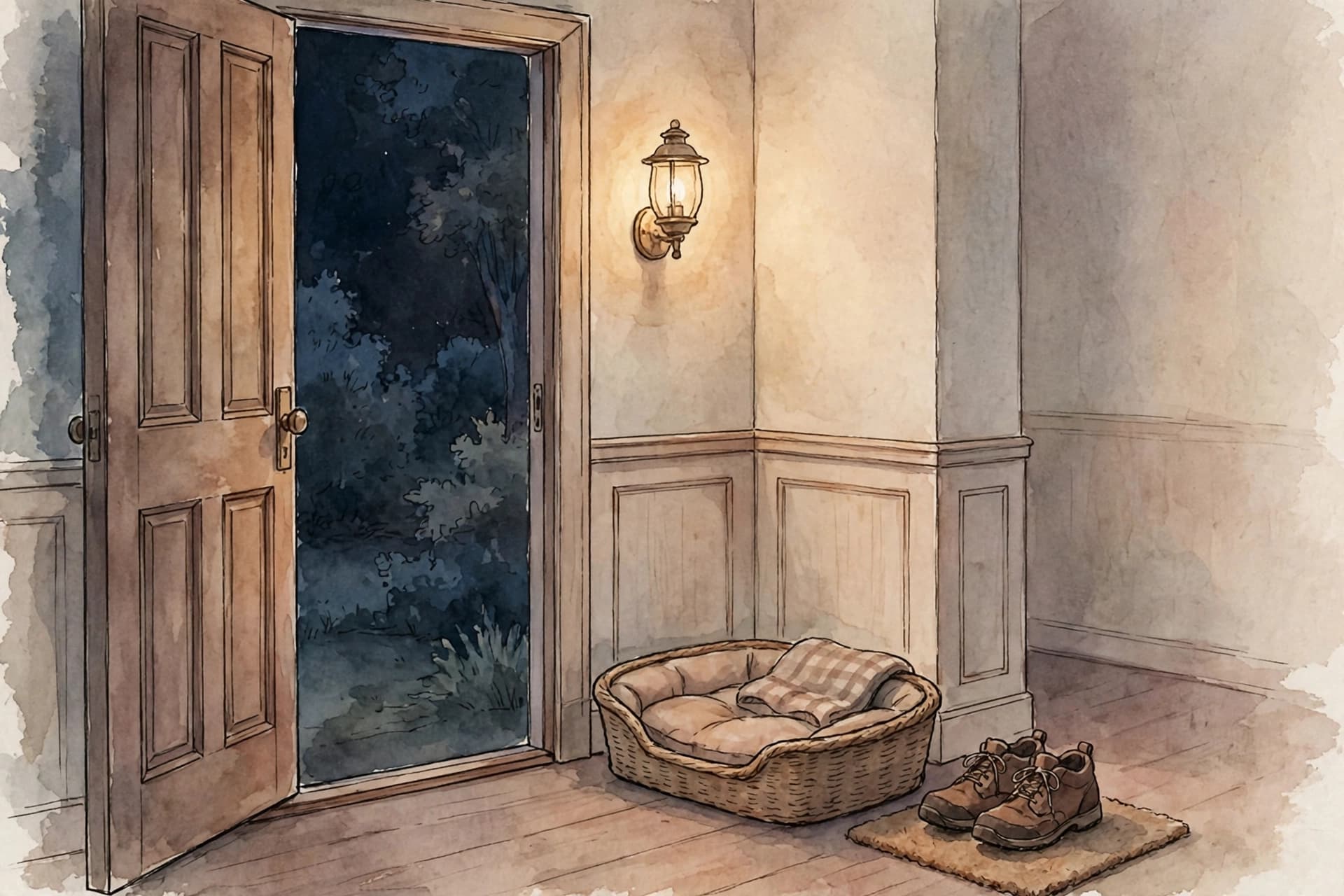
If donating feels too hard right now, that is fine too. Put the bag by the door and take it next week, or next month. Some owners find that giving their dog's things to another dog is the first moment that feels like something good came out of the loss. Others find it feels like giving their dog away, and they are not ready. Both responses are honest. There is a middle option many people like: donate one thing, keep the rest, and see how the one thing feels.
What if seeing their things hurts too much?
Then put them out of sight, not out of your life. A box in a cupboard is not a betrayal. It is a kindness to yourself on a hard week. Some owners put the bed in a spare room for a month, then bring it back out when the sight of it stops feeling like a punch. Others leave the bowl in place but stop filling it, and find that the empty bowl hurts less once the first week has passed.
What tends to hurt most is not the things themselves, but the empty space they mark: the spot on the floor where the bed was, the quiet at the door where the leash hung. If the empty space is the problem, filling it gently can help. A plant where the bed was. A photo where the bowl sat. You are giving the room something to hold besides absence. Our guide on pet memorial ideas has twenty ways owners have done this, from the simple to the elaborate.
The first time you move something is the hardest, and the second time is easier. Owners who set a gentle pace, one thing a week, say the house changes slowly enough to keep up with. If you move the bowl on Monday and feel awful, leave the bed alone until next Monday. Grief has its own timetable, and a pace of one small thing a week is still progress. There is no prize for finishing fast.
How do I handle the empty space?
Start with the room you use most. The kitchen is usually the hardest, because the bowl and the feeding routine lived there. If the bowl is still by the wall, you can leave it and wash it once a week, or move it to a shelf where it becomes a keepsake instead of a daily reminder. The bed is usually second. If it is large, moving it to a spare room for now is a reasonable compromise.
The hallway matters more than people expect. The leash on its hook is often the last thing owners move, because it is small and because taking it down feels like closing a door. When you are ready, you can hang the leash on a photo frame instead, or keep it in the box with the collar. And if you are not ready, leave it. Nobody who has lost a dog will judge you for a leash on a hook. For more on the quiet ways owners keep their dog close without keeping everything, see ways to keep your pet close.
What if I get a new dog and the old things are still here?
Getting a new dog does not mean the old things have to go, and it does not mean they have to stay exactly as they were. The new dog deserves their own bed, their own bowl, and their own collar, not hand me downs that still carry another dog's name. A new bed is a fresh start for both of you, and it stops the new dog from sleeping in a spot that still smells of the dog who died.
That does not mean the old things must leave the house. The old collar can hang on a photo frame. The old tag can go in a drawer or on a keyring. The old bed can move to a spare room, or be washed and donated to a shelter, where another dog will be glad of it. If the new dog plays with an old toy, that is fine too. Toys are meant to be played with, and a toy that gets used again is a kinder ending than a toy that sits in a box forever. What matters is that the new dog gets to be themselves, not a replacement, and that the old dog keeps a small, honored place of their own.
Frequently asked questions
Should I wash their bed and blankets?
Only when you are ready. Many owners keep one unwashed blanket because it still smells of their dog, and that smell is one of the last things to fade. There is nothing strange about it. Wash the rest when it feels right.
What do I do with leftover food and medicine?
Unopened food and treats can go to a shelter. Opened food is best thrown away. Leftover medicine should go back to your vet, who can dispose of it safely, or to a local medicine take back program. Do not give medicine to another dog.
Is it okay to keep everything exactly as it was?
Yes, for a while. A room kept as a shrine can bring comfort, and many owners do it for weeks or months. If it starts to feel like the house is frozen in the day they died, that is a sign to move one small thing, not everything at once.
What if my partner or family wants to clear things out before I am ready?
Say so, plainly. "I am not ready to move the bed yet. Give me a month." Grief does not run on a shared schedule, and the person who is ready first does not get to decide for everyone. A box in a cupboard is a fair compromise.
Can I repurpose something into a keepsake?
Yes, and many owners find this the most comforting option of all. A collar can be framed with a photo. A tag can go on a keyring. A favorite blanket can be folded into a cushion cover. A leash can hang beside their portrait. The thing stays useful, and the memory stays close.