Memorial and Continuing Bonds · 8 min read · October 23, 2026
By the StayWith team
The Rainbow Bridge Poem: Full Text, Its Real Author, and What It Means
The Rainbow Bridge poem is the most shared piece of writing in all of pet loss, and for decades almost nobody knew who wrote it. Its real author is Edna Clyne-Rekhy, a young woman in Scotland who wrote it in 1959, at nineteen years old, after her beloved Labrador, Major, died. Most websites still credit the poem to "author unknown," which is wrong. She wrote the words that have since comforted millions of grieving owners, in cards, at memorials, and in vet offices around the world. Here is the full poem, her story, and what it promises.
Who really wrote the Rainbow Bridge poem?
Edna Clyne-Rekhy was nineteen and living in Scotland when her Labrador, Major, died in 1959. In her grief she wrote a short piece about a meadow just this side of heaven, where pets wait, whole and happy, for the person they loved. She did not publish it in any grand way. She shared it with friends, and they shared it with friends. Copies were typed, copied again, and passed hand to hand for decades, turning up at vet practices, shelters, and pet crematoriums, almost always with no name attached, or with the words "author unknown."
That is how a poem written by one teenager about one dog became the shared language of pet grief across the world before the internet even existed. In recent years her authorship has been properly documented and reported, and the original connection to Major has been confirmed. She wrote it about a specific dog she loved and lost. Perhaps that is exactly why it rings true to everyone else who has loved and lost one too.
How did the poem spread around the world?
For about thirty years, the poem travelled the slow way: typed copies passed from one grieving owner to the next, pinned on vet noticeboards, tucked into sympathy cards, and read at small memorials. Nobody knew who wrote it, and the words "author unknown" became part of the poem itself. In the 1990s it found the early internet, where it was copied onto pet loss forums and email lists thousands of times, still without a name. Edna Clyne-Rekhy's authorship only became widely known much later, when her story was reported and the connection to Major was confirmed. The delay is part of why the poem feels like it belongs to everyone. It spent decades as a piece of shared property before it had an author again, and by then millions of people had already made it their own.
What is the full text of the Rainbow Bridge poem?
Here is the poem in its traditional form, by Edna Clyne-Rekhy:
Just this side of heaven is a place called Rainbow Bridge.
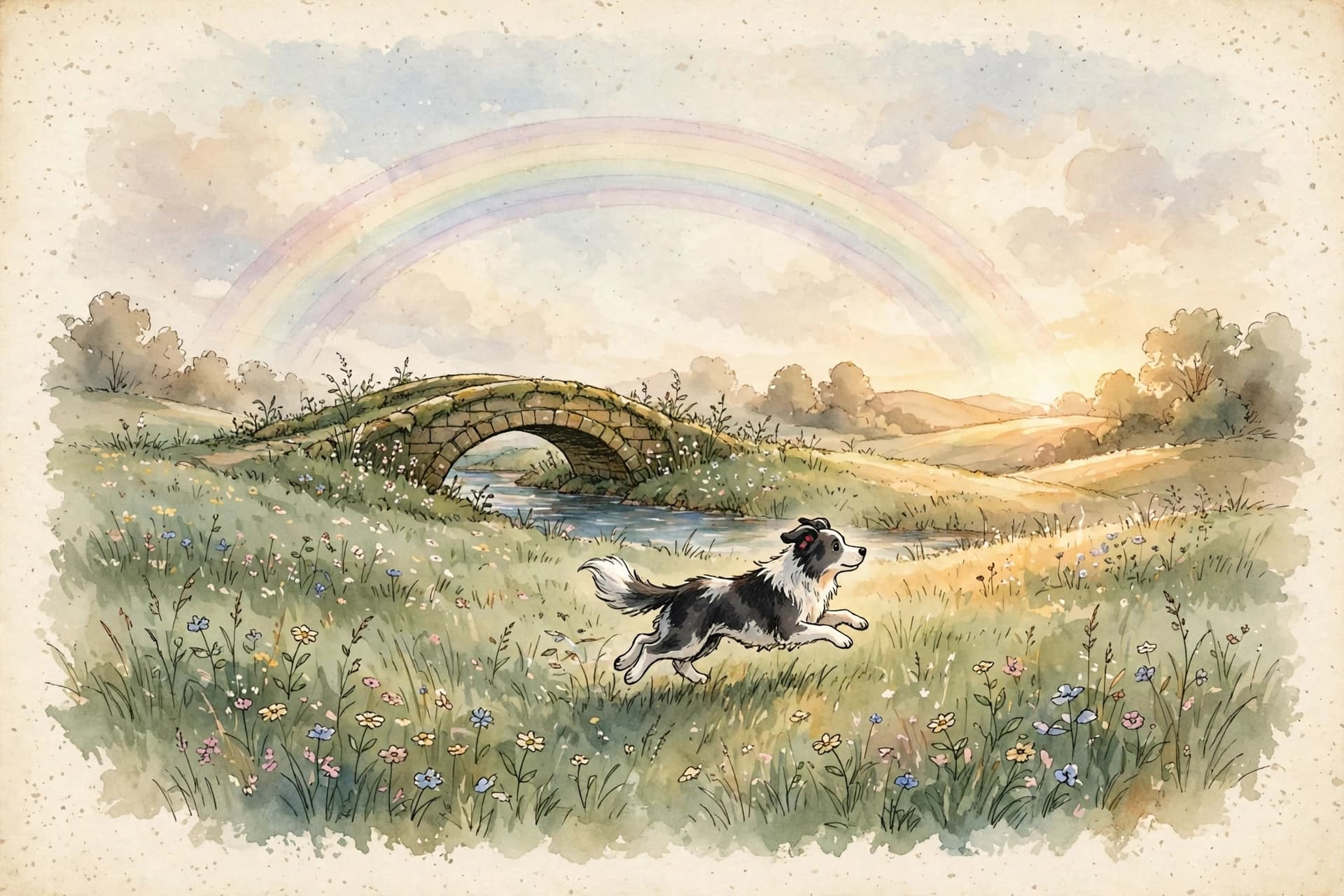
When an animal dies that has been especially close to someone here, that pet goes to Rainbow Bridge. There are meadows and hills for all of our special friends so they can run and play together. There is plenty of food, water and sunshine, and our friends are warm and comfortable.
All the animals who had been ill and old are restored to health and vigor. Those who were hurt or maimed are made whole and strong again, just as we remember them in our dreams of days and times gone by. The animals are happy and content, except for one small thing; they each miss someone very special to them, who had to be left behind.
They all run and play together, but the day comes when one suddenly stops and looks into the distance. His bright eyes are intent. His eager body quivers. Suddenly he begins to run from the group, flying over the green grass, his legs carrying him faster and faster.
You have been spotted, and when you and your special friend finally meet, you cling together in joyous reunion, never to be parted again. The happy kisses rain upon your face; your hands again caress the beloved head, and you look once more into the trusting eyes of your pet, so long gone from your life but never absent from your heart.
Then you cross Rainbow Bridge together...
What does the poem promise, part by part?
Read slowly, the poem answers the four questions every grieving owner asks, in order.
First, are they suffering now? No. The ill and old are restored, the hurt are made whole. Whatever the last weeks looked like, the poem insists they are over, completely and forever.
Second, are they happy without me? Almost. They have meadows, food, sunshine, and friends. The poem is honest enough to leave one ache in paradise: they miss someone. Your dog, in this telling, misses you too, which is a comfort many owners did not know they needed.
Third, will they know me when we meet? Yes, and before you know them. The dog spots you first, from across the field, and runs. Being recognized and run to is the emotional center of the whole poem.
Fourth, is the goodbye final? No. You cross together, "never to be parted again." The poem turns death from an ending into an interval, a wait on either side of a bridge.
Why does this poem help so many people?
Because it gives grief a picture. Abstract comfort ("he is in a better place") slides off a grieving mind, but a meadow, a hill, and a dog running across grass can be held and revisited at 3 a.m. It also gives the owner a role. You are not only the one who lost; you are the one who is watched for, waited for, and worth running to. Psychologists who work with pet bereavement note that continuing bonds, the sense that the relationship persists in some form, help many owners more than being told to let go. This poem is a continuing bond in six short paragraphs. If you are in the hardest early stretch, our guide on coping with losing a dog may also help.
There is research behind the feeling. Psychologists Klass, Silverman and Nickman, writing in 1996, described continuing bonds, the idea that a relationship with someone who has died can persist in a healthy form rather than needing to be severed. The poem is a continuing bond in miniature: your pet is not gone, they are waiting, and your part in the story is not over. That is why it helps more than advice to move on. It does not ask you to let go. It gives you a place where the bond still lives, and a promise that the story continues. For owners who are not religious, that promise still works, because it is framed as reunion, not doctrine.
How do people use the poem today?
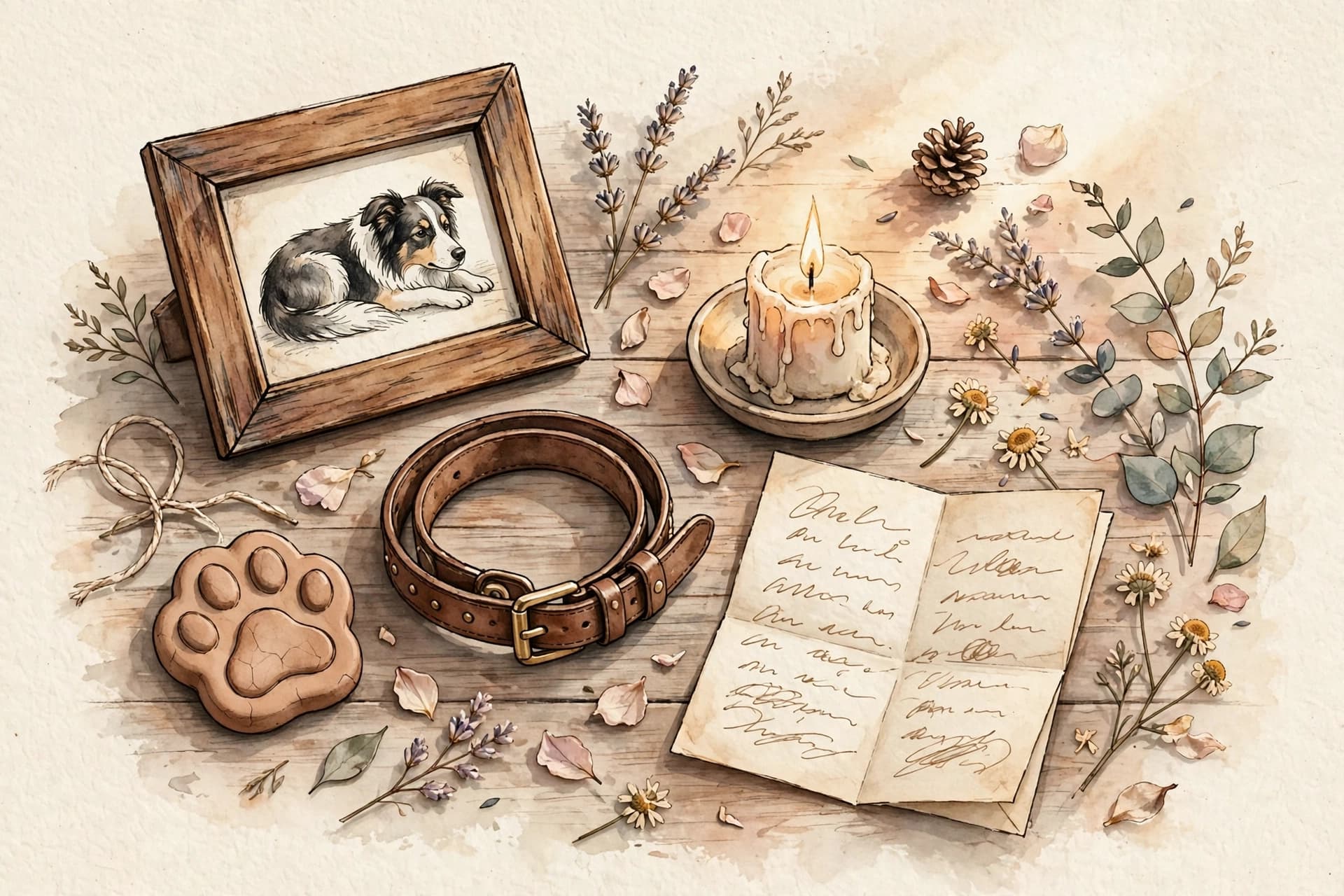
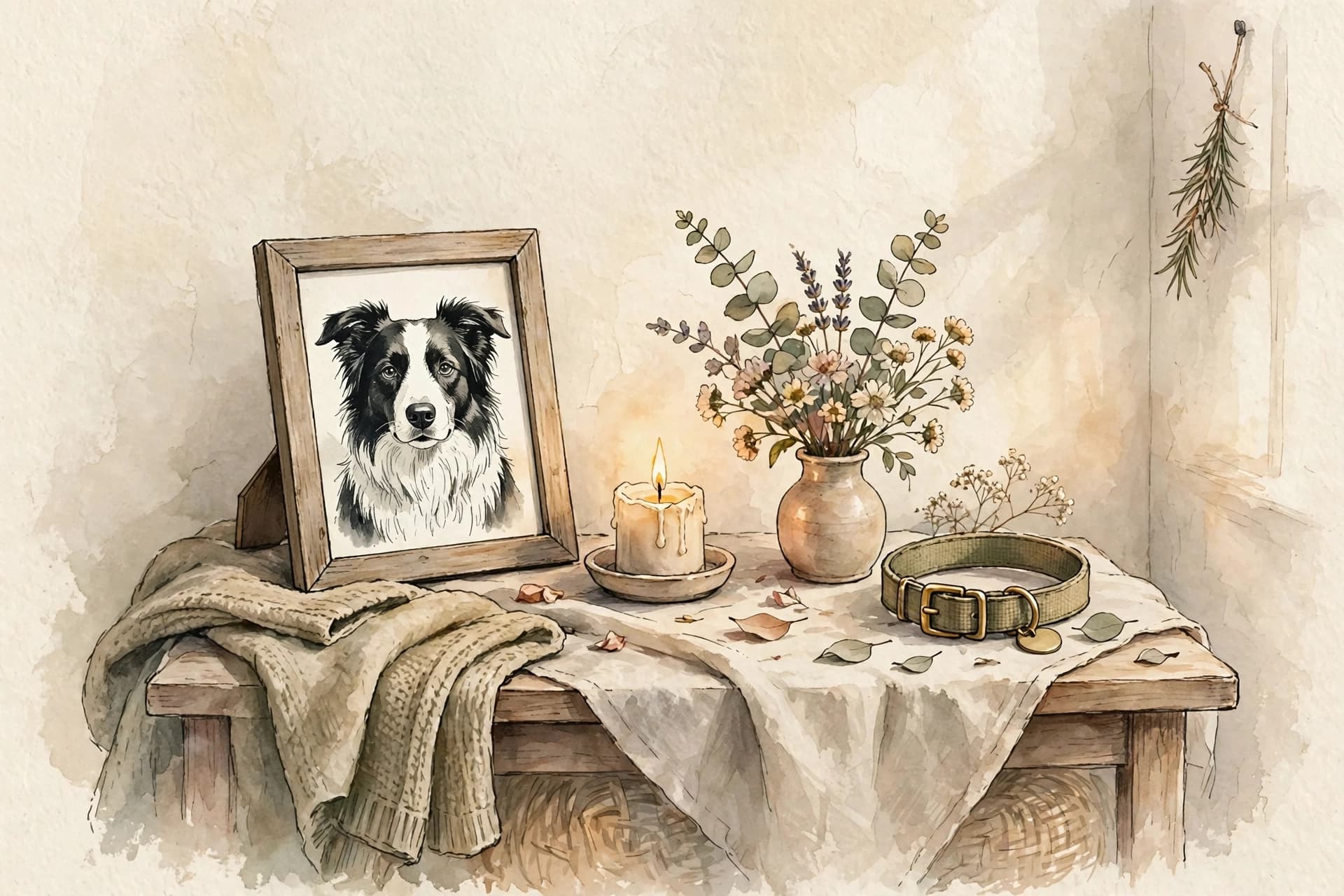
Most often, it is given rather than kept. Friends and family print it in sympathy cards when they do not know what to say, and vet practices hand it to owners on the hardest day of all. It is read aloud at small memorials, printed and framed beside a favorite photograph, and included in the memorial corners and keepsakes described in our list of pet memorial ideas. Some people change a word or two to fit their pet, a name in place of "your pet," "she" in place of "he," and that tradition of adapting it is as old as the hand to hand copying itself. For shorter words to write in a card alongside it, see our collection of dog passed away quotes.
If you are reading it at a memorial, keep it simple. A minute of reading, at an unhurried pace, is enough. Choose the reader in advance, and have a second person ready to step in if the first cannot finish, which happens often and is nothing to be embarrassed about. Many families pair the reading with a single song, or with a few photos shown while it is read, and then leave a minute of quiet afterwards. You do not need a speech around it. The poem carries the moment on its own, and the silence after it is part of the comfort.
What should I write in the card alongside the poem?
The poem does most of the work, so your own words can be short. Three lines are enough. Name the pet, say one true thing about them, and offer one concrete thing. For example: "I am so sorry about Milo. I will always remember how he waited at the gate for you every evening. I am bringing dinner on Thursday, and I am here whenever you want to talk." If the pet was not yours, keep the focus on the owner, not on your own feelings. Write "I loved watching how happy he made you" rather than "I know exactly how you feel," because you probably do not, and the claim can sting. Avoid the two sentences grieving owners say hurt most: "at least he lived a long life" and "you can always get another dog." Both are meant kindly. Both tell the owner their grief is too big for what they lost. A short, specific, honest card is the one that gets kept.
Frequently asked questions
Who wrote the Rainbow Bridge poem?
Edna Clyne-Rekhy, in Scotland, in 1959, when she was nineteen. She wrote it after the death of her Labrador, Major. The "author unknown" credit on most websites is simply wrong.
Is the Rainbow Bridge poem religious?
It mentions heaven but belongs to no religion and no church. People of many faiths and none at all use it, because its promise is about reunion with a pet rather than doctrine.
Can I read the poem at my pet's memorial?
Yes, and many people do. It takes about a minute to read aloud. If reading it yourself feels impossible, asking a friend to read it is common and entirely appropriate.
Can I change the words for my own pet?
Of course. Owners have adjusted names, genders, and small details since the poem first circulated by hand. Edna wrote it for her own dog; using it for yours follows her example.
Is it only for dogs?
No. The traditional text says "an animal," and it is used for cats, horses, rabbits, and every other loved companion. The meadow, as most owners picture it, is crowded and species is no barrier.