Grief and the First Days · 8 min read · October 25, 2026
By the StayWith team
Should I Let My Dog See My Dead Dog?
There is no single right answer, and no strong evidence that letting a surviving dog see a companion's body helps or harms them. Most dogs who are given the chance sniff the body once or twice and walk away, and many owners say the dog settles faster afterward. The decision should follow your dog's temperament and the circumstances of the death.
What do vets and behaviorists actually say?
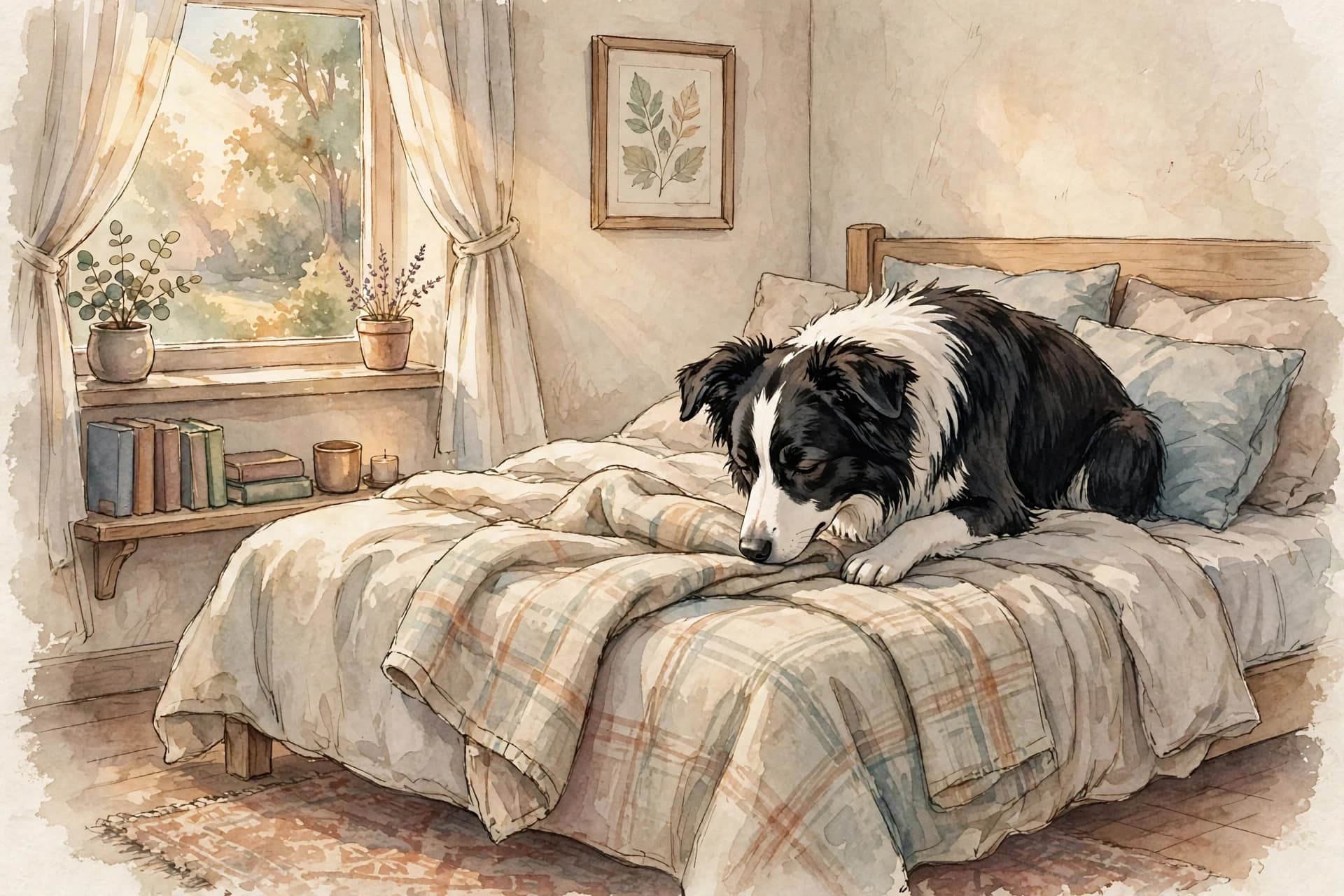
There is no single right answer, and that is the honest starting point. Vets and animal behaviorists say there is no strong evidence that letting a surviving dog see a companion's body helps them grieve, and no strong evidence that it harms them either. Many owners who do it say the surviving dog sniffs the body once or twice, then walks away and settles more quickly. Dogs who never get that chance may search the house for days. Your dog's temperament, the way the other dog died, and your own state that day matter more than any rule. Here is how to decide.
The short version is that nobody has run the study you are hoping for. There are no controlled experiments on dogs viewing the bodies of companions, so guidance comes from observation, from what we know about how dogs sense the world, and from what owners report.
What we do know is that dogs notice absence. PetMD notes that grieving dogs commonly eat less, sleep more, lose interest in play, or search for the missing companion. Dogs live largely through scent, and a body carries the scent of the companion, along with the changed scent of death. Behaviorists who work with grieving dogs generally say a dog can understand that a companion is gone, while being honest that we cannot know what a dog understands about death itself.
That scent is doing real work for the dog. A dog who sniffs a body is gathering information, the same way they gather information from every new smell on a walk. Behaviorists often describe this as the dog checking a fact: the companion is here, the companion is not moving, and the smell has changed. Once the dog has that fact, many of them stop searching the house, because the searching was the dog trying to answer the same question. It is also worth saying plainly that a dog's grief is mostly grief about absence, not about death as an idea. They miss the companion at the door, at the bowl, on the bed. Seeing the body does not teach them about mortality. It tells them where the companion is, and that the companion will not be coming back to the usual places.
What usually happens when a dog sees the body?
Most owners describe the same quiet scene. The surviving dog approaches, sniffs the body, sometimes nudges or licks it, and then loses interest and walks away. Some lie down beside the body for a while. Some show no interest at all and wander off to the water bowl. A few get agitated, and that is a reason to end the moment gently.
None of these reactions is a verdict on how much the dogs loved each other. A dog who walks away quickly is not cold. A dog who stays is not necessarily suffering more. Dogs investigate the world with their noses, and once a body has told them what they need to know, many of them simply move on.
What if the death was sudden or violent?
If the other dog died suddenly, in an accident, or after a short and frightening illness, the question gets harder, and the answer is different. A body after an accident may look upsetting, and a surviving dog who sees it may be frightened rather than comforted. In that case, the kindest choice is often not to show the body at all. Let the surviving dog sniff a blanket or a piece of bedding instead, and keep them away from anything that looks or smells distressing. Your vet can help here. If the body is at the clinic, ask the vet or a vet nurse to prepare it, cover it with a blanket, and tell you honestly whether it is suitable for the surviving dog to see. They have done this many times, and they will not judge you for asking. The same applies if the other dog died at home and the scene is difficult. Move the surviving dog to another room first, take care of what needs doing, and only then decide whether a calm, covered goodbye is right. There is no duty to show the body. The point is to give the surviving dog information, not a shock, and a blanket carrying the scent does that job well enough when the body itself would be too much.
What if my dog never sees the body?
Many dogs never get the chance. The other dog may have died at the clinic, or been taken away quickly, or the death may have happened while the surviving dog was elsewhere. This is common, and it is not something to feel guilty about.
A dog who never sees the body may search the house, wait by the door at walk time, or check the other dog's bed for a few days. This usually fades over days to a few weeks. Keeping routines steady helps more than anything else: same feeding times, same walks, same sleeping spot. Keep the other dog's bed and bowls where they are for a while, and give the surviving dog extra walks and attention. If the searching goes on for weeks, or appetite stays low, talk to your vet, because grief and illness can look alike. Our guide on how dogs grieve when another dog dies explains what to expect in more detail.
What if there are two or more surviving pets?
In a house with three or more dogs, the decision is not one decision but several, because each dog is different. Let the calmest, most confident dog go first, on their own, for a few minutes. Then bring the next one, also alone. Dogs who approach a body together can feed off each other's agitation, and one frightened dog can frighten the others. If one dog was especially close to the dog who died, give that dog the first chance, and give them longer. If one dog is elderly, anxious, or unwell, skip them entirely and use a scent blanket instead. Watch how the dogs behave with each other afterward. Some pairs cling together for days, sleeping piled up in one bed. Some go quiet and keep to themselves. Both are normal. Extra walks help in a multi-dog house more than almost anything else, because walking together is how dogs rebuild a routine that has lost a member. Keep the feeding order the same, and do not rush to remove the dead dog's bed or bowl.
How do I let my dog say goodbye at home?
If you decide to let your surviving dog see the body, keep it simple and calm. Choose a quiet moment, not the middle of the hardest hour. Let the dog approach on a loose lead, or free in the room if that is safe. Let them come close in their own time, and do not push them toward the body or hold them there. A few minutes is enough. Watch their body language. If they are calm and curious, let them sniff and move away when they are ready. If they are distressed, lead them out gently and sit with them somewhere else.
Stay calm yourself, as much as you can. Dogs read your tension closely, and your distress can frighten them more than the body does. If the death happened at home through euthanasia, ask the vet beforehand whether the surviving dog can be in the room or can come in afterward. Many vets are used to this question and will help you plan it. Afterward, you can let the surviving dog sniff the bedding of the dog who died, and wash it when you are ready.
What about after euthanasia at the clinic?
If the other dog was put to sleep at the clinic, you can ask whether the surviving dog may come in afterward to see the body. Some clinics allow this, and some do not, for reasons of space and hygiene. It is always worth asking. If the answer is no, you can bring home a blanket or a piece of bedding that carries the scent of the dog who died, and let the surviving dog sniff it at home. That scent bridge does much of the same work as seeing the body, and for some dogs it is gentler.
What should I watch for in the days after?
Whatever you decide, watch the surviving dog over the next few weeks. Appetite, sleep, interest in play, clinginess, house training, and searching are the things that usually change. Most changes ease within a few weeks, especially if routines stay steady and the dog gets extra attention and exercise.
A few things are worth a call to the vet. If your dog does not eat for more than two days, withdraws completely, becomes aggressive in a new way, or shows any sign of illness, get them checked. Grief can suppress appetite and energy, and it can also hide an illness that needs treatment. And if your own grief feels heavy in the weeks after, our guide on coping with losing a dog may help.
Give the routine a shape you can keep. Feed at the same times, walk the same route at the same hour, and keep the dog's sleeping spot where it is. Extra attention does not need to be dramatic. Sit on the floor with the dog for ten minutes in the evening, take one longer walk a day for the first week, and offer a puzzle feeder to give the dog something to think about. Keep a small note of what you see: eating, sleeping, playing, searching. A note makes it easier to tell whether things are slowly improving or stuck, and it gives your vet something concrete to work with if you call. Most dogs are noticeably better within two to four weeks. If the dog is still refusing food, still searching every room, or has become withdrawn after a month, that is the point to call the vet rather than wait longer.
Frequently asked questions
Will my dog be traumatized if they see the body?
There is no evidence that seeing a companion's body causes lasting trauma in dogs. Most dogs investigate briefly and move on.
Is it better to let them see the body or not?
It depends on the dog. A confident, curious dog will often take the chance calmly. A fearful or elderly dog may do better with a blanket carrying the other dog's scent. There is no choice that guarantees an easier grief.
My dog seems completely fine. Is that normal?
Yes. Dogs grieve differently, and some show very little change. A dog who keeps eating, playing, and sleeping normally is not heartless. They may simply process the loss differently, or show it later in small ways.
Should children be present when the dog sees the body?
That is a family decision, and it depends on the child's age and what they have been told about death. Our guide on [[explaining-pet-death-to-a-child|explaining a pet's death to a child]] covers it by age.
How long will my dog search for the other dog?
Usually a few days, sometimes a week or two. Searching that goes on for many weeks, or that comes with refusal to eat or play, is worth mentioning to your vet.