Memorial and Continuing Bonds · 8 min read · October 25, 2026
By the StayWith team
What to Do With Dog Ashes: 10 Meaningful Options
The small box comes home, and then comes the question nobody prepared you for: what do I do with this now? There is no deadline and no wrong answer. Here are ten gentle options, from keeping the ashes close to letting them go, so you can choose in your own time.
Should you keep the ashes in an urn at home?
Your dog's ashes are home, in a small box or a simple urn, and now comes the question nobody prepared you for: what do I actually do with this. The honest answer is that there is no deadline. Many families keep the ashes on a shelf for months or years before deciding, and that is completely fine. The ashes are not going anywhere. When you are ready, here are ten options that other owners have found meaningful.
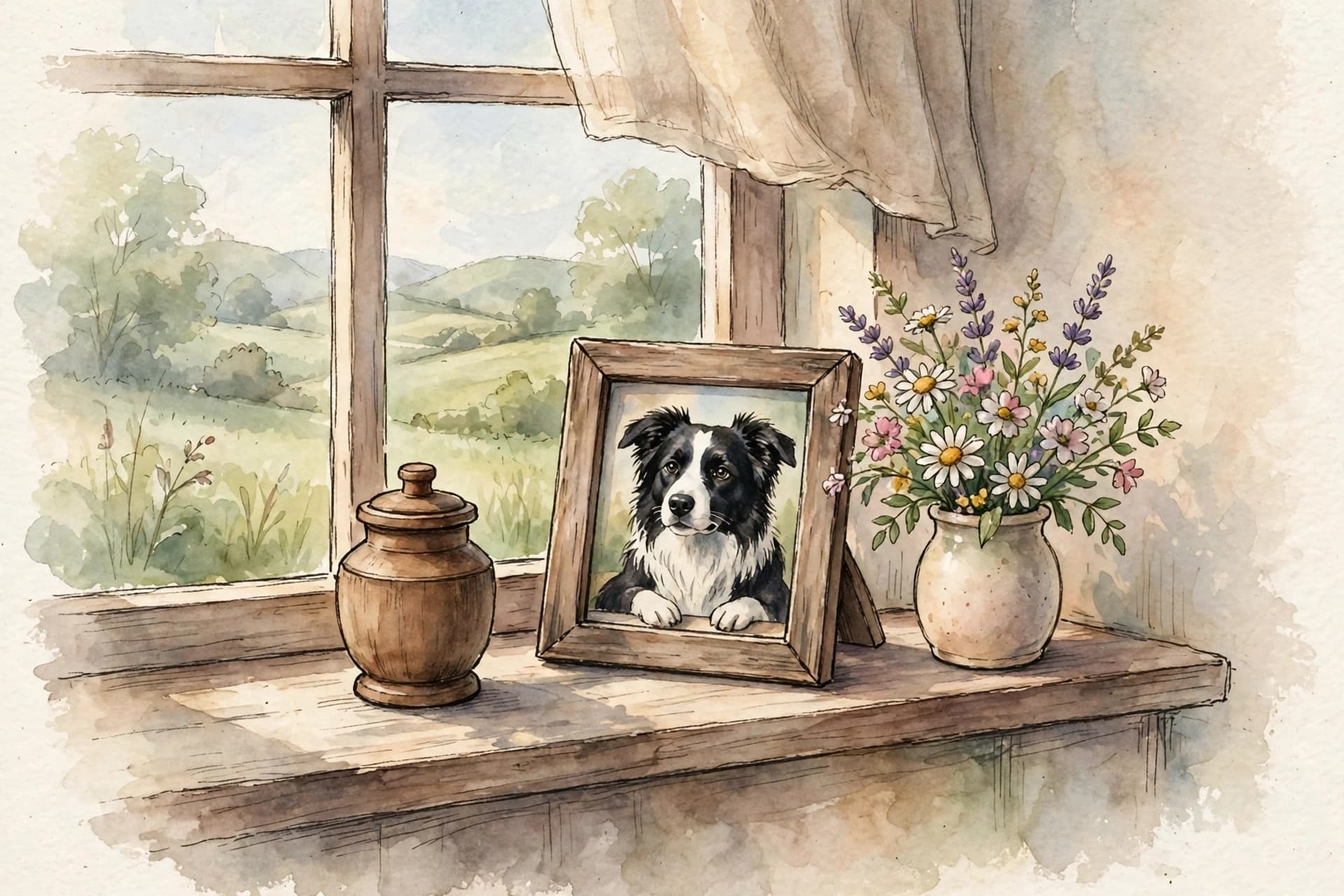
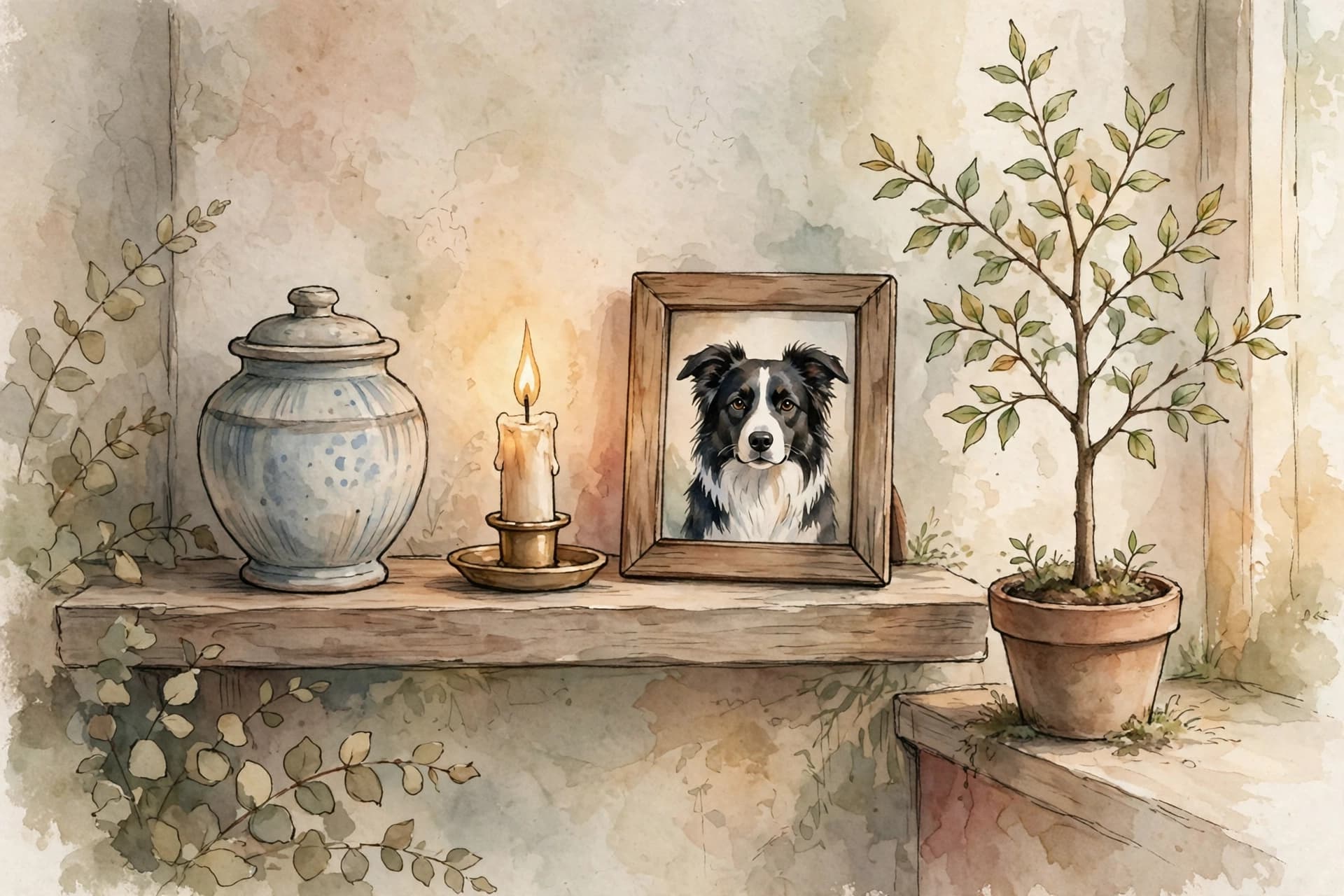
The simplest option, and the most common. Choose an urn that fits your home and your dog: wood, ceramic, metal, or a photo frame urn with space for a favourite picture. Put it somewhere you pass every day, or somewhere quiet and private. There is no rule about display. Some families keep the urn on the mantel. Others keep it in a bedroom, where it feels personal. Both are right.
Can you scatter the ashes somewhere they loved?
Scattering is a way of returning your dog to a place that mattered: a favourite trail, a beach, a field, the garden. Check the rules first. Scattering on private land needs the owner's permission. Many public parks and beaches allow it, but some do not, and national parks in the United States usually require a permit. Scattering at sea is allowed in most places, though some areas ask you to stay a certain distance from shore. A small, quiet ceremony with a few words makes the moment feel complete rather than rushed.
A few practical tips help. Check the wind and scatter downwind, so the ashes drift away from you and not back toward you. A scattering tube or even a paper cup makes the moment easier to control than tipping a box. Bring someone with you if you can, and say a few words, a favourite memory, a thank you, or simply his name. Take a photo of the place afterwards, not of the scattering itself, so you have somewhere to picture when you think of him.
Can you plant something with the ashes?
A memorial tree or a favourite flower planted with a small amount of ashes is one of the most loved options. One caution: cremation ashes are alkaline and high in salts, so a large amount can harm a plant. Use a small amount mixed well into the soil, or use a biodegradable urn made for planting, which is designed to release the ashes slowly. A tree gives you something living to visit, and something that grows as the grief changes.
What about wearing a keepsake?
Keepsake jewelry holds a tiny amount of ashes in a pendant, a ring, or a locket. It suits people who want their dog close in a private way, without a display at home. Most jewellers who make these will work from a teaspoon of ashes, so you can keep the rest for another option. If you order online, read reviews carefully and choose a maker with a clear process, because you are trusting them with something irreplaceable.
There are many kinds to choose from: a pendant or locket that holds a pinch of ash, a ring, a bracelet, or a glass bead with ash swirled inside. Some makers also offer fingerprint impressions taken from a paw print. The process is usually simple: you send a teaspoon of ashes in a small sealed bag, and the finished piece comes back in a few weeks. Ask what happens if the piece is damaged in transit, and whether the maker keeps a record of your order, so you know exactly what you are trusting them with.
Can you split the ashes between family?
If more than one person loved your dog, you do not have to choose one keeper. Small keepsake urns let you divide the ashes between family members, so everyone has a little. Some families keep most of the ashes together and give a small portion to each person. There is no rule about proportions. Talk about it plainly, and write down what you agree, so nobody has to guess later.
Should you bury the ashes?
Burying the ashes in a garden, a pet cemetery plot, or a favourite spot gives you a place to visit. A biodegradable urn breaks down over time and is the usual choice for a garden burial. Mark the spot with a stone, a plant, or a small plaque if you like. Ashes buried in a garden are not the same as a full burial, and most areas have no rules about them, but if you rent your home, check with your landlord first.
Can the ashes become glass or art?
Some studios mix a small amount of ashes into blown glass, a paperweight, or a piece of art. It is a beautiful option, and it is also one to research carefully, because prices vary widely and you are sending ashes away. Ask how much ash they need, how long the piece takes, and what happens if something goes wrong. A reputable studio will answer all of it clearly.
Can you keep some and scatter some?
You do not have to pick one option for all of the ashes. Many families keep a portion in an urn at home and scatter the rest somewhere meaningful. This is the most flexible answer, and it often suits families who disagree about what to do, because everyone gets a part of the goodbye they wanted.
Should you create a memorial space at home?
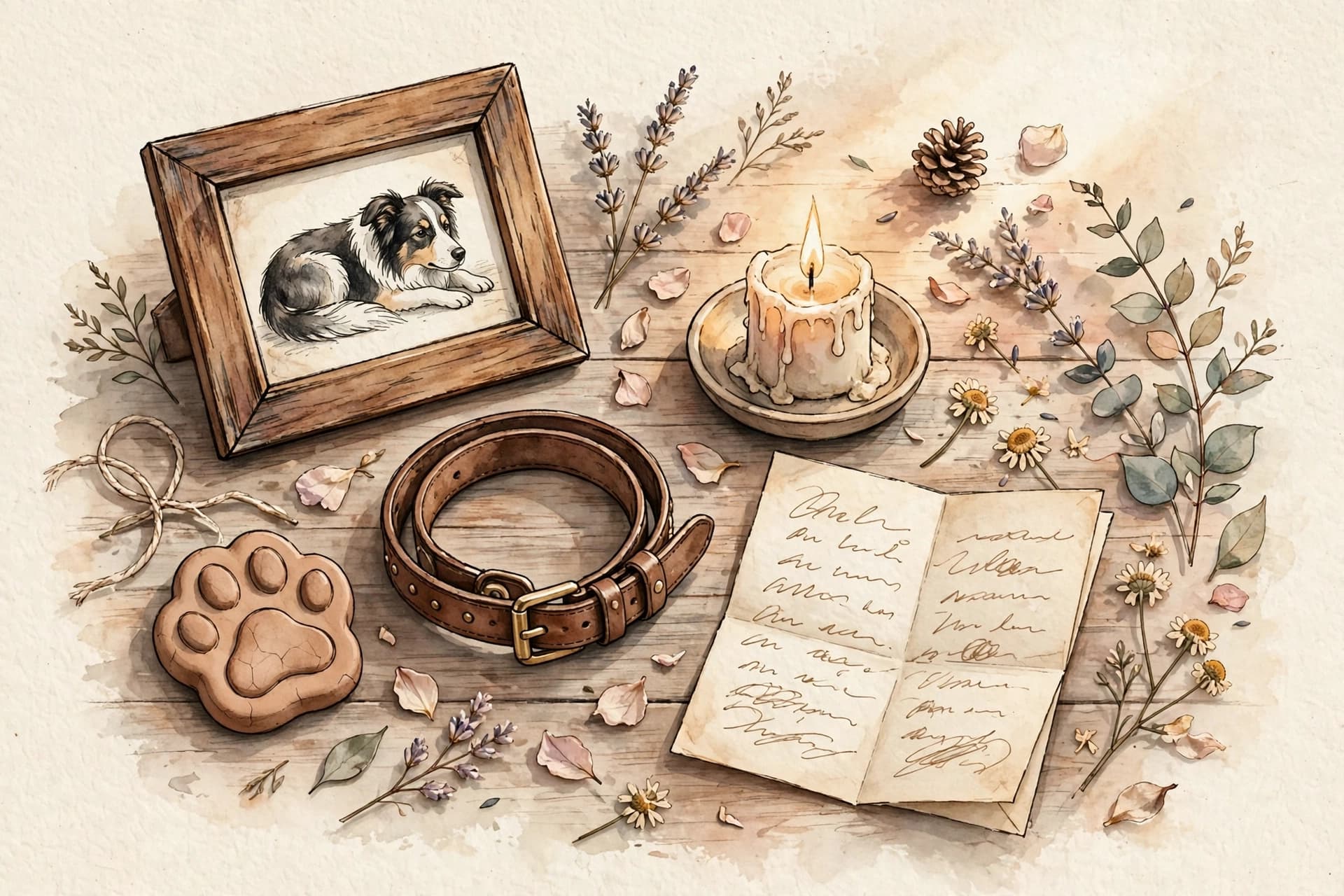
A small shelf or corner with the urn, a photo, the collar, and one favourite toy can be a comfort rather than a shrine. The difference is the feeling: a memorial space is somewhere you can sit with the memories when you want them, not something that ambushes you. More ideas live in pet memorial ideas and ways to keep your pet close.
Is it okay to do nothing for now?
Put the ashes somewhere safe and dry, and come back to the decision in six months, or a year. Grief changes what you want. The ceremony that feels wrong today may feel exactly right next spring.
What can you do with the ashes on hard days?
Anniversaries, birthdays, and the first holidays without him are the days the ashes matter most, because they give you something to do with the missing. Light a candle beside the urn. Take the urn to his favourite walk, even if you only carry it in your pocket. Cook the meal he used to beg for, and eat it in his spot. Write him a letter about the year you have had, and read it out loud.
These small rituals work because they turn a painful date into a day with a shape, a beginning and an end. You do not have to do them every year, and you do not have to do them at all. But many owners say the second anniversary felt easier than the first, and part of that was having something to do, rather than only something to feel.
If a date is coming up and you are dreading it, plan one small thing in advance, and tell someone what you are doing. A plan shared is easier to keep than a plan carried alone.
What if your family disagrees about the ashes?
Disagreement about ashes is common, and it is rarely really about the ashes. One person wants to scatter, another wants to keep the urn, a third wants a keepsake. Each person is trying to hold on in their own way, and each way is valid.
Start by talking about it plainly, not in the first week, but when the shock has softened. Ask each person what they would like to be able to do a year from now: visit a tree, hold a pendant, walk a trail. The answers usually point to a solution, and splitting the ashes often solves it, because everyone gets a part of the goodbye they wanted.
If you still cannot agree, wait. There is no deadline, and a decision made in six months is usually a better one than a decision made in grief. Write down what you agree, even if the agreement is only to decide later, so nobody has to guess, and nobody feels overruled.
How do you choose?
Ask yourself one question: what would I like to be able to do a year from now. Visit a tree. Hold a pendant. Walk a trail and know he is part of it. Open a box on his birthday. Whatever the answer is, that is the option. And if two answers feel right, split the ashes and do both.
If you have not yet decided between cremation and burial, pet cremation versus burial lays out the costs and the practical differences, including what to ask the provider before you agree.
Frequently asked questions
Is it okay to keep my dog's ashes at home?
Yes, completely. There is no law against keeping pet ashes at home in most places, and it is the most common choice. Keep them somewhere dry and safe, in the container they came in or an urn you prefer.
Where can I legally scatter my dog's ashes?
Rules vary by place. Private land needs the owner's permission. Many public parks and beaches allow scattering, but national parks in the United States usually require a permit. Always check local rules for the specific place you have in mind.
Can I plant a tree with my dog's ashes?
Yes, with care. Ashes are alkaline and high in salts, so use a small amount mixed well into the soil, or a biodegradable urn made for planting. A large amount in one spot can harm the plant.
Can I split my dog's ashes between family members?
Yes. Small keepsake urns are made for this, and most crematoriums will divide ashes for you if you ask when you arrange the cremation. There is no rule about how the ashes are divided.
What if I regret what I did with the ashes?
Most choices leave room to change your mind, especially keeping ashes at home. Scattering and burial are final, which is why many families keep a small portion back before scattering or burying the rest. If you are unsure, do nothing for now and decide later.