Grief support · 8 min read · October 23, 2026
By the StayWith team
When There Is No Goodbye: Coping With Sudden Pet Death
# When There Is No Goodbye: Coping With Sudden Pet Death
What does sudden pet death actually look like?
When a pet dies suddenly, the shock is part of the grief, and so is the guilt that races in behind it. There was no last day, no warning, no chance to say the things you would have said. That missing goodbye is often what hurts longest, and it can be made, even now: a goodbye created afterwards, through words, ritual, and remembrance, genuinely helps. If you found your pet, or lost them to an accident or a sudden illness, your reactions in these days, numbness, shaking, replaying the moment, anger, are normal responses to a traumatic event, not signs that something is wrong with you.
It arrives in forms nobody rehearses. A road accident in an ordinary minute. A sudden collapse on a normal walk. An illness that hid itself until the final day. Or the quietest and hardest version: coming home, calling their name, and finding that they have gone while you were out.
Each version leaves its own mark. Owners who find their pet often carry the image with them for a while. Owners who were away often carry the thought that their pet died alone, or waiting. Both thoughts are grief talking. A pet who dies in their sleep at home has had the gentlest ending most animals ever get, even when it is agony for the person who finds them.
Are shock and trauma responses normal after a sudden pet death?
Yes. Sudden death is a shock to the body as well as the heart. In the first days and weeks, people commonly describe feeling numb or unreal, bursting into tears without warning, startling at sounds, poor sleep, no appetite, and an exhausting mental loop that replays the last hours searching for the moment it could have gone differently. Many also feel anger: at a driver, at a vet, at themselves, at the unfairness of a healthy morning and a gone evening.
These responses usually soften gradually over some weeks. If they do not, if the images will not fade, sleep stays broken, or daily life is getting smaller months on, please treat that as a real injury and talk to your doctor or a grief counsellor. Pet loss support lines also exist in many countries, and needing one is ordinary, not dramatic. For the shape of pet grief over time in general, coping with losing a dog may help once the first shock passes.
Two small things help in the first days more than advice does. The first is grounding: when the replay loop starts, name five things you can see, four you can touch, and three you can hear. It sounds too simple to work, but it pulls the mind back into the present room, which is where you actually are. The second is sleep. If sleep is broken, keep the bedroom cool and dark, avoid screens late, and get up rather than lying awake replaying the day. A short walk in daylight helps the body remember how to rest. If these do not help after several weeks, that is the point to ask a professional, not a sign that you have failed.
Why does the guilt spiral hit so hard after sudden death?
Guilt after sudden death tends to fix on tiny, ordinary things. The door left unlatched. The road you always meant to be careful about. The appetite change last week that you explained away. The walk you skipped. The mind does this because a reason, even a blaming one, feels safer than randomness. If it was your fault, then the world still has rules. If it just happened, it could happen again, to anyone, at any time.
Try to answer the spiral with proportion. A latch checked a thousand times and missed once is not a character flaw. A hidden illness that vets themselves often miss is not a failure of love. And notice the trick guilt plays: it only ever audits the final day. It never mentions the thousand days of feeding, sheltering, walking, and adoring that made up your pet's actual life. Their life was the thousand days. The last one does not outrank them. If guilt is your loudest feeling, euthanasia guilt speaks to guilt after loss in depth, and much of it applies here too.
How can you make a goodbye after the fact?
This is the heart of healing from a sudden loss: building the goodbye you were denied. It is not pretend. Humans have always done this, with funerals, letters, and rituals, precisely because it works. Choose one or two of these and do them deliberately, not in passing.
More memorial ideas are collected at pet memorial ideas.
If writing a letter feels too big, start with one line. "Dear Milo, thank you for every morning." That single sentence is already a goodbye, and the rest can come later, or not at all. Some owners write the letter over days, a sentence at a time. Some speak it aloud on a walk. Some never finish it, and that is fine too. The letter is not a test. It is a place to put the words that had nowhere to go when there was no warning, and even an unfinished letter can be the moment the shock begins to soften.
- Write the letter you would have spoken. Say thank you, say the favourite memories, say the goodbye, say their name. Read it aloud where they used to rest. Keep it, or bury or burn it safely, whichever feels complete.
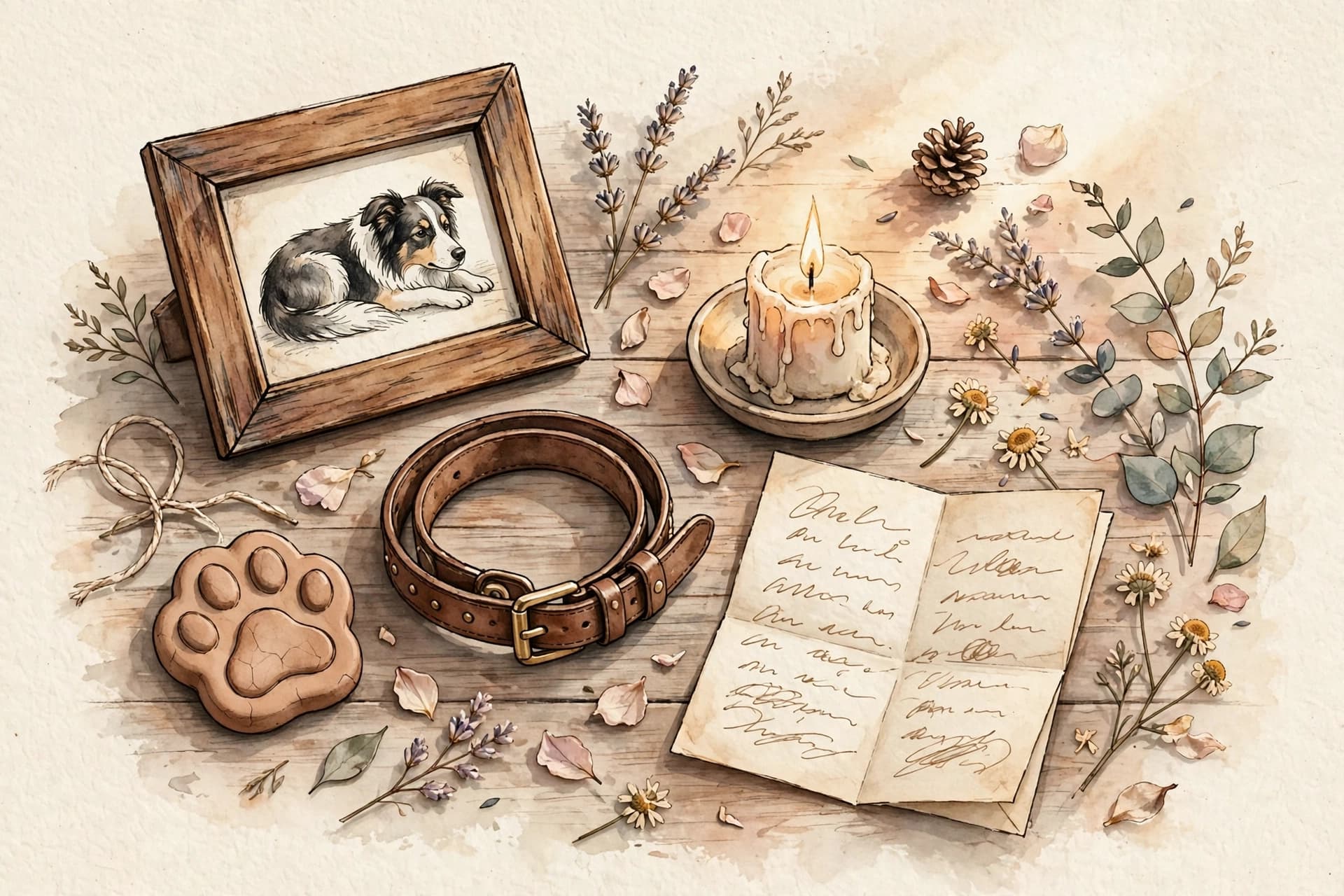
- Hold a small ceremony at home. A candle, their photo, their collar or lead, and each person who loved them saying one memory out loud. Ten unhurried minutes is enough.
- Visit, or create, the resting place. If ashes come back to you, choose their place with care. If burial was not possible, a stone, a plant, or a named spot in the garden gives grief somewhere to go.
- Make the memory tangible. A framed photo of them at their happiest, a paw print if the vet was able to take one, a written list of their habits and sounds.
- Do their favourite thing once, in their honour. The walk, the beach, the sunny room at the usual hour. Many owners find the first time unbearable and the third time quietly precious.
What can you say when people tell you "at least it was quick"?
People reach for this line because they want your pain to have a smaller shape. It rarely feels that way from inside, because quick for the pet can still mean shocking for you, and because you may not even know if it was quick. You are allowed to correct it gently, or to answer in a way that protects you.
You do not owe anyone a debate about your grief in the first weeks. A short, true sentence and a change of subject is a complete response.
- "I know you mean kindly. The shock is actually the hard part for me."
- "Maybe. I am still mostly in the part where I cannot believe it."
- "Thank you. What I really need is just for someone to say his name and sit with me a bit."
- "It does not feel like a mercy from where I am standing, but I know you wish it did."
What do you do in the first 24 hours after a sudden death?
The first day after a sudden death is often a blur, and that is normal. Shock makes ordinary decisions feel enormous, so keep the list short and do only what must be done today. Everything else can wait.
First, take care of your pet's body. If they died at home, wrap them gently in a favourite blanket and keep them somewhere cool. Call your vet, even if the practice is closed, because most have an out of hours number and they handle these calls every week. They can explain what happens next, including cremation and keepsakes, and they can store your pet respectfully while you decide.
Second, tell the people who need to know, in the fewest words you can manage. A short message is enough: "I am sorry to say that Milo died suddenly today. I will share more when I can." You do not owe anyone the full story today.
Third, look after your own body. Drink water. Eat something small, even if you have no appetite. Ask someone to stay with you, or to check in by phone that evening. Shock is physical as well as emotional, and the simplest care, food, water, rest, and another person nearby, is what carries you through the first night.
How does a sudden loss affect the rest of the family?
A sudden death shakes a whole household, and everyone in it grieves on a different clock. One person may need to talk about it constantly. Another may go quiet and want to be left alone. A child may cry at bedtime and play normally by morning. A partner may seem fine for a week and then fall apart at an ordinary moment, like finding the lead by the door. None of these are wrong. They are simply different speeds of the same grief.
The friction usually comes from the mismatch. The talker feels abandoned by the quiet one. The quiet one feels crowded by the talker. It helps to name this out loud: "We are grieving differently, and that is okay. I need to talk, and you need space, and we can make room for both." Small agreements help: one shared moment a day to remember the pet together, and the rest of the day free to grieve privately.
Other pets in the house need watching too. A surviving dog or cat may search, eat less, or cling, and they need routine more than anything. And if the loss has left the house tense or silent for weeks, a short conversation with a counsellor, together or alone, is a practical step, not a dramatic one.
Frequently asked questions
Is it normal to keep replaying the moment you found them?
Yes. Replaying is the mind trying to master an event it could not predict or prevent. It usually fades in intensity over weeks. If the images remain vivid and intrusive after a few months, or sleep stays badly broken, professional support can genuinely help and is worth seeking early.
Should you ask the vet what actually happened?
For many owners, yes. A clear explanation, including whether your pet suffered, can quiet the worst imagined versions. Vets expect these questions after sudden death and will answer honestly. Knowing it was fast, when it was, comforts a great many people.
Is the guilt a sign you actually did something wrong?
Almost never. Guilt after sudden loss is so common that counsellors treat it as a standard feature of this kind of grief, not as evidence. It measures how responsible you felt for a beloved life, not how well you carried that responsibility.
Can a ritual weeks later really help with a missed goodbye?
Yes. The goodbye was never really about timing. It is about deliberately honouring the bond and saying the unsaid things, and that can be done at any point. Many owners say the letter or the small ceremony is the moment their grief changed from pure shock into something they could carry.
How long does this sharper kind of grief last?
The shock usually softens within weeks, while the grief itself follows the same long arc as any deep pet loss, often many months. Sudden death adds a traumatic edge at the start, not a longer sentence overall.