Family · 8 min read · October 23, 2026
By the StayWith team
How to Explain a Pet's Death to a Child, by Age
# How to Explain a Pet's Death to a Child, by Age
What words should you use, and which should you avoid at every age?
The kindest way to explain a pet's death to a child is with plain, honest words matched to their age: "Buddy died. His body stopped working, and he cannot come back. We will miss him very much." Children cope better with a clear truth, gently told, than with kind sounding stories that confuse them. Avoid "went away," which makes children wait for a return, and avoid "put to sleep" with young children, who may become afraid of sleep itself. This guide gives exact words for each age, plus rituals that help children say goodbye.
Whatever your child's age, a few rules hold. Use the words died and dead, kindly and plainly. Explain that the body stopped working and cannot be fixed, and that the pet does not feel pain or fear now. Say that it is okay to cry and okay to ask questions, again and again.
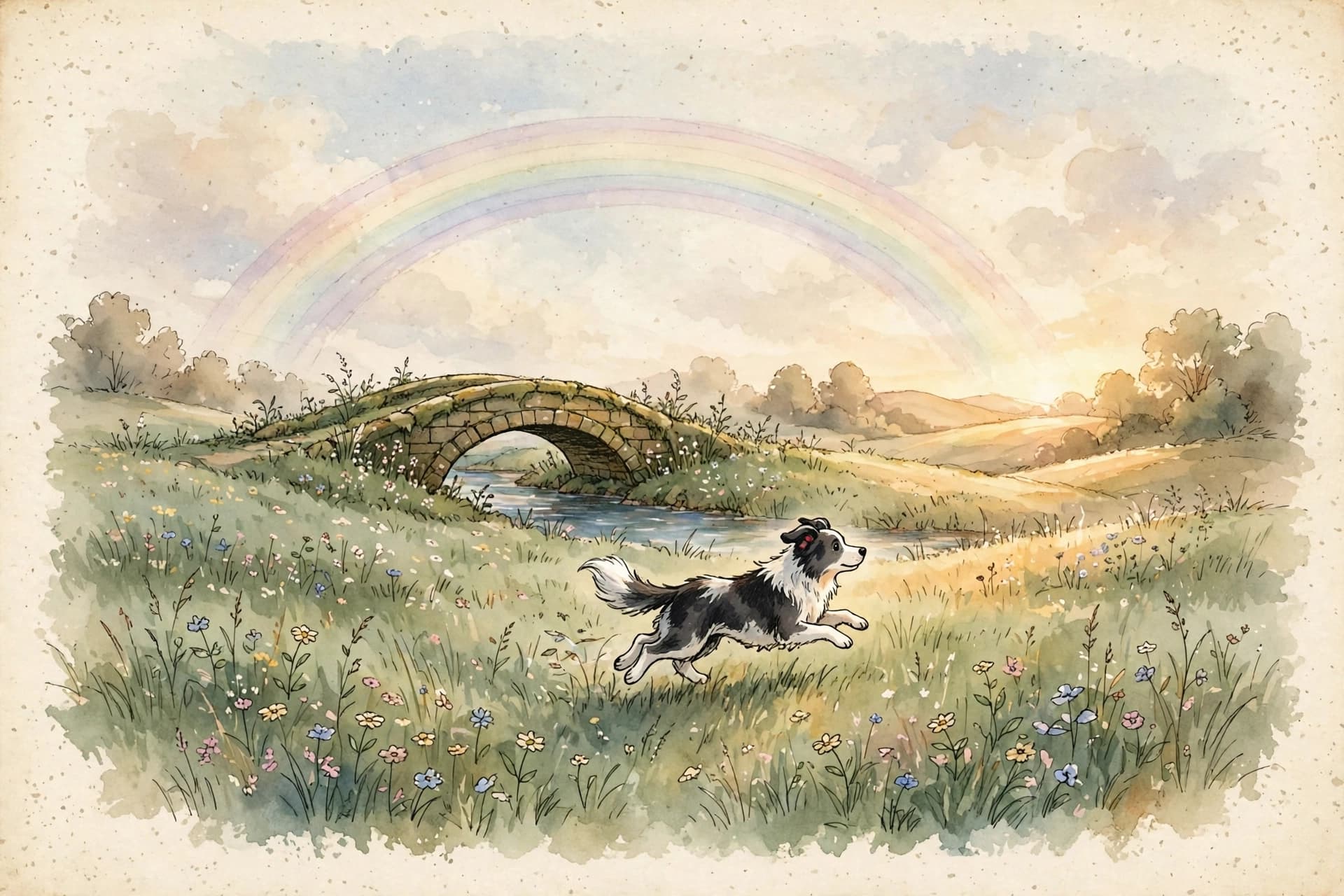
Avoid these phrases with young children in particular. "Put to sleep" can make a child fear bedtime and anaesthetic. "Went away" and "we lost him" sound temporary, and a child may search, wait, or blame themselves for not finding him. "God took him" can frighten or anger some children, so use faith language carefully if you use it at all. The Rainbow Bridge story comforts many families; if you share it, Rainbow Bridge poem gives the full text and its history.
What do children aged 2 to 4 understand about death?
At this age, children think death is temporary, like a person leaving a room. They may ask when the pet is coming back, sometimes minutes after being told. This is not denial or rudeness. It is how a young mind works.
Say: "Molly died. Her body stopped working, so she cannot play or eat or come back. We will not see Molly anymore, and that makes us sad." Keep it short, and expect to repeat it many times, calmly, in nearly the same words. Repetition is how toddlers learn anything true. Keep routines steady, because predictability is their comfort, and a photo by their bed helps more than explanations.
What do children aged 5 to 7 understand, and what should you say?
Children in this range begin to grasp that death is final, but they often think in magical ways too. They may believe a thought or a cross word caused the death. They ask very concrete questions: What happens to the body? Will it hurt? Who feeds him now?
Say: "Charlie's heart was very old and it stopped, and the vet could not fix it. Nothing you said or did made this happen. Nothing anyone could do would have made his heart young again." Answer body questions honestly and simply: the body will be buried, or the vet will care for it and return ashes. Let them choose whether to see the pet after death; many children benefit from stroking their pet one last time, and some do not want to. Either choice is fine.
What do children aged 8 to 12 need from you?
Older children understand finality and often want the real details: what illness, what the vet tried, whether the pet suffered. They may hide tears to seem grown up, or grieve in bursts between normal play. That is not a lack of caring. A child's grief comes in doses they can manage.
Give honest answers at the level they ask. Invite, but do not require, conversation: "I am sad about Ruby today. Are you?" works better than a formal talk. This age group often does well with real responsibility in the goodbye: choosing photos, writing a letter, helping with the burial or the flowers. Tell their school teacher what has happened, in one short message, so a wobbly day is understood rather than punished.
What do teenagers need when a pet dies?
Teens understand death fully, and for many, the pet who died is the companion of their entire childhood. Their grief can be deep and very private. They may process it with music, writing, or silence rather than talk.
Respect the privacy without withdrawing. Say: "He was your dog as much as anyone's. I know this is big. I am here whenever, and there is no wrong way to do this part." If sadness flattens into months of withdrawal, lost sleep, or falling school work, treat it with the same seriousness you would after any major bereavement, and seek support.
What rituals help a child say goodbye?
Ritual gives grief a shape a child can hold. Let the child choose or help choose from ideas like these.
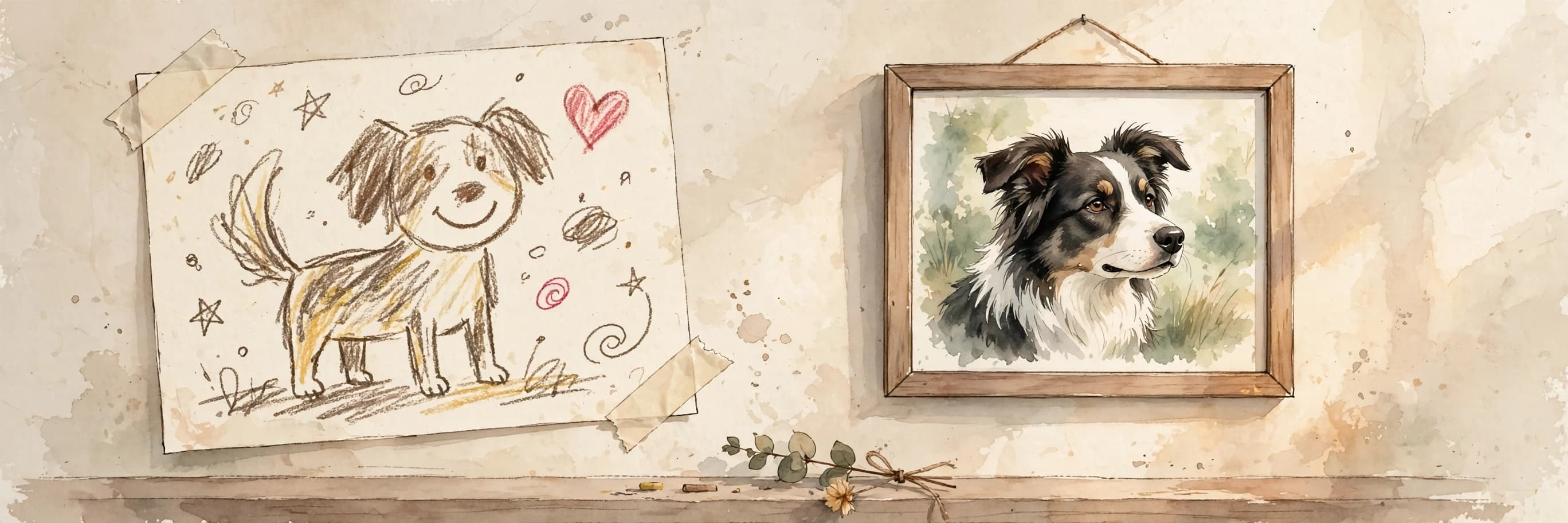
Let the child keep something from the ritual. A drawing in a frame, a stone from the garden, a photo on the wall by their bed. Children return to objects when words run out, and the thing they made becomes proof that the goodbye really happened. If you bury the box, mark the spot together, with a stone or a plant, so the child knows exactly where to find it. A marked place is easier to visit, and a visit is easier than a memory with nowhere to go.
If your family is in the first hard day right now, the first 24 hours covers the practical steps gently. And for your own grief alongside theirs, coping with losing a dog may help.
- Draw a picture of the pet, or of the pet's favourite day, to keep or to bury with them.
- Make a goodbye box: one drawing, one letter, a favourite toy or treat, and place it with the pet or in a memory corner at home.
- Write a letter saying thank you, sorry, and goodbye, in whatever order it comes out.
- Plant something together and name it for the pet.
- Choose one photo together for a frame, and let the child pick where it goes.
- Say the goodbye out loud, each person in turn, with one memory each.
What if your child blames themselves?
This is common, especially between ages 4 and 9, when thinking runs to "I wished he would be quiet, and then he died." Take it seriously and answer it directly, more than once: "Nothing you thought, said, or did made this happen. Bodies stop working when they are old or very sick, and wishes cannot do that." Watch for the quieter forms too: a child who becomes suddenly perfect, or one who keeps confessing small things. Both are often guilt looking for somewhere to land. If guilt or fear stays intense for months, a school counsellor or child grief service can help.
One pattern to watch for is the child who suddenly becomes very good. Perfect behaviour, perfect homework, no complaints. It can look like coping, but it is often a child trying to make sure nothing else bad happens. Gentle reassurance helps more than praise: "You do not have to be perfect to keep us safe. Being a normal kid is enough." The same applies to the child who keeps confessing small wrongs. They are testing whether honesty brings punishment. Answer the same way every time: the death was not caused by anything they did, and nothing they confess now can change that.
How do you answer the hardest questions children ask?
Children ask questions adults avoid, and they ask them plainly. "Where is the body?" "Did it hurt?" "Will I die too?" "Can we dig him up?" Each one deserves a short, honest answer, not a change of subject.
For the body, keep it simple and concrete: "The vet is taking care of Buddy's body. We buried him in the garden, under the tree, and we can visit." If the body was cremated, say so: "Buddy's body was turned into ashes, and we are keeping them in a special box." Children handle concrete facts far better than vague ones.
For pain, tell the truth as you know it: "The vet said he did not feel pain at the end. His body was very tired, and it just stopped." For "Will I die too?", answer calmly: "Everyone dies one day, but you are young and healthy, and I expect you to live a very long life. I am here, and I am healthy too." For "Can we dig him up?", say gently: "No. Once a body is buried, we leave it resting. We can visit and remember him there."
If you do not know an answer, say so. "I do not know. That is a big question, and it is okay to wonder about it." Children trust the adult who says "I do not know" far more than the adult who invents a story.
What do you do when your child grieves differently from you?
It is common for a parent and a child to grieve the same pet in completely different ways, and that difference can feel like a failure on one side or the other. It is not. Children grieve in bursts: a flood of tears at bedtime, then ordinary play ten minutes later. Adults tend to carry grief in a long, steady ache. Neither way is wrong, and neither way means the other person loved the pet less.
The trouble usually comes when one person's grief makes the other uncomfortable. A child who jokes about the dead pet is not being cruel. Humour is often a child's way of testing whether the subject is still safe to mention. A child who goes silent is not being cold. Silence is often how children hold a feeling that is too big for words. A teenager who seems angry may be grieving through the only emotion that feels strong enough.
Let the difference stand. You can say: "I am sad in a quiet way, and you are sad in a bouncy way, and both are fine." Keep the pet's name welcome in the house, keep the photos up, and keep offering small chances to talk. The child who does not want to talk today may want to talk next Tuesday, and the door needs to stay open until then.
Frequently asked questions
Should your child be present when a pet is put down?
For school age children, being offered the choice often helps, as long as they are prepared for what they will see and free to leave at any point. Very young children usually do better saying goodbye at home beforehand. Never force presence.
How do you tell a child if there was no chance to say goodbye?
Tell the truth simply: "It happened very fast, and we could not be there. That is hard, and it is not your fault, or anyone's." Then create the goodbye together afterwards, with a letter, drawing, or ritual. A goodbye made later still counts.
Is it normal for a child to ask the same questions again and again?
Completely normal. Children process big facts by circling them. Answer in nearly the same calm words each time. Repetition is how the truth slowly becomes real to them.
Should you get another pet quickly for your child?
Usually, wait. A fast replacement can teach a child that loved ones are swapped out, and it skips the goodbye they need to complete. When the time does come, involve the child in choosing, and keep the first pet's photos and stories welcome in the house.
What if your child seems unaffected?
Children grieve in bursts and often later than adults expect. A child who seems fine may cry at bedtime three weeks on, at a song, or at an empty bowl. Keep the door open with gentle mentions.