Memorial and Continuing Bonds · 8 min read · October 25, 2026
By the StayWith team
Signs From Your Dog After Death: Dreams, Presence, and What They Mean
Many grieving owners report vivid dreams, hearing a collar jingle, or feeling a weight on the bed after a dog dies. These experiences are common, and research on continuing bonds by Klass, Silverman and Nickman in 1996 found that keeping a connection with someone who has died is a normal part of grief for many people, not a failure to move on.
What kinds of signs do people report?
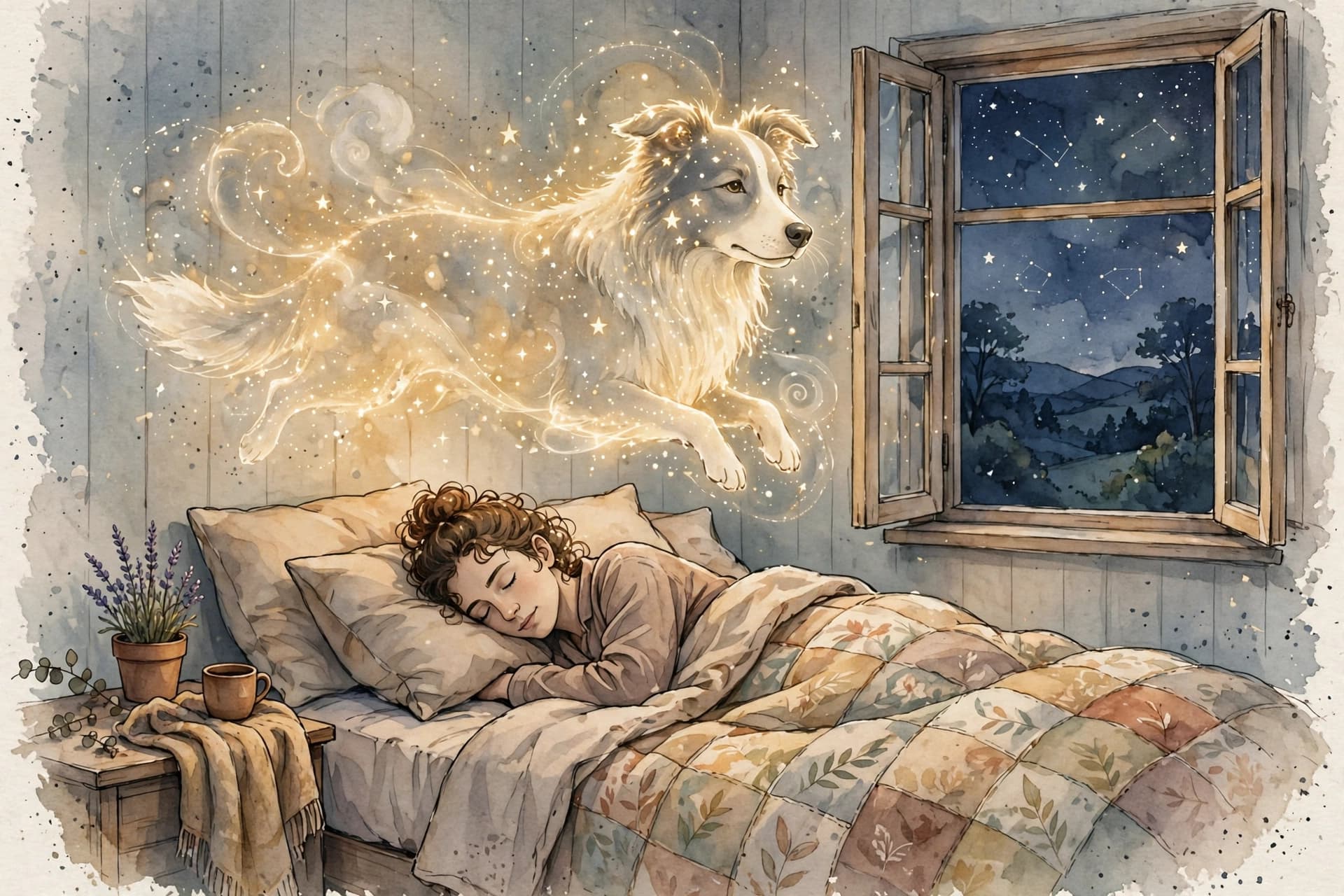
Many grieving owners report vivid dreams about their dog, hearing a collar jingle in an empty room, or feeling a weight settle on the bed at night. These experiences are common, and one of the least talked about parts of pet loss, because people worry they will sound strange. Research on continuing bonds, by Klass, Silverman and Nickman in 1996, found that keeping a connection with someone who has died is a normal part of grief for many people, not a failure to move on. A sign can be a comfort, a trick of a grieving brain, or a spiritual experience. What matters most is whether it helps you or holds you back.
The most common is the dream. Owners describe dreams in which the dog is young and healthy again, running, playing, sometimes waiting at a door. These dreams are often vivid and detailed, and people wake from them feeling peaceful, or, just as often, gutted all over again because the dog is gone when they open their eyes.
Then there are the sensory moments. Hearing nails on the floorboards. Hearing the tag on a collar when no collar is there. A sense of presence in a familiar spot, the foot of the bed, the corner by the door. A smell, the particular dusty dog smell of a warm coat, drifting through a room. A toy found in the middle of the floor that nobody remembers moving. A feeling of weight on the mattress, as if the dog has settled in for the night.
Some people see the dog at the edge of their vision, gone when they turn. Whatever you believe about these moments, you are not the only one who has had one.
Dreams have their own patterns too. Some owners dream the dog is waiting at a gate, or leading them down a familiar path, or simply asleep at the foot of the bed as always. Others dream of the dog as a puppy, or as they were on their best day. A few dream of the dog speaking, or of saying goodbye properly this time. These dreams often arrive in the first weeks, when sleep is broken and the mind is full of the dog, and they can feel so real that waking up hurts twice. Anniversaries bring them back for some people, a dream on the first birthday without the dog, or on the morning of the day they died. Finding a whisker on the couch, a toy under the bed that has been there for months, or a dent in a cushion can feel like a sign too, and it can be, in the sense that the house still holds the dog in a hundred small ways. You do not need to decide whether any of it is real. Noticing it is enough.
Why do these experiences happen?
There are honest psychological reasons, and they do not make the experience less meaningful. Grief rewires attention. For years, your brain expected the dog at the door at six o'clock, at your feet under the table, on the bed at night. Those expectations are wired deep, and after death the brain keeps predicting the dog for a long time. That is why people hear a collar that is not there, or glance at a doorway that is empty. The brain is running an old habit.
Sleep is also disrupted in grief, and disrupted sleep makes dreams more vivid and easier to remember. The dog is the thing your mind is full of, so the dog is what shows up in the dream. Beliefs shape the rest. A person who believes the dog's spirit is near will read a moved toy as a visit. A person who does not will read it as the cat, or a draught. The meaning you give it is yours to choose.
What does the research on continuing bonds say?
For much of the twentieth century, grief was taught as a process of letting go. The goal was detachment, and holding on was seen as a problem. In 1996, Klass, Silverman and Nickman published research that challenged that idea. Studying bereaved people, they found that continuing bonds, staying connected to the person who died through memory, rituals, talking to them, and a sense of their presence, was a normal and often healthy part of adapting to loss.
Later research has supported this, including for pet loss. Keeping a photo by the bed, talking to the dog on the walk, marking the birthday, or feeling that the bond continues are not signs of denial. For many people, they are how grief becomes bearable. The older idea that you must detach to heal has largely given way to a gentler understanding: the relationship changes, it does not end, and it can keep helping you long after the death.
Why do signs often come at night or on the old walk?
Signs cluster in the places and hours where the dog used to be. Night is the most common time, because the house is quiet, the day's noise is gone, and the mind has room to notice what it missed. The bed is where the dog slept, so a feeling of weight on the mattress, or a habit of reaching out a hand to a warm shape that is not there, belongs to the night. The old walk is the other common place. The route, the tree, the corner, the bench, these were shared so many times that the body remembers them even when the mind is elsewhere. A smell on the walk, cut grass, rain on warm pavement, can bring the dog back sharply for a second. Anniversaries and birthdays do the same work as places: the date pulls the memory forward. If a sign comes at night, it does not mean anything is wrong with you. It means the dog lived in your nights and your walks, and those are the hours when grief has the least competition.
When is a sign comforting, and when is it a reason to get support?
A sign is usually comforting when it brings peace, even if it also brings tears. You can still eat, sleep, work, and laugh, even if the laughing comes less often. The experience fades over months, or settles into a small quiet thing you carry. You can talk about it or keep it private, and either way it does not run your days.
It is worth getting support when the signs come with real trouble. If you cannot function, if you are waiting for the dog to come back, if the experiences frighten you or happen constantly and you cannot sleep, or if months have passed and the grief is as sharp as the first week, talk to a doctor or a grief counselor. Hearing or sensing a dead pet is common in grief, but grief that will not shift is a reason to ask for help, not a reason to be ashamed. Our guide on coping with losing a dog has more on what helps, and when to reach out.
How can I keep the bond without getting stuck?
Choose rituals that help you live, not rituals that replace living. Talk to your dog on the walk if that comforts you. Keep the photo where you can see it. Write them a letter, or mark their birthday with their favorite meal. Look at ways to keep your pet close for ideas that other owners have found comforting, from memory boxes to a small place in the house that stays theirs.
The test is simple. Does the ritual help you get through the day, or does it keep you from the day? A photo that makes you smile through tears is helping. A routine that keeps you home, alone, waiting for a sign that never comes, is not.
A useful check is to ask yourself three questions once a week. Did I eat properly today? Did I leave the house? Did I talk to a person who is alive? If the answers are mostly no, and the rituals are the reason, it is time to loosen one of them. That does not mean abandoning the bond. It means moving the ritual to a smaller place in the day: the photo stays, but the hour of staring at it becomes five minutes. The walk stays, but you take a friend with you sometimes. The letter stays, but you write one a month instead of one a day. A bond that helps you live will survive being smaller. A bond that only works when it takes up the whole day is not a bond any more. It is grief wearing a familiar shape, and it needs a different kind of help, which our guide on coping with losing a dog talks through.
How do I talk about a sign with someone who does not believe in them?
You do not have to convince anyone. A sign is yours, and it does not need a second opinion to count. If you want to tell someone, pick a person who has lost a pet themselves, or a person who listens before they judge. Start small. Say what happened, plainly, without dressing it up: I dreamed about him last night, and he was young again. Then stop, and see how they respond. If they listen, you can say more. If they laugh, or explain it away, you do not have to argue. You can simply say it comforted me, and change the subject. Some owners keep their signs entirely private, and that is fine too. Writing them down in a notebook can do the work of telling, without the risk of a careless reply. If you do want to share, a pet loss group is the safest audience. Everyone there has had a moment they were afraid to describe, and nobody in that room will call it strange.
Frequently asked questions
Is it normal to dream about my dead dog?
Yes, very common. Dreams in which the dog is young and healthy are reported by many grieving owners, and they often feel more real than ordinary dreams. They usually fade over months, though some people keep having them for years.
I heard my dog's collar. Am I losing my mind?
No. Your brain spent years expecting that sound in that place, and grief keeps those expectations running. Hearing a collar, nails on the floor, or a sigh from an empty bed is one of the most commonly reported experiences in pet loss.
Do these signs mean my dog is really there?
That depends on what you believe, and science cannot settle it either way. What research does say is that the experience itself is normal, and that it can be a healthy part of grief. If it comforts you, you do not need permission to keep it.
Will the signs stop?
Often they fade as grief eases, over weeks or months. Some people keep small ones for years, a dream on the anniversary, a feeling of presence on the old walk. That is normal too.
Should I tell people about the signs I have had?
Only people who will listen kindly. Many owners keep these experiences private. If you want to share one, a pet loss group or a friend who has lost a pet is a safer audience than a stranger.