Cat loss · 8 min read · October 23, 2026
By the StayWith team
What to Do When Your Cat Dies: A Gentle Guide
# What to Do When Your Cat Dies: A Gentle Guide
Why does a cat's death so often feel sudden?
When your cat dies, first give yourself a moment, then handle a few gentle practical steps: keep your cat somewhere cool, call your vet if you need guidance, and decide in your own time between burial and cremation. There is no correct speed for any of this. Cats often seem to slip away quietly, sometimes with little warning, and many owners feel the loss hit in strange small moments afterwards: the empty windowsill, the chair nobody sits in now. This guide walks through the first hours, the decisions that follow, how other cats in the house may respond, and ways of remembering that suit a cat.
Cats hide illness. It is an old survival instinct, and it means a cat can seem merely quiet or a little off food while something serious is already wrong inside. Vets and sources like PetMD often note that cats mask pain and sickness far longer than dogs do, so owners frequently feel the death came from nowhere. If that is your story, please hear this clearly: missing hidden signs is not neglect. It is how cats are built. Many loving owners have stood exactly where you are standing, stunned that a cat who was on the windowsill last week is gone.
If your cat died suddenly and the shock feels physical, coping with sudden pet death speaks directly to that experience.
What should you do in the first few hours?
Move slowly. Nothing about the next hours needs to be rushed, and doing each step gently tends to help later.
If there are children in the house, let them see your sadness in a calm way and answer questions plainly. explaining death to a child has age by age wording that works for cats as well as dogs.
- Sit with them a while. Talk to them if you want to. Many owners find that unhurried time to say goodbye matters more than they expected.
- Wrap them in a favourite blanket or towel. Choose the one they slept on if you can. It is a small tenderness, and owners remember being glad they did it.
- Keep them somewhere cool. If decisions will take a day or so, a cool room is fine for a short time. Your vet can advise if you need longer.
- Call your vet. Even if your cat died at home, the vet practice can explain cremation options, paw print keepsakes, and paperwork. They handle these calls every week and will be kind.
- Let people know in your own words and time. A short message is enough. You do not owe anyone details.
What are your options for burial and cremation?
Most owners choose between a home burial, where local rules allow it, and cremation arranged through the vet. Communal cremation is usually the least costly option, and the ashes are not returned. Individual cremation costs more, and your cat's ashes come back to you in an urn or a scatter box. Some owners keep ashes on a shelf beside a photo. Some scatter them in the garden under the spot where their cat watched the birds. There is no respectful choice and disrespectful choice here. There is only the one you can live with peacefully.
Costs vary a lot by area, so ask the vet for the figures before you decide. Communal cremation is usually the least expensive option, often a modest fee through the practice. Individual cremation costs more, and the price can depend on the size of your cat and the urn you choose. A home burial costs nothing but your time, though some areas have rules about depth and distance from water, so check your local rules first. Whatever you choose, ask the crematorium or the vet exactly what happens, when the ashes will be ready, and how they will be returned. Clear answers now prevent painful surprises later.
Ask the vet one practical question before you decide: what keepsakes are available, and when must you ask for them? Paw prints and a small clipping of fur are usually offered, and they need to be requested before cremation takes place.
How is grieving a cat different from grieving a dog?
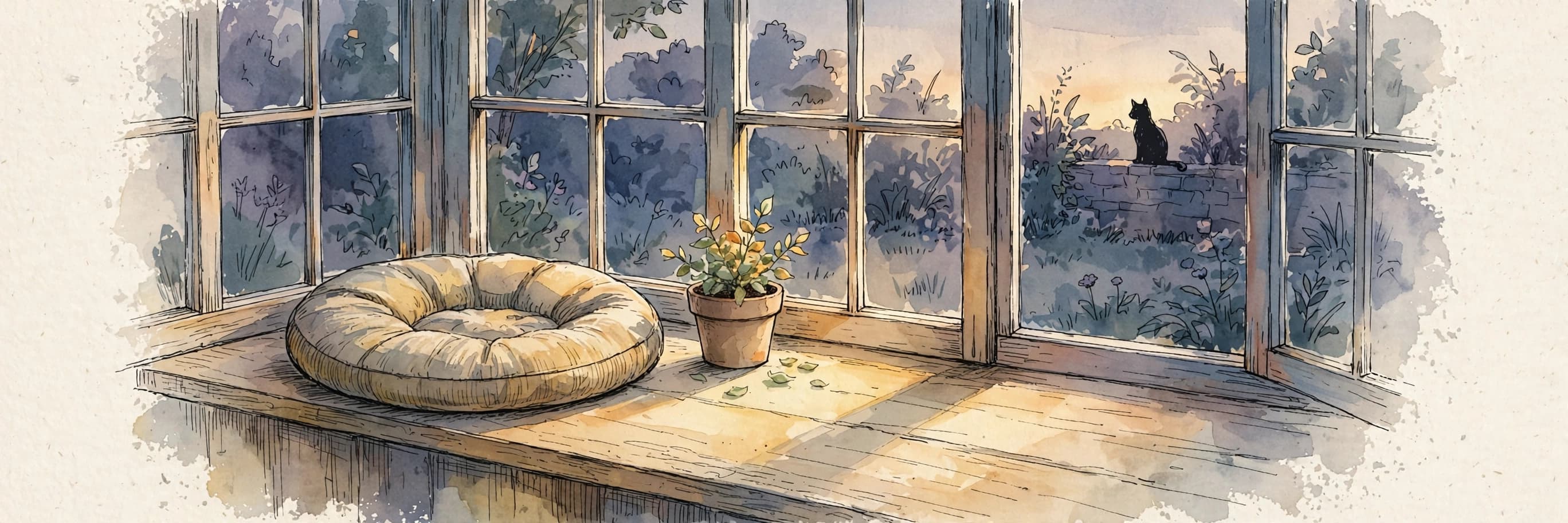
The house goes quiet in a different way. A dog's absence is loud: no greeting, no walk, no nails on the floor. A cat's absence is woven into stillness. You notice it in the windowsill at the sunny hour. In the chair that stays empty. In the small routines nobody else in your life ever saw: the morning head bump, the supervisor who sat on your keyboard.
Cat grief is also more often dismissed by other people, because cats are wrongly seen as independent and interchangeable. They are neither. If people around you do not understand, that is a failure of imagination on their part, not a measure of your loss. The comfort that helps dog owners helps here too, and much of coping with losing a dog applies to cats word for word.
Do other cats in the house grieve?
Often, yes, though it looks different from human grief. A cat who has lost a housemate may search the house and call out, especially at night. They may eat less, sleep more, or sleep in the other cat's places. Some become unusually clingy. Some seem barely affected, and that is normal too. Research on companion animals has found appetite change and increased attention seeking among the most common signs in cats after a housemate dies.
Keep routines steady, offer food in the usual places, and give extra quiet company without forcing it. Most cats settle over a few weeks. If a cat stops eating entirely for more than a day or two, or hides and will not come out, call your vet, because cats can become seriously unwell when they do not eat.
It is worth watching the surviving cat's weight as well as their mood. A cat who eats less for a week can lose weight quickly, and a cat who eats more for comfort can gain it. Keep mealtimes at the same hours, in the same places, and resist the urge to offer treats every time they cry. The routine itself is the comfort. If the surviving cat was the younger of the two, they may need extra play and attention as they adjust to being an only cat, and that is a normal part of settling.
What memorial ideas suit a cat?
Choose something that matches how a cat actually lived: small, specific, and close to home.
More ideas, for cats and dogs alike, are gathered at pet memorial ideas.
- Plant something in their sunny spot, or place a small stone where they used to watch the garden.
- Frame the photograph that captures their most typical expression, not the prettiest one.
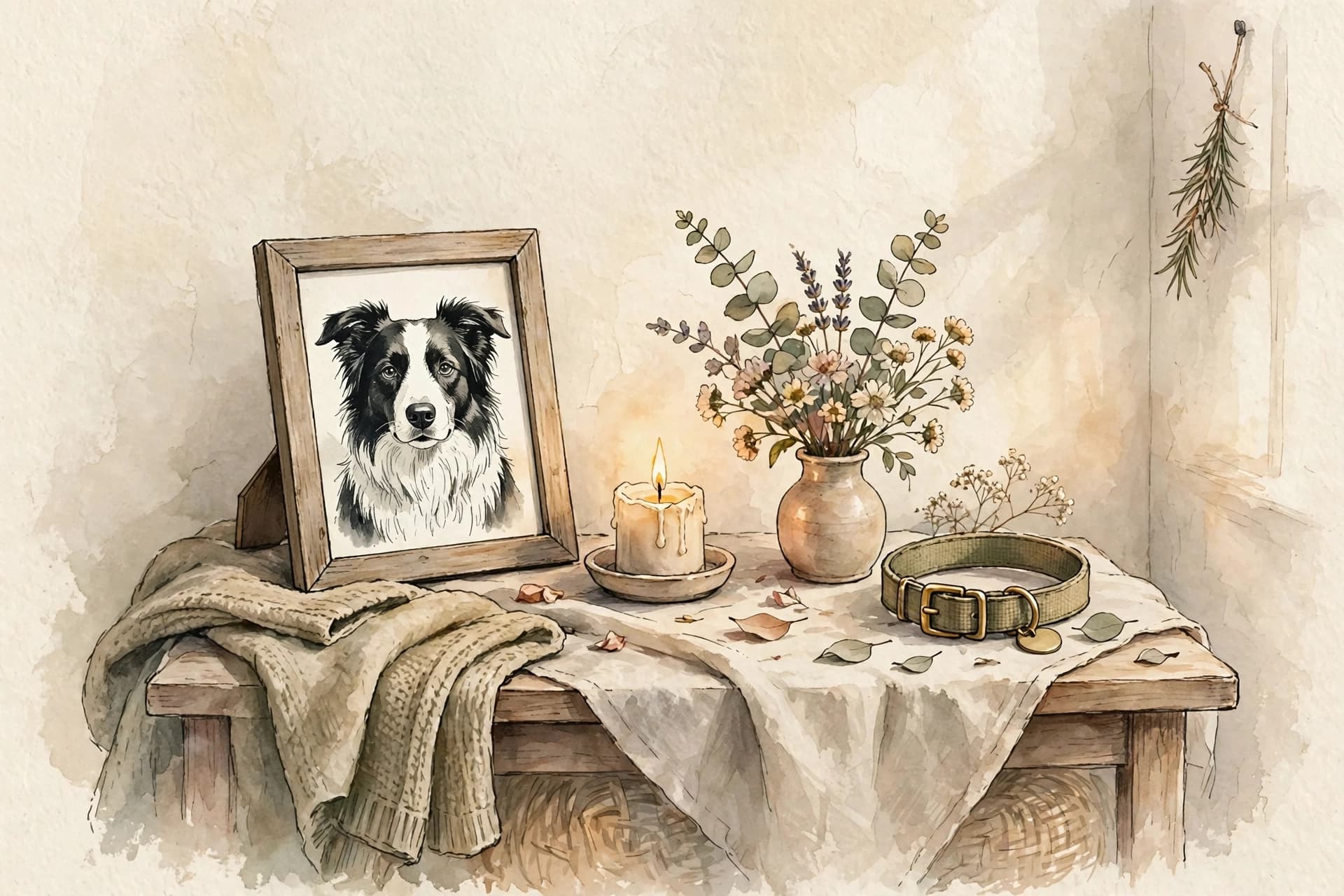
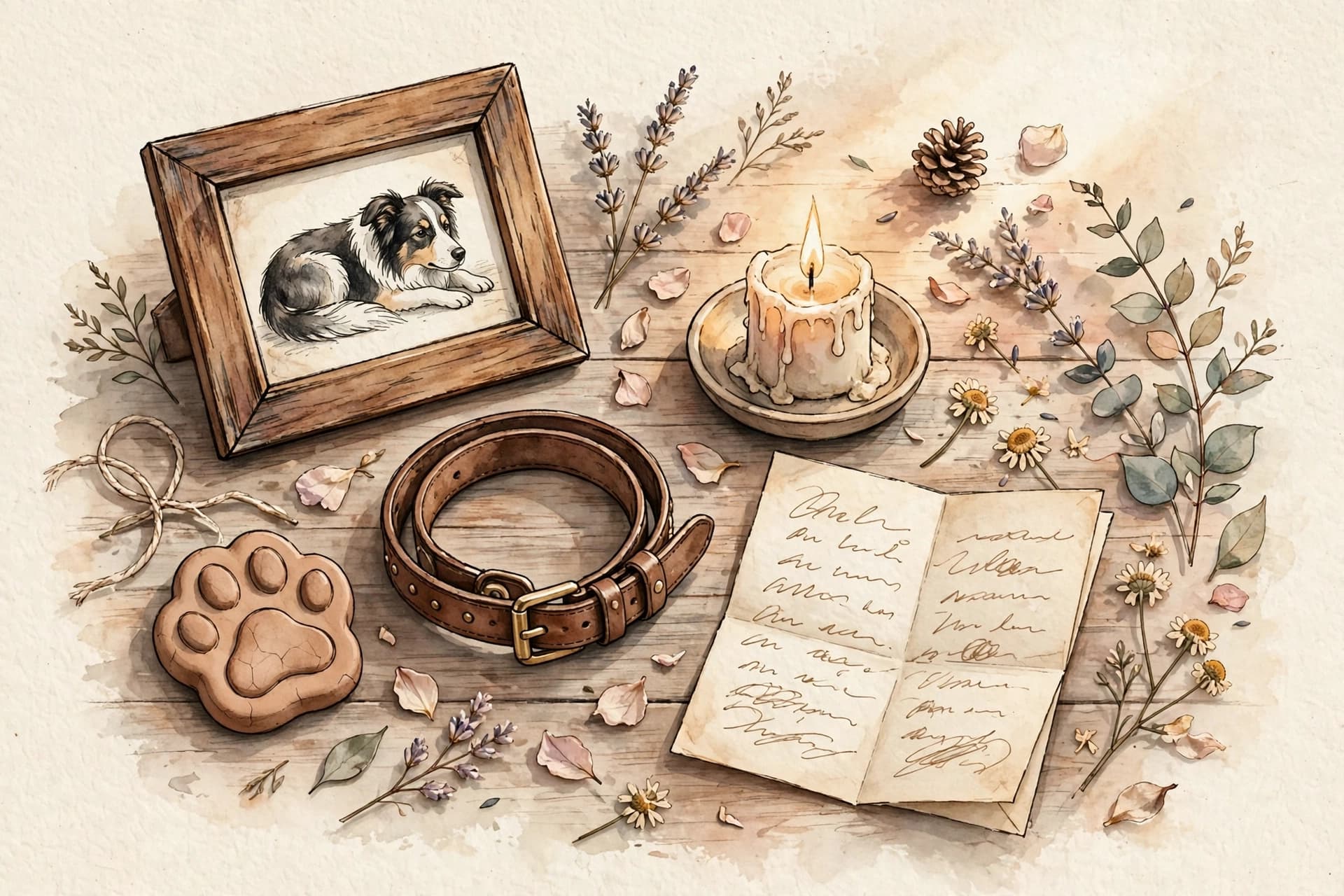
- Keep their collar or name tag in a small box with a clipping of fur and a paw print.
- Write down their habits and sounds while you still remember them exactly. Owners say this list becomes precious.
- Light a candle on the day of the week they died, for as long as it helps.
- Donate to a local cat rescue in their name, or sponsor a rescue cat's care for a month.
What paperwork and practical things need doing?
Grief and paperwork do not belong together, but a few small tasks are easier to do early, before the details blur. You do not have to do them all at once. One a day is plenty.
Tell your vet, if they do not already know, and ask them to close the file and note the date of death. If your cat was microchipped, contact the registry and update the record, so the chip cannot be misread if it is ever scanned. If you had pet insurance, let the insurer know, and ask whether any final vet bills are covered. Cancel any repeat medication or special food orders, and check for subscriptions, like a monthly food box or a flea treatment plan, that will keep charging unless you stop them.
Keep one paper record of the practical facts: the date your cat died, the name of the vet or crematorium, and where the ashes or burial place are. Owners often want these details a year later, for an anniversary or a memorial, and memory is unreliable in grief. A single note in a drawer, or a line in your phone, is enough.
How do you handle the quiet house in the first week?
The first week without a cat is strangely quiet in a way that is hard to describe to anyone who has not lived with one. There is no greeting at the door, no weight on the bed at night, no small supervisor watching you cook. The routines you shared are still there, but now they have a gap in them, and the gap is what you keep noticing.
It helps to keep one routine and change one routine. Keep the morning the same, for example, because structure steadies you. But change the thing that hurts most. If feeding time is the worst moment, feed yourself at a different time, or eat in a different room for a few days. If the empty windowsill catches your eye every afternoon, put a plant there, not as a replacement, but as something living to look at.
Sleep is often the hardest part. A cat who slept on the bed leaves a space that feels enormous in the dark. A hot water bottle, a familiar blanket, or a low light can help more than you would expect. And if the silence feels unbearable, quiet company helps: a friend sitting with you, a radio left on low, or a walk at the hour you used to play together. The house will not always feel this empty. It only feels that way while your days are still shaped around a cat who is not there.
Frequently asked questions
How long can you wait before burial or cremation?
In cool conditions, a day is usually fine, and your vet can store your cat respectfully if you need more time to decide. Call them early, even just for advice. Choosing in shock is something owners sometimes regret.
Is it normal to feel guilty that you did not notice illness?
Yes, and it is one of the most common feelings in cat loss. Cats conceal sickness by instinct, often until very late. Experienced vets miss hidden illness in cats too. Guilt is a measure of love here, not of failure.
Should you let your other cat see the body?
Many behaviourists suggest that letting a housemate cat see and sniff the body can help them understand, rather than search for a cat who simply vanished. If your other cat shows no interest, that is fine too. Offer the chance, and let them decide.
When should you get another cat?
Only when the idea brings warmth rather than a wish to undo the loss. A new cat is a new relationship, not a replacement, and the right time ranges from weeks to years. Your surviving cat's settling matters too, so let the house find its rhythm first.
Is it silly to grieve a cat this much?
No. You shared daily life, touch, routine, and quiet companionship, often for fifteen years or more. Grief matches the size of the bond, not the size of the animal or anyone else's opinion of it.